Xbox Live Global Service Outage: Microsoft Servers Down Worldwide in 2026 Crisis
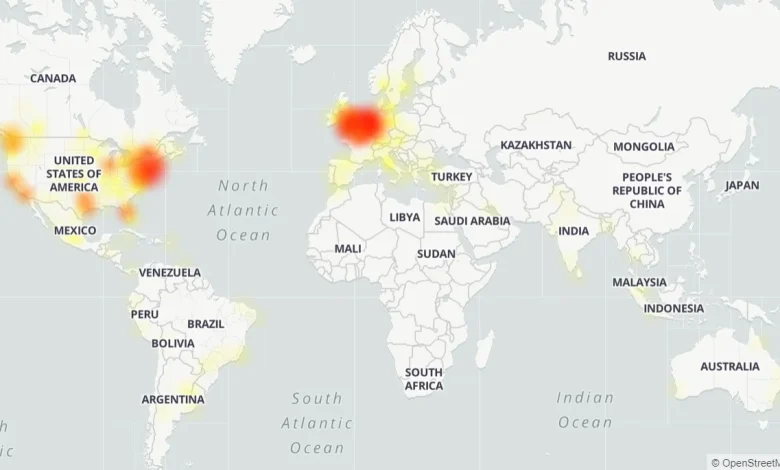
Table of Contents
- The Scale of the Crisis
- Technical Breakdown: Error 0x87e10007
- Impact on Game Pass Premium & Essential
- The Xbox Handheld and Cloud Gaming Collapse
- Digital Rights Management (DRM) Synchronization Failure
- Data Analysis: 2024 vs. 2026 Outages
- Financial & Market Implications
- The Agentic AI & Cloud Competitor Landscape
- Community Reaction and Support Dashboard
- Recovery Timeline and Future Prevention
Xbox Live Global Service Outage struck the digital gaming world with unprecedented severity early Wednesday morning, leaving millions of players across the globe disconnected from Microsoft’s ecosystem. The catastrophic failure, which began around 08:00 UTC on February 18, 2026, has rendered the Xbox Network (formerly Xbox Live) inaccessible for users on Xbox Series X|S consoles, PC Game Pass platforms, and the newly released Xbox Handheld devices. As reports flood in from the United States, Europe, and key Asian markets, the outage has paralyzed not only multiplayer gaming but also the ability to launch single-player digital titles, reigniting fierce debates over Always-Online DRM (Digital Rights Management) requirements.
This disruption comes at a particularly volatile moment for the gaming giant, coinciding with the highly anticipated Wave 2 February drop of Kingdom Come: Deliverance 2 and The Witcher 3: Complete Edition on Game Pass Ultimate. Instead of diving into these immersive RPG worlds, gamers are being met with a wall of cryptic error codes and unresponsive dashboards. The timing has amplified the frustration, as the service failure effectively locks paying subscribers out of the very content they were promised.
The Scale of the Crisis
The scope of this outage appears to be total. Unlike regional disruptions that often affect specific nodes in North America or Western Europe, today’s blackout is truly global. DownDetector reports spiked from a baseline of zero to over 450,000 concurrent reports within fifteen minutes of the initial crash. This vertical trajectory suggests a catastrophic failure at the authentication root level, likely involving the Azure Active Directory services that manage user identity across the Microsoft ecosystem.
Users attempting to sign in are greeting with infinite loading spinners or immediate dismissals. The ripple effects have extended beyond gaming; the Xbox app on mobile devices, Windows 10/11 integration, and even third-party partner logins that rely on Microsoft authentication are failing. This interconnected failure points to a vulnerability in the centralized architecture that powers the modern “gaming as a service” model.
Technical Breakdown: Error 0x87e10007
The defining characteristic of this outage is the widespread appearance of error code 0x87e10007. Historically, this code indicates that a specific game or application is incompatible with the hardware—for example, trying to run an Xbox Series X exclusive on an older Xbox One console. However, in the context of today’s Xbox Live Global Service Outage, the error is appearing erroneously for fully compatible, native software.
Technical analysts suggest that the authentication servers are failing to return valid license tokens. When the console queries the server to verify ownership of a digital game like Avatar: Frontiers of Pandora, the request times out or returns null data. The local operating system, unable to interpret this server-side void, defaults to the generic “incompatible” error message. This has caused mass confusion, with users frantically hard-resetting their consoles or fearing hardware failure, unaware that the issue is entirely on the network side.
Furthermore, the dependency on server-side “handshakes” for launching games—even those downloaded locally—has exposed the fragility of the current DRM infrastructure. Without that digital handshake, powerful hardware is effectively bricked for the duration of the downtime.
Impact on Game Pass Premium & Essential
The restructuring of the subscription tiers in late 2025 has added layers of complexity to the outage. Subscribers to Xbox Game Pass Essential (formerly Core) and the mid-tier Xbox Game Pass Premium are finding themselves completely locked out of their libraries. Since these tiers rely heavily on continuous license verification to differentiate access levels (e.g., verifying that a Premium user has access to Avowed while an Essential user does not), the authentication servers are under immense strain.
The outage has prevented the download and activation of the newly added February titles. Players hoping to pre-load EA Sports College Football 26 are finding the store pages inaccessible. For a service model built on the promise of instant accessibility and a “Netflix-for-games” convenience, such a prolonged blackout is a significant reputational blow. The inability to access even the legacy catalog of Xbox 360 titles via backward compatibility underscores how deep the DRM tentacles reach into the system’s architecture.
The Xbox Handheld and Cloud Gaming Collapse
Perhaps the most critical failure involves the cloud infrastructure. With the recent launch of the dedicated Xbox Handheld, Microsoft bet heavily on the seamless integration of local play and xCloud streaming. This device, marketed as the ultimate portal for the “play anywhere” ecosystem, has been rendered largely useless by the outage. Since the Handheld relies on a constant heartbeat connection to sync save states and verify Game Pass Ultimate credentials, users are reporting that the devices are stuck in boot loops or restricted to limited offline modes.
Cloud Gaming (xCloud), which runs on custom Xbox Series X blades in Azure data centers, is currently offline. This segment of the market is crucial for Microsoft’s strategy to reach gamers without consoles. The failure here draws sharp comparisons to the stability of competitors. For a deeper understanding of the cloud infrastructure wars, one can look at how other tech giants are positioning themselves; for instance, the dominance of Amazon in 2026: Dominating the Agentic AI Space Economy highlights the fierce competition for server reliability and uptime. While Amazon’s AWS has had its own struggles, today’s failure places Microsoft’s Azure gaming vertical under a microscope.
Digital Rights Management (DRM) Synchronization Failure
The core of the issue lies in the synchronization between the user’s local “Home Xbox” settings and the global rights database. Under normal circumstances, a designated “Home Xbox” should allow offline play for digital games. However, reports indicate that even this fail-safe is malfunctioning for many users. This suggests that the outage may have been preceded by a corrupted database update pushed earlier in the week, which desynchronized local keys from the master server.
This situation mirrors the theoretical risks discussed in advanced computing circles regarding system dependency. Just as AI systems require robust logic to function, as explored in Pluribus AI: From Mastering Poker to Powering System 2 Reasoning in LLMs, gaming networks require fault-tolerant logic that is evidently missing in the current Xbox Live architecture. The system appears to lack a “System 2” reasoning capability—a fallback mode that prioritizes user access over strict license enforcement during catastrophic server failures.
Data Analysis: 2024 vs. 2026 Outages
To contextualize the severity of this event, we have compiled a comparison of major Xbox Live service interruptions. This data highlights a worrying trend in the duration and complexity of outages.
| Feature Comparison | July 2024 Outage | October 2025 (Azure) | February 2026 (Current) |
|---|---|---|---|
| Duration | ~7 Hours | ~5 Hours | Ongoing (8+ Hours) |
| Primary Error Code | Generic Timeout | 0x80048820 | 0x87e10007 (False Incompatible) |
| Scope | Login & Multiplayer | Azure & Enterprise | Total Ecosystem (Console, PC, Handheld, Cloud) |
| Offline Play | Partially Available | Available | Broken for Digital Titles |
| Root Cause | DDoS / Config Error | Azure Front Door | Authentication Token Failure (Suspected) |
The table illustrates that while previous outages were annoying, they often left offline functionality intact. The 2026 incident is unique in its ability to cripple the entire hardware ecosystem, treating owned games as rentals that have expired.
Financial & Market Implications
The timing of the outage, occurring during a mid-week engagement peak for the newly released Game Pass Wave 2 content, has immediate financial implications. Microtransaction volumes for live-service games like Call of Duty and Overwatch 2 have plummeted to near zero for the Xbox platform. In an era where digital engagement is the primary metric for stock valuation, this downtime represents millions of dollars in lost revenue per hour.
Investors are watching closely. The stability of digital infrastructure is paramount not just for gaming, but for the broader perception of a tech giant’s reliability. Similar market sensitivities were observed in the social media sector, as detailed in the Facebook (Meta) in 2026: The AI Pivot, Andromeda Algorithm, and Future Outlook report, where platform stability directly correlated with ad revenue and stock performance. If Microsoft cannot guarantee uptime for its consumer services, enterprise confidence in Azure could also waver.
The Agentic AI & Cloud Competitor Landscape
The gaming industry in 2026 is no longer just about who has the best graphics; it is about who has the most reliable cloud. Sony’s PlayStation Network, while having its own history of outages, has recently invested heavily in decentralized edge computing to mitigate global blackouts. Meanwhile, Microsoft’s centralization strategy, while efficient for AI integration and data analytics, creates a single point of failure.
The role of news and information spread during these outages is also critical. Gamers are turning to decentralized news sources and social platforms to verify their status. The dynamics of how this information travels are analyzed in The State of Digital News in 2026: AI Integration and Traffic Shifts, which notes that during crises, official status pages often lag behind real-time community reporting. Indeed, the official Xbox Status page took nearly 45 minutes to acknowledge the outage, by which time #XboxDown was already trending globally.
Community Reaction and Support Dashboard
The community response has been a mixture of resignation and fury. Forums and social media channels are flooded with screenshots of the 0x87e10007 error. A particular point of contention is the lack of transparency from the Xbox Support Dashboard. For the first hour of the outage, all services were listed as “Up and Running,” leading to gaslighting accusations from users who were staring at blank screens.
Influential gaming figures are calling for a “Offline Guarantee”—a policy change that would require consoles to cache license keys for at least 30 days, ensuring that a server outage does not prevent access to single-player games. The current requirement for frequent online “check-ins” is being cited as anti-consumer, especially when the service provider cannot maintain 99.9% uptime.
Recovery Timeline and Future Prevention
As of this reporting, Microsoft has acknowledged the issue and engineering teams are attempting to roll back the authentication server updates. However, the recovery process is expected to be slow. “Throttling” will likely be implemented as services come back online to prevent a secondary crash from the surge of millions of users attempting to log in simultaneously.
For users seeking official updates, the Xbox Status Page remains the primary source of truth, though third-party detectors often provide faster real-time data. In the aftermath of this event, Microsoft will likely face pressure to redesign its DRM architecture to allow for greater offline autonomy. The Xbox Live Global Service Outage of 2026 serves as a stark reminder that in a digital-first future, possession is only nine-tenths of the law if the server says so.
The casual gaming market, often less vocal but numerically significant, is also impacted. Players of viral hits, similar to the phenomena analyzed in the Wordle Advanced SEO Report: Strategic Analysis 2026 Edition, are finding their daily streaks and casual sessions interrupted. This broad-spectrum failure ensures that the outage will remain a significant topic of discussion for weeks to come, potentially accelerating the industry’s move towards more resilient, decentralized gaming protocols.