Venezuela Oil Crisis 2026: Legal Insecurity and Arrests Halt Recovery
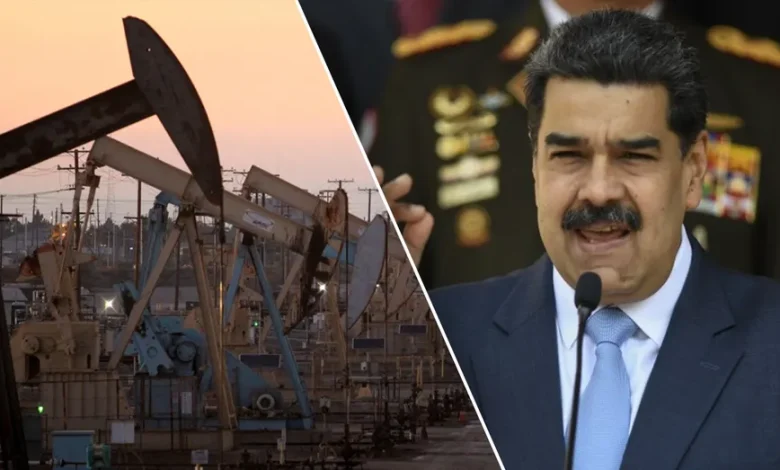
Venezuela remains at the epicenter of a complex geopolitical and energy storm in early 2026, where the potential for vast oil wealth collides violently with institutional decay. Despite possessing the world’s largest proven oil reserves, the nation’s struggle to reactivate its hydrocarbon sector has hit a formidable wall: a profound lack of legal security exacerbated by a renewed wave of political detentions. As the global energy landscape shifts under the weight of new technologies and supply chains, the window for Venezuela to re-emerge as a petro-giant is narrowing. This comprehensive analysis explores how the arbitrary application of law and the targeting of political opposition have paralyzed the much-needed revitalization of PDVSA (Petróleos de Venezuela, S.A.) and alienated potential partners essential for reconstruction.
The Legal Insecurity Crisis: A Barrier to Foreign Capital
The primary deterrent for international energy conglomerates contemplating a return to the Orinoco Oil Belt is not the geological difficulty of extracting extra-heavy crude, but the utter absence of rule of law. In 2026, the legal framework governing joint ventures remains opaque, subject to executive whims rather than constitutional mandates. Foreign investors require arbitration clarity, asset protection, and contract sanctity—three pillars that have been systematically eroded in Venezuela over the last two decades.
Recent reports indicate that “legal insecurity” has evolved from a theoretical risk to an operational nightmare. Companies operating under the tenuous protections of special licenses report increasing harassment of local supply chain partners and arbitrary administrative seizures. The judiciary, heavily politicized, offers no recourse for contract disputes, leaving foreign assets vulnerable to de facto expropriation disguised as regulatory enforcement. For executives in Houston and London, the risk premium associated with Venezuela has become mathematically unjustifiable, even with oil prices hovering at profitable margins.
This environment of uncertainty creates a “compliance trap.” Western oil majors, bound by strict anti-corruption laws (such as the FCPA in the U.S. and the UK Bribery Act), cannot navigate a system where basic operations often require informal payments or adherence to unwritten political mandates. Consequently, the sector remains starved of the capital-intensive technology required to upgrade upgraders and refineries, leaving infrastructure to rust in the tropical heat.
Political Detentions and the Sanctions Snapback
The correlation between political repression in Caracas and the tightening of economic valves in Washington is direct and devastating. The tenuous progress made during the erratic negotiations of 2024 and 2025 has been undone by a fresh wave of political detentions targeting opposition figures, human rights activists, and even technocratic dissenters within the oil industry itself. These arrests serve as a stark signal to the international community that the administration prioritizes political survival over economic rehabilitation.
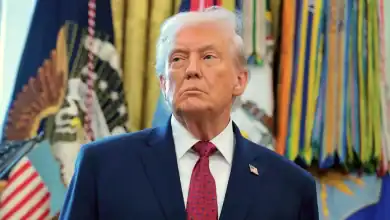
Under the administration of Donald Trump, the 47th President of the United States, the U.S. State Department has adopted a “maximum pressure 2.0” strategy. The violation of electoral agreements and the imprisonment of key opposition leaders have triggered automatic “snapback” provisions in sanctions relief packages. The hope that the Barbados Agreements would lead to a sustained easing of the embargo has evaporated. Washington has made it clear: without genuine steps toward democratization and the release of political prisoners, the U.S. financial system remains off-limits to PDVSA.
This geopolitical standoff freezes the logistics of the oil trade. Tankers willing to load Venezuelan crude are scarce and charge exorbitant rates due to the risk of secondary sanctions. Insurance companies, vital for maritime trade, have largely abandoned the market, forcing Venezuela to rely on a “dark fleet” of aging vessels that pose significant environmental risks and limit the volume of exports to mainstream markets.
| Indicator | 2024 Baseline | 2025 Actual | 2026 Projection (Current) | 2026 Target (Missed) |
|---|---|---|---|---|
| Crude Production (bpd) | 850,000 | 920,000 | 890,000 | 1,500,000 |
| Active Drilling Rigs | 22 | 25 | 18 | 60+ |
| Foreign Direct Investment ($B) | 0.5 | 1.2 | 0.3 | 5.0 |
| Country Risk Score (EMBI) | High | Very High | Critical | Moderate |
PDVSA’s Operational Decay: Beyond Politics
While politics dominates the headlines, the physical reality of Venezuela’s oil infrastructure is a crisis of engineering. Years of underinvestment and brain drain have left PDVSA as a shell of its former self. The reactivation of wells is not merely a matter of turning a valve; it requires complex workovers, reliable electricity, and diluents to transport the heavy crude. The national power grid, plagued by blackouts, frequently shuts down pumping stations, causing production stoppages that damage reservoirs permanently.
Furthermore, the environmental degradation in the Lake Maracaibo region has reached catastrophic levels, drawing international condemnation. Leaking pipelines and failing infrastructure create a liability that reputable international firms are hesitant to inherit. The cost of environmental remediation alone is estimated in the billions, a figure that PDVSA’s hollowed-out balance sheet cannot support. Without the return of service giants like Halliburton or Schlumberger—who remain sidelined by sanctions and payment arrears—indigenous technical solutions have proven insufficient to arrest the decline.
The Role of Chevron and General License 44 in 2026
The solitary exception to the general exodus has been Chevron, operating under specific licenses that allow for limited production and export to the United States. However, the status of General License 44—which broadly authorized oil and gas transactions—remains the focal point of uncertainty. In early 2026, the license is effectively in limbo, replaced by a restrictive case-by-case approval process that stifles broad market recovery.
Chevron’s operations, while profitable, are capped by the inability to drill new wells or expand footprint significantly. They are essentially in a holding pattern, recovering legacy debts through oil shipments while avoiding new capital exposure. Other European majors, such as Eni and Repsol, have followed a similar, cautious path: taking payment in kind for past debts but refusing to commit fresh cash to a jurisdiction where a local manager could be detained on spurious charges the next day.
Economic Fallout: Hyperinflation and Currency Risk
The failure to reactivate the oil sector has immediate and brutal consequences for the Venezuelan economy. With oil accounting for over 90% of export earnings, the stagnation in production translates directly to a scarcity of foreign currency. This scarcity fuels a new cycle of devaluation and inflation, impacting the purchasing power of the average citizen. As detailed in our comprehensive guide to global currency exchange, such extreme volatility makes financial planning impossible for local businesses and foreign investors alike.
The central bank’s inability to defend the bolívar is exacerbated by the lack of petrodollars. This forces the economy into an uncontrolled dollarization where the gap between the wealthy elite and the impoverished majority widens. The government’s attempts to tax dollar transactions or impose price controls only drive commerce further into the gray market, reducing tax revenue and deepening the fiscal deficit.
Geopolitics: Venezuela in the Global Energy Matrix
Venezuela’s isolation allows other global players to capture its traditional market share. Neighboring Guyana has surged ahead as a preferred destination for offshore investment, offering a stable legal framework and favorable contract terms. Additionally, the global shift toward renewables and the strategic positioning of Arctic resources, as discussed in our analysis of Greenland’s geopolitical frontier, means that the world is becoming less desperate for Venezuela’s heavy, sulfur-rich crude.
Russia and China, once the lenders of last resort for Caracas, have also recalibrated their engagement. Burthened by their own geopolitical entanglements and wary of PDVSA’s history of corruption and non-payment, these allies offer rhetorical support but minimal hard currency. The narrative that the “East” would rescue the Venezuelan oil sector has proven false; without Western technology and markets, the sector cannot scale.
Future Outlook: Can Investor Confidence Be Restored?
The path forward is fraught with difficulty. For Venezuela to achieve a genuine reactivation, it must decouple its oil industry from its political volatility—a feat that seems impossible under the current regime structure. The United States continues to hold the keys to the kingdom via sanctions policy, but domestic U.S. politics, including budgetary stalemates similar to the 2026 government shutdown crisis, often slow the diplomatic machinery required to negotiate complex relief deals.
Ultimately, the restoration of the Venezuelan oil sector requires a “Grand Bargain” that includes verifiable legal reforms, the release of political prisoners, and a transition plan that guarantees the physical security of personnel and assets. Until the risks of arbitrary detention and asset seizure are eliminated, Venezuela’s vast hydrocarbon wealth will remain trapped underground, a hostage to politics and a tragedy of wasted potential.
For more detailed statistics on global energy production and historical data, refer to the U.S. Energy Information Administration (EIA).