Tom Noonan Death at 74: Iconic Manhunter Actor Dies
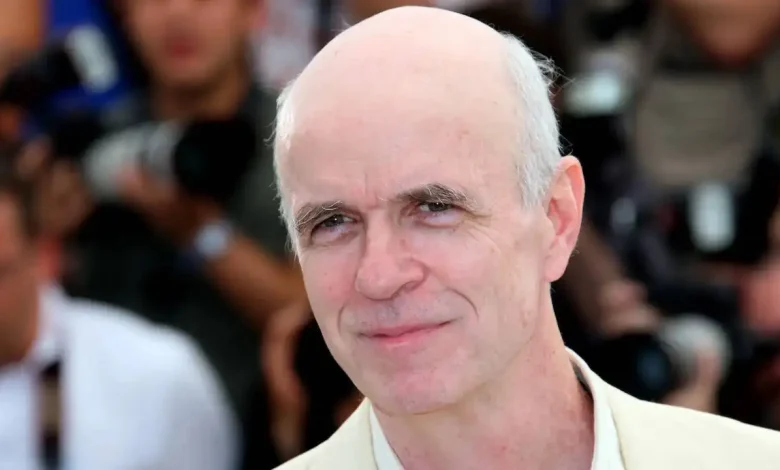
Table of Contents
- Tom Noonan Death at 74: Hollywood Mourns a Giant
- The Manhunter Legacy: Redefining the Movie Villain
- Method Acting and the Art of Isolation
- RoboCop 2 and Cain: The Face of Future Crime
- The Gentle Giant: The Monster Squad and Last Action Hero
- The Auteur: Sundance Glory with What Happened Was…
- A Master of the Stage: The Paradise Factory Roots
- Late Career Renaissance: Synecdoche, New York and Anomalisa
- Cinematic Legacy: Filmography and Accolades
- Industry Tributes and Lasting Impact
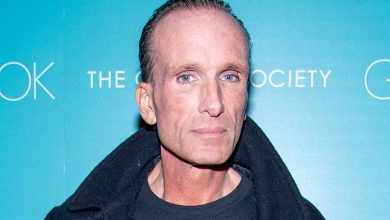
Tom Noonan death at 74 has sent a profound wave of grief through the cinematic community, marking the departure of one of Hollywood's most distinctive and towering talents. On February 14, 2026, the industry lost not just a character actor defined by his imposing 6’7" frame, but a visionary playwright, director, and Independent Spirit Award winner whose contributions spanned decades of genre-defining work. Known to millions as the terrifying Francis Dolarhyde in Michael Mann's Manhunter and the villainous Cain in RoboCop 2, Noonan passed away peacefully, leaving behind a legacy that bridges the gap between high-octane blockbusters and intimate, award-winning indie cinema.
Tom Noonan Death at 74: Hollywood Mourns a Giant
The news of the Tom Noonan death broke late on Valentine's Day, a poignant coincidence for an artist who often explored the complexities of loneliness and love in his directorial work. Confirmed by his longtime collaborator and friend, actress Karen Sillas, and later by director Fred Dekker, Noonan's passing is attributed to natural causes following a period of declining health. He was 74 years old.
Noonan's career was a testament to the power of presence. In an industry that often typecasts based on physical appearance, Noonan used his height and gaunt, striking features to create characters that were simultaneously frightening and deeply human. Whether he was playing a drug-addicted cyborg cult leader or a shy, awkward paralegal on a first date, Noonan brought an intensity that demanded the audience's full attention. His death comes during a somber week for the entertainment world, following closely on the heels of other losses, including the news that Sean Swayze dies at 63, creating a collective sense of mourning for the figures who shaped the pop culture landscape of the late 20th century.
The Manhunter Legacy: Redefining the Movie Villain
While his filmography is vast, Noonan's role as Francis Dolarhyde in Michael Mann's 1986 thriller Manhunter stands as his magnum opus in the realm of villainy. Portraying the serial killer known as "The Tooth Fairy," Noonan delivered a performance that was lightyears ahead of the typical slasher antagonists of the 80s. Michael Mann Manhunter became a cult classic largely due to the psychological depth Noonan imbued in Dolarhyde.
Unlike the flamboyant evil of other screen killers, Noonan's Dolarhyde was a creature of silence and repressed rage. He did not play the character as a monster, but as a tortured soul believing he was becoming something greater—the Red Dragon. Critics and film historians have often cited his portrayal as the template for the modern cinematic psychopath: intelligent, physically imposing, yet pitifully broken. This performance laid the groundwork for the later explosion of interest in Thomas Harris's characters, predating Anthony Hopkins' Hannibal Lecter by five years.
Method Acting and the Art of Isolation
Central to Noonan's success was his dedication to Method acting. Stories from the set of Manhunter have become legendary. To maintain the psychological distance and fear required for the role, Noonan famously refused to interact with his co-stars, including William Petersen, who played the protagonist Will Graham. Noonan requested that he never be seen by the cast playing his pursuers until the cameras were rolling for their climactic confrontations.
This extreme isolation created a palpable tension on set that translated visceral fear onto the screen. When Noonan finally crashed through a window in the film's finale, the terror on the faces of the other actors was genuine. This commitment to the craft defined Noonan as a 6’7 character actor who viewed his physical stature not as a prop, but as an instrument of psychological warfare. His approach to acting was less about pretending and more about becoming, a philosophy he would later teach to students at his own theater company.
RoboCop 2 and Cain: The Face of Future Crime
In 1990, Noonan took on another iconic antagonistic role as RoboCop 2 Cain. As the drug lord obsessed with the narcotic "Nuke," Noonan's Cain was a messianic figure, a cult leader who viewed his criminal empire with religious fervor. Even before his brain was transferred into the monstrous robotic chassis of the "RoboCop 2" unit, Noonan made Cain terrifyingly memorable with his soft-spoken demeanor and piercing gaze.
The role required Noonan to project menace through heavy prosthetics and eventually as a disembodied face on a screen, yet he managed to convey the character's narcissism and insanity perfectly. It remains one of the definitive sci-fi villain performances of the 90s, showcasing Noonan's ability to dominate a high-tech blockbuster environment just as effectively as a gritty crime thriller. This era also saw him as Last Action Hero Ripper's henchman (The Ripper himself), where he played a meta-fictional villain who realizes he can invade the real world, further cementing his status as the go-to bad guy for intelligent action cinema.
The Gentle Giant: The Monster Squad and Last Action Hero
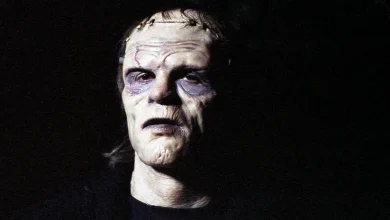
Despite his penchant for playing killers, Noonan possessed a profound gentleness that he utilized in roles like The Monster Squad Frankenstein. In this 1987 cult favorite, Noonan played Frankenstein's Monster not as a brute, but as a misunderstood, tragic figure who befriends a young girl. Underneath layers of makeup, Noonan's expressive eyes conveyed a deep sadness and warmth, endearing him to a generation of children who saw him not as a monster, but as a hero.
This duality—the ability to switch between the horrifying Francis Dolarhyde and the lovable Frankenstein—was the hallmark of Noonan's versatility. It was a range rarely seen in actors of his physical type, who are often relegated to silent thug roles. Noonan always brought a soul to his characters, regardless of their moral alignment.
The Auteur: Sundance Glory with What Happened Was…
Perhaps the most overlooked aspect of Noonan's career by the general public, but most cherished by cinephiles, was his work as a filmmaker. In 1994, he stunned the independent film world as the What Happened Was… director, writer, and star. The film, a claustrophobic, real-time drama about a first date gone wrong, won the Grand Jury Prize and the Waldo Salt Screenwriting Award at the Sundance Film Festival.
What Happened Was… revealed the other side of the "monster." Stripped of special effects and villainous tropes, Noonan played a socially anxious, lonely man trying to connect with a woman (Karen Sillas) in a New York apartment. The film is a masterclass in dialogue and vulnerability, proving that Noonan understood the human condition more deeply than his blockbuster roles ever allowed him to show. This success was not a fluke; he followed it up with The Wife, another critically acclaimed chamber drama that dissected the breakdown of a marriage with surgical precision.
A Master of the Stage: The Paradise Factory Roots
Noonan's directorial voice was honed in the theater. He founded the Paradise Factory in New York City, a theater company and creative incubator where he developed his plays before adapting them for the screen. It was here that he cultivated a unique rehearsal process, often spending months exploring the backstories of characters before a single line of script was written.
The Paradise Factory became a haven for actors who wanted to escape the commercial pressures of the industry and focus on raw, truthful performance. Noonan's influence as a teacher and mentor is immeasurable, with many of his students going on to successful careers in film and television. His dedication to the stage kept him grounded in New York, even as Hollywood beckoned with more lucrative offers. This artistic integrity mirrors the struggles seen in other creative sectors, such as the corporate battles described in reports like The Fight for Warner Bros, where artistic vision often clashes with commercial necessity.
Late Career Renaissance: Synecdoche, New York and Anomalisa
In his later years, Noonan found a kindred spirit in writer-director Charlie Kaufman. Their collaboration began with Synecdoche New York (2008), where Noonan played Sammy Barnathan, the actor hired to play the protagonist Caden Cotard (Philip Seymour Hoffman) in a play-within-a-movie. The role was meta-textual and complex, requiring Noonan to shadow Hoffman's character, eventually blurring the lines between identity and performance.
This partnership continued with the stop-motion masterpiece Anomalisa (2015). As the Anomalisa voice actor, Noonan voiced every character in the film except for the two leads. This "Fregoli delusion" effect meant Noonan voiced men, women, and children, creating a soundscape of uniformity that emphasized the protagonist's isolation. This vocal performance is widely considered one of the greatest feats of voice acting in the 21st century, earning him further critical adulation and cementing his place as an Independent Spirit Award winner (via the Robert Altman Award for ensemble).
Cinematic Legacy: Filmography and Accolades
Tom Noonan's body of work is vast, but a few key projects define his trajectory from character actor to auteur. The following table summarizes his most impactful contributions to film and television.
| Year | Title | Role / Function | Significance |
|---|---|---|---|
| 1986 | Manhunter | Francis Dolarhyde | Defined the modern cinematic serial killer; Michael Mann Manhunter classic. |
| 1987 | The Monster Squad | Frankenstein’s Monster | Cult classic role showcasing his gentle emotional range. |
| 1990 | RoboCop 2 | Cain | Iconic sci-fi villain; RoboCop 2 Cain drug lord. |
| 1993 | Last Action Hero | The Ripper | Meta-villain role; Last Action Hero Ripper’s henchman. |
| 1994 | What Happened Was… | Director / Writer / Michael | Sundance Grand Jury Prize Winner. |
| 1995 | Heat | Kelso | Heat 1995 Kelso; key role in Michael Mann’s crime epic. |
| 2008 | Synecdoche, New York | Sammy Barnathan | Complex meta-role in Charlie Kaufman’s debut. |
| 2015 | Anomalisa | Voice of Everyone Else | Voiced dozens of characters; Independent Spirit Award (Ensemble). |
Industry Tributes and Lasting Impact
The outpouring of love for Noonan highlights the duality of his career: he was feared on screen but beloved behind the scenes. Director Fred Dekker wrote, "Tom's indelible performance as Frankenstein in The Monster Squad is a highlight of my modest filmography… the world has lost a great talent." His Manhunter director Michael Mann also released a statement, praising Noonan's "uncompromising intellect" and his ability to "go to the darkest places and bring back the truth."
Even in the shifting political and cultural landscape of 2026, where headlines are dominated by figures like Donald Trump 47th President, the loss of an artist like Noonan cuts through the noise. He represented a specific era of American filmmaking—gritty, experimental, and daring. His passing serves as a reminder of the fragility of the artistic giants who built the foundations of modern cinema.
Tom Noonan's death at 74 is not just the end of a life, but the closing of a chapter on Tom Noonan filmography. From the terrifying Red Dragon to the lonely Michael in What Happened Was…, he gave us monsters and men, and taught us that often, there is very little difference between the two. He is survived by his children and a community of artists at the Paradise Factory who will continue to carry his torch.
For more on the lives of those we’ve lost recently, you can read about how gospel legend Dr. Ron Kenoly passes away at 81, another titan in his respective field. Tom Noonan will be missed, but his towering shadow will linger over cinema forever. To explore his full credits, visit his IMDb profile.