Munich Security Conference 2026: The “Under Destruction” Era Begins
Munich Security Conference 2026: A World “Under Destruction”
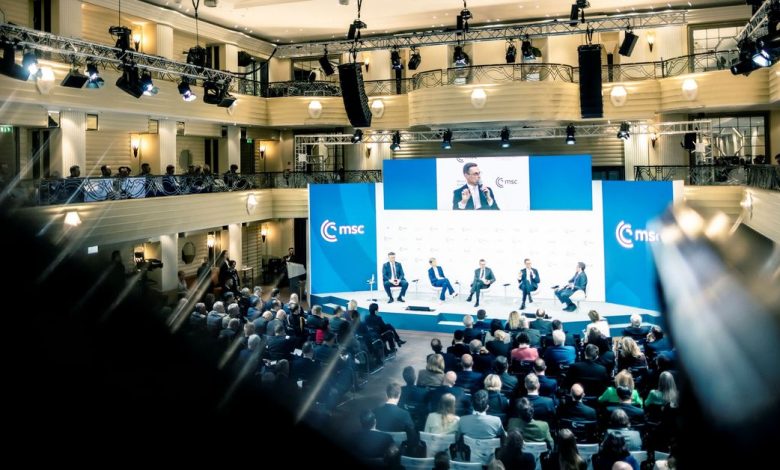
Munich Security Conference 2026 has concluded today, leaving the global defense community grappling with a stark new reality. As the 62nd iteration of the world’s premier defense forum wraps up at the Hotel Bayerischer Hof, the mood is distinctly darker than in previous years. The official motto for 2026, “Under Destruction,” serves as a grim successor to 2025’s “Multipolarization,” signaling that the erosion of international norms has moved from a theoretical risk to an active, kinetic process.
While diplomats toasted to “dialogue” inside the heavily fortified venue, the streets of Munich told a different story. Over 250,000 protesters gathered in the city center, many rallying in solidarity with the Iranian opposition and responding to the exiled Crown Prince Pahlavi’s call for a free Iran. Inside, the debates were dominated by the “wrecking-ball politics” described in the Munich Security Report 2026. From the hallways where US Secretary of State Marco Rubio held court to the closed-door sessions on nuclear deterrence, the consensus is clear: the post-1945 order isn’t just cracking; it is being actively dismantled.
This year’s conference was defined not by unity, but by the fragmentation of alliances into transactional blocs. The specter of a “Deterrence Gap” in Europe, the explosive demand for sovereign AI infrastructure, and the re-calibration of US foreign policy under the second Trump administration formed the triad of anxieties that no cocktail reception could soothe.
The US Delegation: Rubio & The DOGE Doctrine
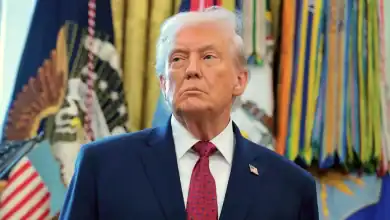
The American presence at the Munich Security Conference 2026 was markedly different from the “We are back” rhetoric of the early 2020s. Led by Secretary of State Marco Rubio, the US delegation arrived with a mandate of “Radical Efficiency” in foreign commitments. This shift is inextricably linked to the domestic overhaul being driven by the Department of Government Efficiency (DOGE) Musk Ramaswamy’s radical fiscal reform initiative. The “DOGE Doctrine,” as European analysts have dubbed it, prioritizes high-yield strategic investments over sprawling, open-ended aid packages.
Secretary Rubio’s keynote address emphasized that US security guarantees are now “performance-based.” He made it clear that while NATO remains a pillar, the financial restructuring of the US government demands that European allies not only meet the 2% GDP spending target but exceed it to fill the logistical voids left by a leaner American footprint. This has sent shockwaves through the Chancelleries of Berlin and Paris, where the fiscal space for increased defense spending is already tight.
The message from Washington is transactional but clear: The US is securing its own economic fortress first. The implications for the Global South were equally stark, with aid programs being audited for “strategic return on investment,” leaving a vacuum that China and Russia are eager to fill.
The Iran Paradox: Pezeshkian’s Gambit vs. Munich Streets
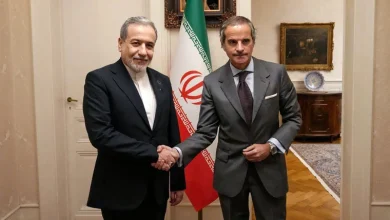
One of the most volatile subplots of the Munich Security Conference 2026 was the Iranian question. While the streets outside roared with anti-regime chants, inside the diplomatic track, a high-stakes game of poker was unfolding. Tehran, under President Masoud Pezeshkian, has been pursuing a strategy of “dignified dialogue,” attempting to leverage the Diplomatic Re-engagement Pezeshkian’s strategic gambit for sanctions relief Feb 2026 to gain economic breathing room without dismantling its nuclear infrastructure.
Pezeshkian’s representatives in Munich argued that the region is capable of “self-guardianship” and rejected external interference. This rhetoric, however, clashed violently with the reality of the massive diaspora protests surrounding the venue. The presence of Prince Pahlavi in Munich galvanized the opposition, creating a split-screen effect: the regime seeking legitimacy through “constructive engagement” in conference rooms, while its legitimacy was vocally denied on the pavement below.
Complicating matters further are the back-channel nuclear talks reportedly mediated by Oman. US officials at MSC were tight-lipped but acknowledged that “result-oriented” discussions are ongoing. The fear among European delegates is that a transactional US administration might cut a limited deal with Tehran to stabilize oil markets, leaving human rights concerns—and the protesters outside—as collateral damage.
Indo-Pacific Realignment: The $500B India Pact
If Europe felt the chill of American austerity, the Indo-Pacific basked in its warmth. The strategic highlight of the month, reverberating through the halls of the Bayerischer Hof, was the historic India US Trade Deal 2026 tariff cuts Russian oil pivot the $500B pact. Signed just days before the conference, this agreement fundamentally alters the security calculus in Asia.
By securing a commitment from New Delhi to purchase $500 billion in US energy and technology, Washington has effectively bought India’s partial decoupling from Russian energy dependence. In Munich, Indian External Affairs officials were the belles of the ball, courted by Western defense contractors eager to replace Russian hardware in India’s arsenal. This pivot is the “DOGE Doctrine” in action: using economic leverage to achieve a security outcome that decades of moralizing could not.
Chinese Foreign Minister Wang Yi’s scheduled meeting with Secretary Rubio was tense, overshadowed by this Indo-US realignment. The “encirclement” of China, a long-standing fear in Beijing, now looks economically cemented. For the MSC audience, this signifies a definitive shift of the center of gravity from the Euro-Atlantic to the Indo-Pacific.
| Strategic Pillar | 2025 Status (Multipolarization) | 2026 Outcome (Under Destruction) |
|---|---|---|
| US Foreign Policy | “We are back” (Multilateralism) | “Radical Efficiency” (DOGE / Transactionalism) |
| NATO Posture | Incremental support for Ukraine | Urgent call to bridge the “Deterrence Gap” |
| Indo-Pacific | Loose coalition building | Hard economic alliance (US-India $500B Pact) |
| AI Security | Theoretical regulation risks | Physical chip shortages & Sovereign AI Clouds |
| Iran Strategy | Containment & Sanctions | Binary: Regime change pressure vs. Nuclear deal |
The AI Arms Race: Blackwell Shortages & Sovereign Clouds
Technology security has moved from a side event to the main stage. The 2026 conference coincided with the release of the Munich Security Report’s chapter on “Silicon Sovereignty,” which paints a bleak picture of the widening AI divide. The conversation was dominated by the implications of the Nvidia Stock NVDA Analysis Feb 2026 Blackwell peak Rubin hype valuation risks.
With the Blackwell architecture now serving as the backbone of modern warfare and intelligence, the “AI Chip Shortage of 2026” is no longer just a supply chain issue—it is a national security crisis. Delegates discussed the rise of “Sovereign AI Clouds,” where nations like Saudi Arabia, Japan, and France are racing to build domestic compute capacity to avoid reliance on US hyperscalers. The fear expressed by smaller nations at MSC is that without access to Blackwell-class compute, their cyber defenses will be obsolete against AI-driven threats.
The “Rubin” architecture, teased as the next leap, is already accelerating this arms race. Military officials in Munich privately admitted that the speed of AI development is outpacing their ability to write doctrine, leaving a dangerous gap where autonomous systems might be deployed without adequate human oversight.
Cyber Warfare: Supply Chains in the Crosshairs
The physical destruction discussed in the main hall has a digital twin. Cybersecurity sessions were packed, focusing on the sophisticated nature of recent state-sponsored attacks. The case study on everyone’s lips was the Lotus Blossoms infrastructure hijack the Chrysalis backdoor Notepad supply chain attack. This incident demonstrated how innocuous software updates could be weaponized to cripple critical infrastructure.
Experts warned that the “Under Destruction” theme applies literally to digital trust. The Lotus Blossom attack revealed that supply chain vulnerabilities are systemic. In a world of “wrecking-ball politics,” cyber offensive capabilities are the first tool of choice for revisionist powers. The MSC’s cyber pledge was renewed, but with a cynical understanding that voluntary norms are unlikely to hold back state actors engaged in hybrid warfare.
NATO & Europe: Bridging the Deterrence Gap
For European leaders, MSC 2026 was a wake-up call. The “Under Destruction” report highlighted a critical “Deterrence Gap”—the inability of European conventional forces to credible deter aggression without immediate US reinforcement. With the US pivoting to the Indo-Pacific and tightening its fiscal belt, the debate on a “Euro-deterrent” has moved from taboo to necessity.
Discussions on the sidelines focused on the “nuclearization” of European defense. While not officially on the agenda, the question of whether British and French nuclear umbrellas can—or should—cover the eastern flank was debated with unprecedented openness. The consensus is that the “peace dividend” is dead and buried. Europe must rearm, not just for Ukraine’s sake, but for its own survival in a world where security guarantees are becoming conditional.
Conclusion: Surviving Wrecking-Ball Politics
As the limousines depart the Hotel Bayerischer Hof, the Munich Security Conference 2026 leaves behind a legacy of stark clarity. The era of polite disagreements is over. We have entered the age of “Under Destruction,” where institutions, alliances, and norms are being tested to their breaking point.
From the streets of Munich where Iranians demand freedom, to the boardrooms where the US and India redraw the economic map, the message is the same: power is being reconsolidated. The winners in this new era will be those who can navigate the “wrecking-ball politics” with agility—securing their supply chains, fortifying their AI sovereignty, and finding new allies in a fracturing world. For the rest, the destruction may have only just begun.