Marco Rubio Defines 2026 Foreign Policy: The ‘Western Century’ Doctrine
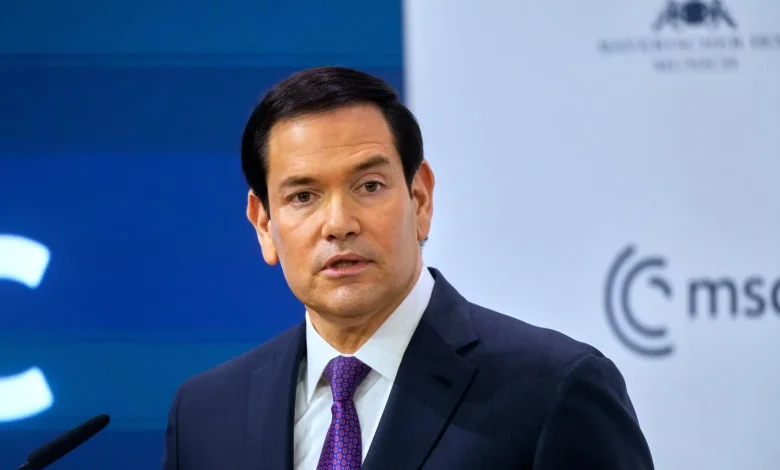
The Munich Doctrine: Reclaiming Western Civilization
On February 14, 2026, Marco Rubio took the stage at the Hotel Bayerischer Hof in Munich, facing a European audience still rattled by the combative rhetoric of Vice President J.D. Vance the previous year. In a speech that has since been dubbed the ‘Munich Doctrine,’ Rubio threaded a delicate needle. He did not retreat from the Trump administration’s demands for burden-sharing, but he framed the transatlantic alliance in sweeping, almost romantic terms.
“America will always be a child of Europe,” Rubio declared, a phrase that instantly made headlines across the continent. This rhetorical pivot was calculated. By grounding the alliance in shared “Western Civilization” and “Christian roots” rather than just transactional security guarantees, Rubio offered European leaders a way to align with Trump’s nationalism without feeling subjugated. However, the velvet glove concealed an iron fist. Rubio explicitly warned that the “globalist structures” of the post-Cold War era were obsolete. He argued that for the West to survive the 21st century, it must reject unchecked mass migration, climate extremism, and industrial hollowing-out.
Critics argue that Rubio’s speech was merely a softer packaging of isolationism, but supporters see it as a necessary evolution of the MAGA doctrine—one that seeks to build a “Fortress West” capable of withstanding the rise of authoritarian powers in the East. This strategy aligns closely with the internal shifts within the administration, where Rubio acts as the bridge between the populist base and traditional institutional power.
The Venezuela Gambit: Anatomy of a Regime Change
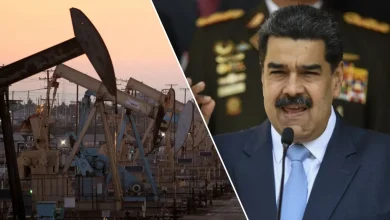
If Munich was the rhetorical high point of Rubio’s early 2026 tenure, the “Venezuela Gambit” was his operational masterpiece. In January 2026, the United States executed a stunning swift operation that resulted in the removal of Nicolás Maduro from power, a move that Rubio had championed for over a decade.
Marco Rubio: The Dual-Hat Secretary of State has long argued that the stability of the Western Hemisphere is paramount to U.S. security. The operation, detailed in leaked briefings, involved a sophisticated “oil quarantine” that effectively strangled the Maduro regime’s remaining lifelines. Unlike previous sanctions, this strategy involved the physical interdiction of tankers in the Caribbean, a high-stakes move that risked direct confrontation with other global powers.
Following Maduro’s extraction to face trial in New York, Rubio wasted no time in reshaping the narrative. He didn’t just celebrate the removal of a dictator; he utilized the power vacuum to pressure Cuba and Nicaragua. Rubio’s State Department has made it clear: the oil that once flowed freely from Caracas to Havana is cut off. This has plunged Cuba into a deeper energy crisis, with Rubio betting that the fall of the “Bolivarian” financier will trigger a domino effect of democratization—or at least destabilization—across the region’s remaining socialist strongholds.
The Economic Aftershocks in Latin America
The ripple effects of the Venezuela operation are being felt from Bogotá to Buenos Aires. Rubio has leveraged the success to rally right-leaning governments in the region, proposing a new “Hemispheric Growth Compact” that privileges U.S. supply chains over Chinese infrastructure investment. This effectively draws a line in the sand: Latin American nations must choose between the immediate capital of Beijing and the security guarantees (and energy markets) of Washington.
| Policy Area | Key Action (Q1 2026) | Strategic Goal | Global Impact |
|---|---|---|---|
| Latin America | Orchestrated removal of Maduro; Oil Quarantine. | Restore Monroe Doctrine; Cut Cuban lifelines. | Destabilization of authoritarian regimes in the hemisphere. |
| Europe (NATO) | “Child of Europe” Speech in Munich. | Shift alliance focus to “Civilizational Defense.” | Reassured allies while demanding anti-migration policies. |
| China | Meeting with Wang Yi; Tariff threats. | Decouple critical supply chains; Prepare for Summit. | High tension; slowed export of rare earth minerals. |
| State Dept Reform | Visa restrictions on “Globalist” officials. | Ideological alignment of U.S. diplomacy. | Significant turnover in career diplomatic staff. |
China Policy: The Wang Yi Standoff and Tariff Wars
While Latin America represents a victory, China remains the enduring challenge. On February 13, 2026, just a day before his Munich speech, Rubio held a tense, hour-long meeting with Chinese Foreign Minister Wang Yi. The backdrop was a looming trade war that threatens to eclipse the conflicts of the 2018-2019 era.
The Trump administration has threatened 100% tariffs on a wide range of Chinese goods, and Rubio’s role has been to communicate the non-negotiable nature of these threats while keeping diplomatic channels open for a potential Trump-Xi summit in April. The meeting in Munich produced no joint statement, a diplomatic signal of the deep chasm between the two superpowers.
Rubio’s China strategy is distinct from the “engagement” policies of the past. He views Beijing not as a competitor to be managed, but as an existential threat to be neutralized. This is evident in his aggressive pursuit of the India-US Trade Deal 2026, which aims to shift manufacturing bases away from the Pearl River Delta to the subcontinent. By empowering India, Rubio hopes to create a counterweight to Chinese hegemony in Asia. Furthermore, Rubio has tied trade explicitly to human rights and espionage, supporting new visa restrictions on Chinese researchers in sensitive fields.
Reorganizing Foggy Bottom: The Anti-Globalist Overhaul
Back in Washington, Rubio’s impact on the Department of State itself has been profound. Announced in April 2025 and accelerating into 2026, his “Comprehensive Reorganization Plan” is fundamentally altering the DNA of American diplomacy. Rubio has criticized the department’s career bureaucracy for being “captured” by globalist ideologies that prioritize international agreements over American sovereignty.
The reorganization has seen the consolidation of bureaus focusing on “Democracy, Human Rights, and Labor” into new offices with mandates focused on “Religious Freedom and National Sovereignty.” Furthermore, Rubio has implemented strict visa policies targeting foreign officials who facilitate illegal migration, a direct nod to the Donald Trump 2026 Profile and his administration’s core domestic promises. This alignment of foreign policy with domestic border enforcement is a hallmark of the Rubio doctrine, blurring the lines between the two for a cohesive national strategy.
Greenland, Tariffs, and the Arctic Pivot
One of the most surprising flashpoints of early 2026 has been the resurgence of tensions surrounding Greenland. While often dismissed by critics, the strategic value of the island in terms of rare earth minerals and Arctic dominance is central to Rubio’s resource security strategy. The administration’s renewed interest has caused friction with European allies, specifically Denmark, but Rubio has framed this as a matter of “North American Security.”
As discussed in reports on Greenland Tariffs and the 2026 Trade Crisis, Rubio is leveraging import duties to force negotiations regarding access to Greenland’s mineral wealth. This is not just about economics; it is about denying China a foothold in the Arctic. Rubio’s team views the Arctic as the next great frontier of great-power competition, and they are willing to bruise diplomatic feelings in Copenhagen and Brussels to secure U.S. interests.
Middle East Recalibration: Maximum Pressure Returns
In the Middle East, Rubio has returned to the “Maximum Pressure” campaign against Iran with renewed vigor. Following the successes in Venezuela, the State Department is applying similar economic strangulation techniques to Tehran. Rubio has explicitly linked the stability of the Middle East to the suppression of Iranian proxies.
His approach also involves a strengthening of the Abraham Accords, pushing for normalization between Saudi Arabia and Israel despite the ongoing complexities of regional conflicts. Rubio’s logic is that a united anti-Iran bloc is the only path to long-term stability, allowing the U.S. to reduce its military footprint while maintaining influence—a key tenet of the “America First” philosophy.
The Vance-Rubio Dynamic: Good Cop, Bad Cop?
Political analysts have spent much of early 2026 dissecting the relationship between Secretary of State Rubio and Vice President J.D. Vance. While Vance often plays the role of the ideological “bad cop,” delivering harsh truths and isolationist rhetoric, Rubio operates as the “good cop”—or perhaps the “pragmatic hawk.”
In Munich, where Vance had shocked the establishment a year prior, Rubio soothed them. This dynamic allows the Trump administration to keep adversaries and allies alike off-balance. Allies cling to Rubio’s assurances of “Western Civilization” unity to cope with Vance’s threats of withdrawal. This dual-pronged approach maximizes U.S. leverage, forcing concessions from partners who are desperate to keep the “Rubio channel” open.
Future Outlook: The Road to the Trump-Xi Summit
Looking ahead to the rest of 2026, Marco Rubio’s calendar is dominated by the preparation for the potential Trump-Xi summit. The stakes could not be higher. If Rubio can engineer a trade deal that satisfies Trump’s protectionist demands while avoiding a kinetic conflict over Taiwan, he will have cemented his legacy as one of the most consequential Secretaries of State in modern history.
However, the risks are immense. The aggressive moves in Venezuela and the Arctic have stretched diplomatic bandwidth. The “Western Century” doctrine requires not just American strength, but willing partners. Whether Rubio can maintain the fragile unity he championed in Munich while simultaneously waging economic warfare on multiple fronts remains the defining question of the year. For now, Marco Rubio stands at the helm, steering the massive ship of state through a storm of his own design, with the eyes of the world watching every maneuver.
For more insights into global diplomatic shifts, visit the official U.S. Department of State website.