Google Gemini 2.5 Redefines AI with Sovereign Reasoning and Agentic Flows
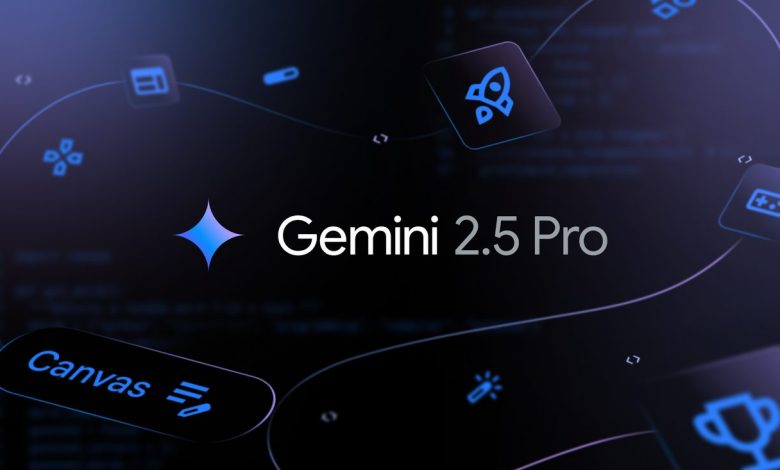
Google Gemini has officially entered its most advanced phase yet with the rollout of the Gemini 2.5 architecture in early 2026. As the artificial intelligence landscape shifts from generative text to autonomous action, Google’s flagship model is asserting dominance through sovereign reasoning capabilities and seamless integration across the world’s most utilized digital platforms. This update marks a critical turning point in the AI arms race, moving beyond simple chat interfaces to fully embedded, agentic workflows.
In this comprehensive report, we analyze the technical breakthroughs of Gemini 2.5, its impact on the Google ecosystem, and how it stacks up against its fiercest competitors in the 2026 market.
The Evolution to Gemini 2.5: Agentic AI Arrives
The release of Gemini 2.5 represents a paradigm shift from “ask and receive” to “command and execute.” Unlike previous iterations that relied heavily on prompt engineering, the new Google Gemini models possess “Agentic” capabilities. This allows the AI to break down complex goals into sub-tasks, browse the live web, verify facts, and execute actions across different applications without constant human oversight.

For enterprise users, this means Gemini can now audit spreadsheets, draft emails based on findings, and schedule meetings autonomously. This evolution is crucial as Google seeks to maintain its leadership against emerging threats. For a broader look at the company’s strategic roadmap, read our analysis on Google in 2026: The AI-First Ecosystem.
Deep Ecosystem Integration: Gmail, YouTube, and Beyond
The true power of Google Gemini lies in its ubiquity. It is no longer a standalone chatbot but the engine powering Google’s entire suite of products.
Gmail and Docs Revolution
In Gmail, Gemini 2.5 now pre-processes incoming mail, summarizing threads, drafting context-aware replies, and even highlighting action items from complex legal or technical documents. This level of utility transforms email from a chore into a managed workflow. To understand the specific technical SEO implications of these changes, refer to the Gmail SEO Report 2026.
YouTube Multimodal Analysis
On YouTube, creators are leveraging Gemini to auto-generate chapters, analyze audience retention patterns in real-time, and even dub content into 40+ languages instantly with lip-sync technology. The algorithmic authority of video content is shifting heavily toward AI-enhanced metadata. See our report on YouTube in 2026 for more details.
The Battle for Supremacy: Google Gemini vs. ChatGPT-6
The rivalry between Google and OpenAI remains the defining narrative of the tech sector. While ChatGPT-6 continues to excel in creative writing and code generation, Google Gemini has carved a niche in factual accuracy and multimodal reasoning (processing video, audio, and text simultaneously).

Benchmarks from early 2026 suggest that Gemini holds a slight edge in “long-context” retrieval—the ability to process massive datasets (up to 10 million tokens) without hallucination. However, the competition is fierce. For a detailed breakdown of the opposition, check our ChatGPT in 2026 Technical Report.
The Hardware and Infrastructure Powering the Beast
Running a model as massive as Google Gemini 2.5 requires unprecedented computational power. Google has continued to deploy its custom TPUs (Tensor Processing Units) v6 pods, but the demand for inference compute has also strengthened ties with third-party hardware giants. The synergy between software optimization and raw silicon performance is pivotal.
This massive infrastructure build-out is closely tied to the broader semiconductor market boom. Investors and tech analysts are closely watching NVIDIA’s 2026 Growth Outlook, as the Rubin architecture plays a supporting role in the global AI compute grid that Google taps into for cloud redundancy.
Future Implications for Search and SEO
As Google Gemini becomes the core of the Search Generative Experience (SGE), the traditional “10 blue links” are becoming a legacy format. SEO in 2026 is about optimizing for “Answer Engine Optimization” (AEO)—ensuring that content is structured in a way that Gemini can parse, verify, and cite.

Publishers must adapt to a world where zero-click searches are the norm, and authority is derived from being the primary source cited by the AI agent. This shift is affecting everything from news publishers to e-commerce giants like Walmart, which uses similar AI tech for inventory management.