Georgia’s Transit and Geopolitical Leverage: A Crisis of Strategy
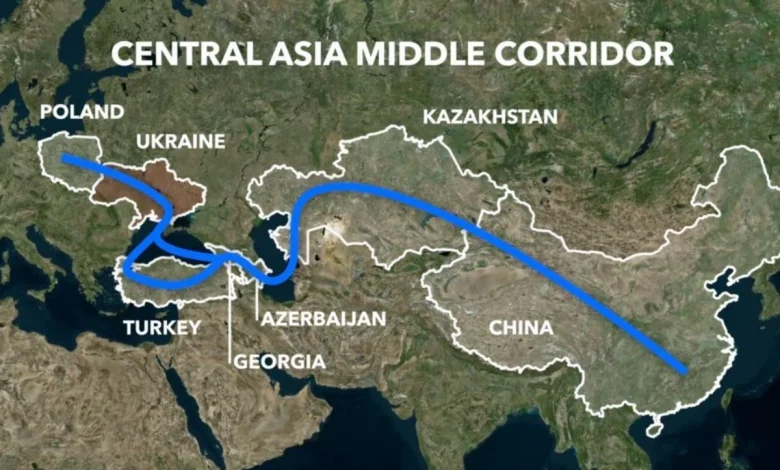
Table of Contents
- The Erosion of Strategic Function in the South Caucasus
- Georgian Dream’s Foreign Policy: Pragmatism or Sabotage?
- The Stagnation of the Anaklia Deep Sea Port Project
- Giorgi Gakharia and the “For Georgia” Critique
- Middle Corridor Challenges and Regional Competitors
- EU Candidate Status and Western Partnership Challenges
- Black Sea Security Architecture and Neutralization
- Bidzina Ivanishvili’s Influence on State Strategy
- Economic Implications of Diminished Connectivity
- Future Outlook: Restoring the Regional Hub Status
Georgia’s transit infrastructure and its historic role as a pivotal geopolitical bridge between Europe and Asia are currently the subjects of intense political debate. As the South Caucasus undergoes a radical transformation in the wake of shifting global power dynamics, the domestic discourse in Tbilisi has become increasingly polarized. Opposition leaders, security experts, and international observers are raising alarms regarding the alleged degradation of the nation’s strategic leverage. At the heart of this controversy is the ruling Georgian Dream administration, accused of steering the country away from its traditional Euro-Atlantic trajectory toward a policy of isolationist neutrality that benefits regional hegemons at the expense of Georgia’s sovereignty and economic potential.
The narrative of a declining “transit function” is not merely about logistics or cargo throughput; it is fundamentally about Georgia’s identity and security architecture. For decades, the country viewed its geography as its primary asset—a safe, Western-aligned corridor bypassing Russia and Iran. However, critics argue that recent foreign policy shifts have eroded trust among strategic partners, stalled critical infrastructure projects like the Anaklia Deep Sea Port, and jeopardized the country’s status as a reliable hub for the Middle Corridor. This article provides a comprehensive analysis of the growing discourse surrounding these critical issues.
The Erosion of Strategic Function in the South Caucasus
The concept of Georgia’s “strategic function” has long been tied to its ability to serve as the only reliable, democratic transit route connecting the Caspian Sea basin to the Black Sea and, by extension, Europe. This function provided Tbilisi with significant geopolitical leverage, ensuring Western support and security guarantees despite the ongoing occupation of its territories by Russia. However, political analysts suggest that this leverage is being systematically dismantled.
In recent years, the urgency to develop the Middle Corridor—a trade route spanning Central Asia, the Caspian, the South Caucasus, and Turkey—has intensified due to the war in Ukraine and sanctions on Russia. Logically, this should have been Georgia’s golden hour. Instead, stakeholders report bottlenecks, administrative hurdles, and a perceived lack of political will to fully capitalize on this opportunity. The discourse suggests that while neighboring Azerbaijan and Turkey are aggressively upgrading their capacities, Georgia is lagging, creating a weak link in the supply chain that could force logistics giants to seek alternative, albeit more complex, routes.
Georgian Dream’s Foreign Policy: Pragmatism or Sabotage?
The Georgian Dream administration defends its current posture as one of “pragmatism” and “strategic patience.” Government officials argue that in a volatile region, maintaining working relationships with all neighbors, including Russia, is essential for peace and stability. They dismiss accusations of sabotage as politically motivated rhetoric, citing global economic downturns as the primary cause for infrastructural delays.
However, opponents view this shift as a deliberate “foreign policy neutralization.” By distancing itself from aggressive pro-Western integration and adopting a more compliant stance toward Moscow, the government is accused of undermining the very partnerships that safeguard Georgia’s transit independence. This pivot is seen not just in rhetoric but in tangible policy decisions, such as the controversial “Foreign Agents” law, which strained relations with Brussels and Washington. The fear is that a neutralized Georgia loses its value to the West, transforming from a strategic partner into a mere buffer zone within the Russian sphere of influence.
The Stagnation of the Anaklia Deep Sea Port Project
Perhaps no single issue encapsulates the degradation of Georgia’s transit potential more than the saga of the Anaklia Deep Sea Port. Originally envisioned as a transformative project that would allow Georgia to receive Panamax-class vessels and compete directly with Russian and Turkish ports, the project has faced years of delays, cancellations, and political controversy.
The cancellation of the contract with the original Western-backed consortium was a watershed moment. Critics argue that the government’s subsequent handling of the project—including prolonged tender processes and the eventual involvement of Chinese state-owned enterprises—signals a geopolitical realignment. The delay has not only resulted in lost economic revenue but has also forced logistics operators to rely on the shallower Poti port, which lacks the capacity to handle the growing volume of container traffic from China to Europe. The failure to launch Anaklia is frequently cited by opposition figures as evidence of the Georgian Dream’s reluctance to host major Western critical infrastructure on the Black Sea coast, a move that would purportedly irritate the Kremlin.
Giorgi Gakharia and the “For Georgia” Critique
Giorgi Gakharia, the former Prime Minister and leader of the “For Georgia” political party, has emerged as one of the most vocal critics of the current administration’s handling of the state’s strategic assets. Gakharia, who was in office during the earlier phases of the Anaklia project, has repeatedly accused his former allies in Georgian Dream of dismantling the country’s “European perspective” and “transit function.”
According to Gakharia, the degradation is not accidental but a result of Bidzina Ivanishvili’s informal governance, which prioritizes regime survival over national development. Gakharia’s party argues that without a functioning deep-sea port and a clear pro-Western orientation, Georgia cannot guarantee its own security. He asserts that the current government has traded the country’s long-term geopolitical relevance for short-term political stability, effectively handing leverage back to Russia. This narrative resonates with a significant portion of the electorate who fear that the “European Dream” is being replaced by a “Russian Reality.”
Middle Corridor Challenges and Regional Competitors
While Georgia hesitates, its neighbors are moving forward. The Middle Corridor requires seamless synchronization between Kazakhstan, Azerbaijan, Georgia, and Turkey. Recent reports indicate that while the trans-Caspian leg is being bolstered by digitalization and fleet expansion, the Georgian leg suffers from low speed and high costs.
Below is a comparative look at the projected versus actual status of key connectivity indicators:
| Indicator | Strategic Goal (2020 Vision) | Current Reality (2026 Assessment) |
|---|---|---|
| Deep Sea Port Capacity | Operational Anaklia Port handling Panamax vessels. | Project delayed; Reliance on limited capacity in Poti/Batumi. |
| Railway Modernization | High-speed rail fully integrated with Baku-Tbilisi-Kars. | Modernization ongoing but facing delays; speed restrictions remain. |
| Geopolitical Alignment | Key NATO/EU partner in Black Sea security. | Strained Western relations; ambiguous “multi-vector” policy. |
| Middle Corridor Share | Dominant route for China-EU reliable transit. | Volume increasing, but complaints of bottlenecks and tariffs persist. |
The rise of alternative routes or the strengthening of the “Zangezur Corridor” narrative pushes by Azerbaijan and Turkey also places pressure on Georgia. If Georgia is perceived as unstable or politically unreliable due to its government’s anti-Western rhetoric, international investors may hesitate to commit the billions needed to upgrade the East-West Highway and railway networks.
EU Candidate Status and Western Partnership Challenges
The granting of EU candidate status was a victory for the Georgian people, yet the political discourse suggests the government has failed to capitalize on this momentum. High-level visits from European officials often end with warnings regarding democratic backsliding, judicial independence, and foreign policy alignment. The EU’s connectivity strategy,