FDA Policy Shift 2026: Warnings on Autism Treatments Removed
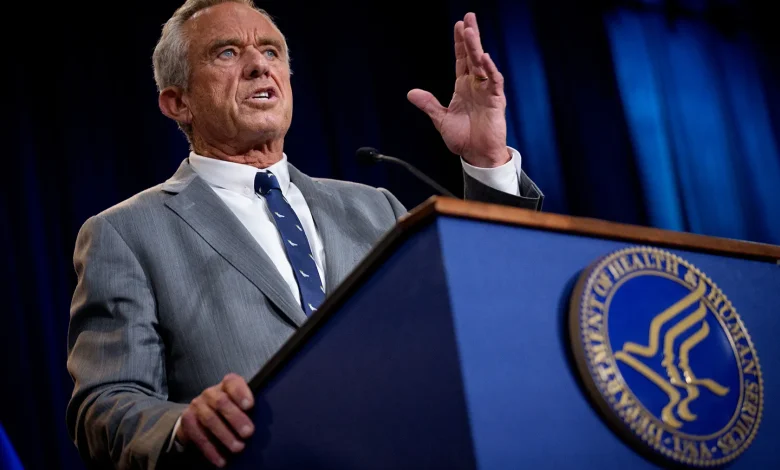
Table of Contents
- FDA Policy Reversal: The 2026 Webpage Removal
- The “Routine Cleanup” vs. Public Health Reality
- Controversial Therapies Now Unchecked
- Outrage Among Autism Advocacy Groups
- Economic Consequences for Families
- The Role of Big Tech in Medical Misinformation
- Scientific Consensus Remains Unchanged
- Future Outlook: A New Era of Deregulation?
FDA regulatory policy shifts on alternative autism treatments have taken a dramatic and controversial turn in February 2026, marking one of the most significant departures from established public health guidance in the agency’s history. In a move that has stunned medical professionals and terrified disability advocates, the Food and Drug Administration (FDA) has quietly removed its long-standing consumer warning pages regarding unproven and potentially dangerous autism "cures," including Miracle Mineral Solution (MMS), chelation therapy, and hyperbaric oxygen therapy. This decision, characterized by the Department of Health and Human Services (HHS) as a "routine cleanup of dated content," signals a profound realignment of federal health priorities under the new HHS leadership, raising urgent questions about consumer protection and patient safety in the United States.
FDA Policy Reversal: The 2026 Webpage Removal
On February 18, 2026, investigative reports confirmed that the FDA had scrubbed a critical webpage titled “Be Aware of Potentially Dangerous Products and Therapies that Claim to Treat Autism.” For over a decade, this resource served as a primary line of defense for parents and caregivers, explicitly warning that products like chlorine dioxide (marketed as MMS) and chemical chelation agents were not only ineffective for treating Autism Spectrum Disorder (ASD) but carried risks of life-threatening side effects, including kidney failure, severe vomiting, and hypotension.
The removal occurred late in 2025 but only came to widespread public attention in early 2026 following inquiries by watchdog groups. The timing coincides with broader administrative changes within the HHS, which has seen a pivot toward what officials describe as "medical freedom" and an openness to alternative modalities previously marginalized by regulatory bodies. While the FDA has historically issued warning letters to companies peddling fraudulent cures, the erasure of consumer-facing warnings suggests a cessation of this enforcement strategy, effectively leaving the marketplace unpoliced regarding these specific claims.
The "Routine Cleanup" vs. Public Health Reality
The official explanation from HHS spokespersons is that the removal was part of a bureaucratic maintenance cycle to archive content that had not been updated since 2019. However, public health experts argue that the age of the content is irrelevant to its validity. The dangers of drinking bleach (MMS) or undergoing unapproved chelation have not diminished over time; if anything, the proliferation of misinformation on social media has made these warnings more necessary than ever.
The Rise of Alternative Medicine in Federal Policy
This deregulatory shift is widely interpreted as a direct result of the influence of HHS Secretary Robert F. Kennedy Jr., who has frequently criticized the FDA’s "aggressive suppression" of alternative treatments. In late 2025, the Secretary promised to end the "war on public health," specifically citing chelation and other non-pharmaceutical interventions as areas deserving of less restriction. This philosophy posits that individuals should have the autonomy to choose treatments without federal interference, even if those treatments lack FDA approval or rigorous clinical trial data supporting their efficacy for a specific condition.
This ideological pivot has also reshaped the Interagency Autism Coordinating Committee (IACC). In January 2026, the committee was reconstituted with several members who have publicly supported the link between vaccines and autism—a theory exhaustively debunked by science—and who advocate for the very treatments the FDA previously warned against. This institutional capture has fundamentally altered the federal government’s stance, moving from a position of protective oversight to one of permissive deregulation.
Controversial Therapies Now Unchecked
With the federal guardrails removed, several controversial treatments are expected to see a resurgence in popularity and availability. The following table outlines the treatments that were previously the subject of FDA warnings and the risks associated with them.
| Treatment Name | Mechanism of Action Claims | Documented Health Risks | Current Regulatory Status (2026) |
|---|---|---|---|
| Miracle Mineral Solution (MMS) | Claims to "detox" autism by killing pathogens; essentially industrial bleach (Chlorine Dioxide). | Severe vomiting, diarrhea, dehydration, acute liver failure, low blood pressure. | Warning Removed; Enforcement paused. |
| Chelation Therapy | Chemical removal of heavy metals based on the debunked theory that metals cause ASD. | Kidney damage, hypocalcemia (potentially fatal), cardiac arrest. | Warning Removed; Promoted by some IACC members. |
| Hyperbaric Oxygen Therapy | Pressurized oxygen to reduce brain inflammation. | Ear/sinus damage, seizures, oxygen toxicity; fire hazard in unapproved chambers. | Warning Removed; unregulated clinic expansion. |
| Raw Camel Milk | Nutritional claims regarding immune system modulation. | High risk of bacterial infections (E. coli, Salmonella, Listeria). | Warning Removed; Sales restrictions relaxed. |
Miracle Mineral Solution (MMS) and Chlorine Dioxide
Perhaps the most dangerous of the newly "destigmatized" treatments is MMS. When mixed with an activator (usually citric acid), the solution becomes chlorine dioxide—a potent bleaching agent used for stripping textiles and treating industrial water. For years, fringe groups have marketed this substance to parents of autistic children, instructing them to administer it orally or via enema to "purge parasites." The FDA had previously received numerous reports of children suffering life-threatening complications. The removal of the warning page eliminates the primary federal document that parents could find when Googling the safety of this product, potentially leading to a spike in poison control center calls.
Chelation Therapy Risks
Chelation therapy involves the administration of chemical agents (like EDTA) to remove heavy metals from the body. While it is a legitimate, FDA-approved treatment for acute lead or mercury poisoning, it has never been approved for autism. The premise that autism is caused by heavy metal toxicity has been rejected by the scientific community. Yet, practitioners in the alternative health sphere charge thousands of dollars for this dangerous procedure. In 2005, a five-year-old autistic boy died from cardiac arrest caused by hypocalcemia during a chelation procedure. The FDA’s silence in 2026 effectively removes the government’s memory of such tragedies, emboldening practitioners to market these services without fear of federal reprisal.
Outrage Among Autism Advocacy Groups
The reaction from the neurodivergent community has been one of intense anger and fear. Organizations like the Autistic Self Advocacy Network (ASAN) have issued blistering statements condemning the HHS’s actions. Zoe Gross, a director at ASAN, told reporters that "people are still being preyed on by these alternative treatments," and that the removal of warnings "can kill people."
Advocates argue that this is not merely a policy shift but an abandonment of the government’s duty to protect vulnerable populations from fraud. By erasing the distinction between evidence-based therapy and dangerous pseudoscience, the FDA is complicating the landscape for parents who are often desperate for answers. The backlash is also evident in the broader medical community, with the American Academy of Pediatrics (AAP) reiterating that their guidelines remain unchanged despite the federal rollback. However, without the FDA’s enforcement arm, professional guidelines lack the legal teeth to stop the sale and distribution of these products.
Economic Consequences for Families
Beyond the physical dangers, the deregulatory shift poses a significant financial threat to families. "Miracle cures" are rarely covered by insurance and are often exorbitantly priced. Families may spend tens of thousands of dollars on hyperbaric chambers, supplements, and chelation rounds, diverting resources from proven support systems like speech therapy or occupational therapy.
This financial strain comes at a time when healthcare costs are already skyrocketing. According to the 2026 Medical Cost Trends Report, inflation in the healthcare sector is projected to hit nearly 10%, squeezing household budgets further. The proliferation of unregulated, cash-only alternative treatments exacerbates this economic burden, effectively creating a shadow healthcare market that siphons wealth from families of disabled children while offering false hope and potential harm in return.
The Role of Big Tech in Medical Misinformation
The removal of the FDA’s warning page has a secondary effect on the digital information ecosystem. Search engine algorithms and AI models often rely on high-authority government domains (like .gov sites) to ground their answers in fact. When the FDA removes a page declaring MMS dangerous, it creates a "data void" that can be filled by misinformation from sellers and conspiracy theorists.
As detailed in recent analyses of Google’s AI-first ecosystem in 2026, the battle against misinformation is heavily dependent on the availability of authoritative sources. With the FDA stepping back, social media platforms and search engines may struggle to automatically flag fraudulent autism cures, as their primary reference point for "health fraud" has been deleted. This digital deregulation amplifies the reach of predatory marketers who use sophisticated algorithms to target vulnerable parents on platforms like TikTok and Instagram.
Scientific Consensus Remains Unchanged
It is crucial to note that while the regulatory policy has shifted, the science has not. No new peer-reviewed studies have emerged in 2025 or 2026 to support the efficacy of bleach, chelation, or raw camel milk for treating autism. The future of care for complex conditions relies on precision medicine and genetic research, not on reviving debunked hazardous chemicals from the early 2000s.
The consensus among the American Medical Association, the CDC (though its autonomy is also under pressure), and global health bodies remains that autism is a neurodevelopmental difference, not a toxic poisoning that needs to be "bleached" out. The dissonance between US federal policy and global scientific consensus is widening, potentially isolating American healthcare standards from the rest of the developed world. While the US moves toward deregulation, the European Medicines Agency continues to strictly enforce bans on these substances.
Future Outlook: A New Era of Deregulation?
The events of February 2026 likely represent only the beginning of a broader deregulatory agenda. With the IACC now staffed by proponents of alternative medicine, we may soon see attempts to divert federal research funding toward these unproven therapies. There is also speculation that the FDA may face pressure to approve certain "nutraceuticals" or relax labeling laws further.
Political analysts suggest this is part of a larger trend of challenging established institutions. Just as debates over subsidies have reshaped the insurance landscape (as seen in the recent bipartisan votes on ACA credits), the battle over FDA authority reflects a deep ideological divide regarding the role of government in personal health decisions. For the autism community, however, this is not an abstract political debate; it is a matter of immediate physical safety. As the regulatory shield evaporates, the burden of protection falls squarely on parents, pediatricians, and advocacy groups to maintain the line against dangerous pseudoscience. The FDA’s official site continues to list approved drugs, but the absence of the warning list leaves a silence that speaks volumes about the new direction of American public health policy.