Energy market volatility spikes amid Middle East talks and Asian caution
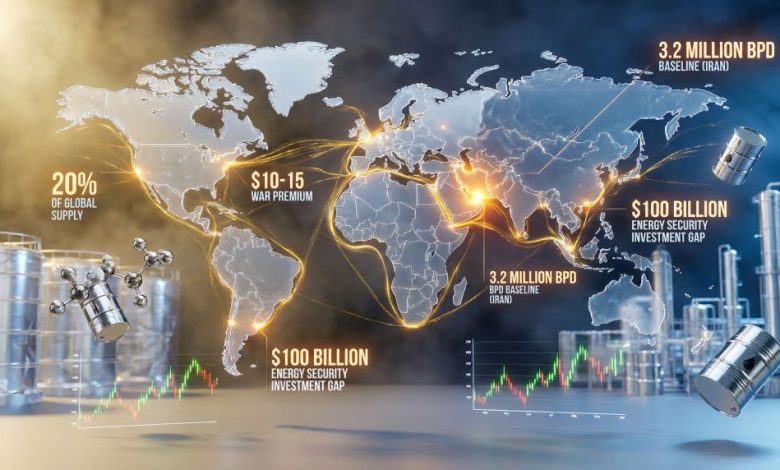
Energy market volatility has returned to the forefront of global financial discourse this week, driven by a complex interplay of high-stakes diplomatic maneuvering in the Middle East and a palpable sense of hesitation across major Asian trading hubs. As of Tuesday, February 17, 2026, traders are grappling with conflicting signals: the potential for a breakthrough in Tehran that could flood the market with supply, contrasted against lingering fears of supply chain disruptions and tepid economic data emerging from the Pacific Rim. This article provides a comprehensive analysis of these diverging forces, examining how geopolitical risk premiums are being repriced and what the current sentiment in Asian equities signals for the broader commodity market trends.
The Catalysts Driving Global Volatility
The current spike in market fluctuation is not attributable to a single event but rather a convergence of structural and event-driven factors. Primary among these is the renewed diplomatic engagement regarding the Iranian nuclear program, often referred to in the context of the JCPOA nuclear deal successor talks. Energy traders are currently pricing in binary outcomes: a successful deal that introduces millions of barrels of oil back into the global supply, or a breakdown in talks that could heighten security risks in the Strait of Hormuz. Simultaneously, Asian index performance has shown a decoupling from Western optimism, with investors in Tokyo, Shanghai, and Hong Kong adopting a defensive posture. This caution is rooting itself in concerns over energy costs and the sustainability of manufacturing recovery in energy-dependent economies.
Middle East Geopolitical Negotiations: A Delicate Balance
Recent diplomatic cables suggest that Tehran diplomatic talks have entered a critical phase. For the energy sector, the implications are profound. The re-imposition or lifting of sanctions acts as a massive lever on global oil supply. Analysts estimate that significant sanctions relief impact could see Iran ramping up exports by anywhere from 1.0 to 1.5 million barrels per day within six months. Such an influx would fundamentally alter the supply-demand balance that OPEC+ has meticulously managed over the last few years.
However, the negotiations are fraught with complexity. Hardliners on both sides of the table are demanding guarantees that extend beyond mere nuclear compliance, touching upon regional influence and ballistic missile programs. For the energy market, this uncertainty translates directly into price swings. When a headline suggests progress, bearish sentiment takes hold as algorithms anticipate a supply glut. Conversely, reports of stalled negotiations or aggressive rhetoric immediately trigger a bullish reversal, as fears of supply constraints resurface. The market is effectively caught in a feedback loop of geopolitical speculation.
Crude Oil Price Dynamics: Brent and WTI Analysis
The impact of these geopolitical maneuvers is most visibly reflected in the divergence between Brent crude futures and the WTI crude oil price. Brent, serving as the international benchmark, has shown higher sensitivity to the Middle East headlines due to its proximity to the region and its dominance in European and Asian pricing formulas. In early trading this week, Brent futures exhibited wide intraday swings, testing resistance levels that haven’t been challenged since the previous quarter.
West Texas Intermediate (WTI), while also affected, is grappling with domestic US inventory data and production rates in the Permian Basin. The spread between Brent and WTI has widened slightly, indicating that the market perceives the risks as primarily international rather than structural to the North American market. Traders are closely watching the term structure of the futures curve; a shift into steep backwardation would suggest that the market fears immediate shortages, whereas the current mild backwardation points to a tense but adequately supplied physical market.
The Return of the Geopolitical Risk Premium
For several months, the so-called geopolitical risk premium had largely evaporated from oil prices as relative calm prevailed. That complacency has now evaporated. Institutional investors are rapidly reassessing their exposure to energy assets, factoring in a probability of disruption that was previously considered negligible. This premium is difficult to quantify precisely, but modeling suggests that current prices include a buffer of approximately $4 to $6 per barrel purely attributable to the risk of conflict or sanctions enforcement escalation.
This risk premium acts as a floor for prices. Even if fundamental data regarding inventories and consumption suggests a surplus, prices remain elevated because traders are unwilling to go short in a volatile geopolitical environment. This psychological component of pricing is driving stock market volatility in related sectors, particularly for energy majors and oilfield service companies whose revenues are leveraged to the price of crude.
Asian Equity Markets: Interpreting the Cautious Sentiment
While the energy markets oscillate based on headlines from the Middle East, Asian index performance tells a story of economic prudence. Major indices such as the Nikkei 225 and the Hang Seng have started the week with subdued volumes and sideways movement. This cautious Asian equity trading sentiment is inextricably linked to the region’s status as a net importer of energy. Rising or volatile oil prices act as a tax on consumption for economies like Japan, South Korea, China, and India.
Investors in these markets are currently risk-averse, fearing that sustained energy market volatility will erode corporate margins and stoke inflationary pressures just as central banks are attempting to stabilize monetary policy. The manufacturing sectors in China and Vietnam, which rely heavily on stable commodity inputs, are particularly sensitive. Purchasing Managers’ Index (PMI) data released recently hints at a wait-and-see approach from factory owners who are reluctant to build aggressive inventory amidst such price uncertainty.
Global Energy Supply Chain Vulnerabilities
The energy supply chain is currently under stress not just from price volatility but from logistical anxieties. The potential for disruption in the Strait of Hormuz—a chokepoint through which a fifth of the world’s oil passes—remains the nightmare scenario for logistics planners. Insurance rates for tankers operating in the Persian Gulf have begun to tick upward, adding another layer of cost to the delivered price of crude.
Furthermore, the interplay between natural gas markets and oil markets cannot be ignored. Volatility in crude often bleeds into LNG (Liquefied Natural Gas) pricing contracts, many of which are indexed to oil. For Asian utilities, this creates a compounding challenge: managing electricity generation costs while navigating a volatile procurement landscape. This fragility in the supply chain underscores why the Tehran talks are viewed not just as a political event, but as a critical economic pivot point for the global economy.
Data Analysis: Commodity vs. Equity Performance
To understand the correlation between these geopolitical events and market performance, it is helpful to analyze the comparative movements of key energy benchmarks against major Asian equity indices over the past trading week. The table below illustrates the inverse correlation observed during peak volatility sessions.
| Asset Class / Index | Weekly Change (%) | Volatility (ATR) | Primary Driver |
|---|---|---|---|
| Brent Crude Futures | +3.4% | High | Geopolitical Negotiations |
| WTI Crude Oil | +2.8% | Moderate-High | Inventory & Export Demand |
| Nikkei 225 (Japan) | -1.2% | Low | Energy Cost Concerns |
| Shanghai Composite | -0.5% | Low | Manufacturing Sentiment |
| Energy Sector ETF (XLE) | +2.1% | Moderate | Rising Commodity Prices |
The data clearly indicates that while commodity markets are reacting aggressively to the upside, Asian equities are pricing in the negative externalities of these price hikes. The high Average True Range (ATR) on Brent futures confirms the presence of algorithmic trading reacting to news flow, whereas the low volatility but negative bias in the Nikkei suggests a slow, deliberate withdrawal of liquidity by risk managers.
Broader Economic Implications and Inflationary Pressures
The persistence of commodity market trends favoring higher prices poses a renewed threat to global inflation targets. Central banks, having spent the last two years fighting to bring inflation down to the 2% target, view the current energy volatility with alarm. If the Tehran talks collapse and the geopolitical risk premium becomes a permanent fixture of the market, the cost of goods sold (COGS) for virtually every industry will rise.
This is particularly problematic for nations with weak currencies relative to the dollar. Since oil is priced in USD, a strengthening dollar combined with rising oil prices creates a “double whammy” for emerging markets in Asia. This dynamic explains the cautious trading sentiment; investors are wary of currency depreciation forcing central banks in Asia to hike interest rates, thereby choking off economic growth. The interplay between foreign exchange markets and energy derivatives is currently one of the most active areas of institutional speculation.
For more insights into global energy trends, reliable data can often be found through major agencies such as the International Energy Agency, which tracks these supply disruptions closely.
Future Outlook: Scenarios for the Next Quarter
Looking ahead, market participants must prepare for several distinct scenarios. The “Bull Case” for oil (and consequently the “Bear Case” for Asian consumer equities) involves a breakdown in negotiations and a subsequent tightening of sanctions enforcement. In this scenario, Brent could test new highs, forcing Asian governments to subsidize fuel or face demand destruction. The stock market volatility index (VIX) would likely spike as uncertainty permeates the broader financial system.
Conversely, the “Bear Case” for oil involves a diplomatic breakthrough where sanctions relief impact is immediate and substantial. This would likely trigger a sharp sell-off in crude futures, potentially dropping prices by 10-15% in a matter of weeks. While this would be punishing for energy producers, it would act as a massive stimulus for Asian economies, likely sparking a rally in indices like the Nikkei and the KOSPI. Currently, the options market suggests that traders are hedging their bets, with significant open interest in both out-of-the-money calls and puts, reflecting a complete lack of consensus on the outcome.
In conclusion, the energy markets are currently tethered to the whims of geopolitical negotiators. Until clarity emerges from the Middle East, the cautious sentiment in Asia is likely to persist, serving as a barometer for the global appetite for risk. Investors are advised to monitor the news flow closely, as the shift from negotiation to implementation—or breakdown—will be the defining market event of the first quarter of 2026.