ChatGPT in 2026: GPT-5 Architecture & Agentic Workflows
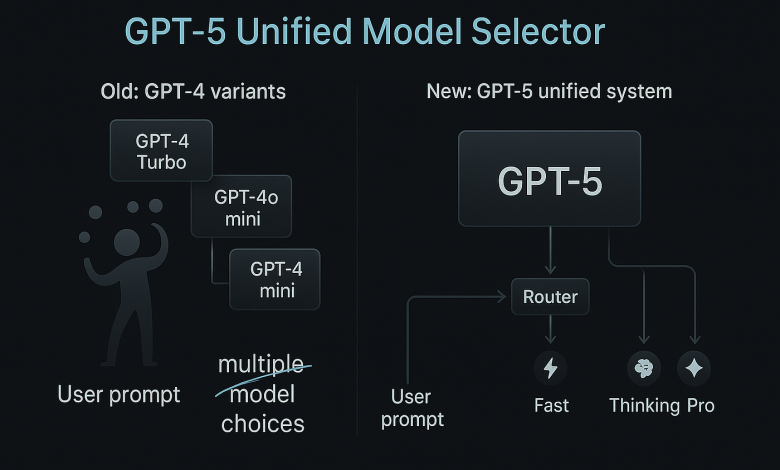
Table of Contents
- The State of AI in 2026: From Chat to Action
- GPT-5 Architecture: The “Research Intern” Leap
- Agentic Workflows & The Model Context Protocol
- Enterprise Impact: The Shift to “Human Supervisors”
- The Infrastructure War: 1GW Clusters & Sovereign Clouds
- Security Challenges: Agent Hijacking & Identity
- Comparative Analysis: GPT-5 vs. Competitors
- Future Outlook: Towards 2028 and AGI
ChatGPT in 2026 has fundamentally transcended its origins as a conversational chatbot to become the central operating system of the modern enterprise. As of February 18, 2026, the artificial intelligence landscape has shifted decisively from generative content creation to agentic execution. The release of OpenAI’s GPT-5 suite—comprising the developer-focused GPT-5 and the enterprise-grade GPT-5.2—has marked the end of the “prompt engineering” era and the beginning of the “objective engineering” epoch. Organizations are no longer asking AI to write emails; they are authorizing AI agents to negotiate contracts, manage supply chains, and execute complex coding workflows with minimal human oversight.
The State of AI in 2026: From Chat to Action
The transformation witnessed over the last 12 months has been staggering. In 2024 and 2025, the industry grappled with hallucinations and the limitations of context windows. Today, in early 2026, those challenges have largely been mitigated by the adoption of System 2 reasoning as a default setting in flagship models. ChatGPT in 2026 is not just a text predictor; it is a reasoning engine capable of planning, self-correction, and tool use.
The defining characteristic of this year is the widespread deployment of “AI Research Interns”—autonomous agents capable of performing the work equivalent to a junior human researcher. These agents do not merely retrieve information; they synthesize data from disparate sources, formulate hypotheses, test them against simulated environments, and present actionable conclusions. This shift has forced a reimagining of digital labor, where the human role evolves from creator to supervisor.
GPT-5 Architecture: The “Research Intern” Leap
The architecture underpinning ChatGPT in 2026 represents a departure from the monolithic models of the past. OpenAI has transitioned to a modular Mixture-of-Experts (MoE) architecture that scales dynamically based on task complexity. GPT-5 is not a single model but a federated constellation of specialized sub-models orchestrated by a central reasoning core.
The Rise of “System 2” Thinking
Unlike GPT-4, which processed tokens sequentially and reactively, GPT-5 employs an inherent “pause-and-think” mechanism for complex queries. This allows the model to traverse a decision tree, simulate potential outcomes, and verify facts against a trusted knowledge graph before generating a response. This architecture has reduced hallucination rates to below 0.5% for enterprise-grade tasks, making it viable for high-stakes industries like finance and healthcare.
Infinite Effective Context
While the raw context window has stabilized around 10 million tokens, the effective context is virtually infinite thanks to advanced Retrieval-Augmented Generation (RAG) embedded directly into the model’s neural weights. ChatGPT in 2026 can instantaneously recall every interaction a user has ever had, across all connected devices, creating a seamless “digital memory” that anticipates needs before they are explicitly stated. This mirrors the capabilities seen in Gmail’s 2026 AI integration, where communication agents manage inboxes autonomously.
Agentic Workflows & The Model Context Protocol
The buzzword of 2026 is “Agentic AI.” This refers to systems that can pursue abstract goals over extended periods. ChatGPT in 2026 utilizes the newly standardized Model Context Protocol (MCP), a universal API that allows agents to interface with external software, databases, and even physical hardware.
For instance, a user can now issue a command like: “Optimize my supply chain for the impending storm in the Atlantic.” The ChatGPT agent does not just offer advice; it connects to logistics ERPs, reroutes shipments, updates inventory databases, and notifies vendors—all autonomously. This level of execution requires a high degree of trust and robust guardrails, which are now enforced through “Bounded Autonomy” frameworks.
The integration of multimodal capabilities has also accelerated. As detailed in our analysis of YouTube’s 2026 ecosystem, agents can now watch, analyze, and even generate video content as part of a research workflow, seamlessly blending text, audio, and visual data streams.
Enterprise Impact: The Shift to “Human Supervisors”
The economic impact of ChatGPT in 2026 is profound. Gartner reports that 40% of enterprise applications now embed task-specific AI agents. This has led to the “Agents as a Service” (AaaS) business model, disrupting traditional SaaS pricing. Companies no longer pay for seats; they pay for outcomes.
In the corporate hierarchy, a new role has emerged: the AI Orchestrator. Employees are increasingly acting as managers of agent fleets, defining objectives and reviewing outputs rather than performing the work themselves. This shift is particularly visible in the tech sector, where coding agents have taken over 70% of routine software maintenance, allowing human engineers to focus on architecture and system design.
Furthermore, the convergence of AI and finance is becoming a reality. Agents are now authorized to make micro-payments using blockchain rails to access gated data or hire other specialized agents. This machine-to-machine economy is a key driver of the trends discussed in the 2026 Institutional RWA Tokenization report.
The Infrastructure War: 1GW Clusters & Sovereign Clouds
The capabilities of ChatGPT in 2026 are powered by an infrastructure build-out of unprecedented scale. OpenAI, in partnership with Microsoft, has brought its first 1-gigawatt compute cluster online. These “AI Factories” are essential for training the next generation of models and serving the inference needs of billions of active agents.
However, this centralization has sparked a counter-movement toward Sovereign AI. Nations and large multinational corporations are increasingly deploying “local” instances of GPT-5.2 to ensure data privacy and compliance with regional regulations. This fragmentation is a critical battleground, as explored in our coverage of the SpaceX and xAI merger, which aims to bypass terrestrial bottlenecks via orbital compute clusters.
Security Challenges: Agent Hijacking & Identity
With great power comes great vulnerability. The primary security threat in 2026 is “Agent Hijacking,” where malicious actors inject prompt injections into data streams (such as emails or websites) that are consumed by autonomous agents. If an agent with financial authority reads a compromised document, it could be tricked into transferring funds or exfiltrating sensitive data.
To combat this, OpenAI has introduced Cryptographic Identity Verification for agents. Every action taken by a ChatGPT agent is signed with a unique digital watermark, creating an immutable audit trail. This is crucial for maintaining trust in a world where competitors like Meta’s Andromeda are also deploying millions of autonomous entities.
Comparative Analysis: GPT-5 vs. Competitors
The following table illustrates how ChatGPT in 2026 compares to its predecessor and current market rivals.
| Feature | GPT-4o (2024) | GPT-5 (2026) | Claude 4.5 (Anthropic) |
|---|---|---|---|
| Primary Mode | Chat / Generation | Agentic Execution | Multi-Agent Orchestration |
| Reasoning | Reactive | System 2 (Default) | Constitutional AI |
| Context Window | 128k Tokens | 10M+ (Infinite RAG) | 5M Tokens |
| Autonomy Level | Human-in-the-loop | Bounded Autonomy | Supervised Teams |
| Enterprise Adoption | Experimental | Core Infrastructure | Research / Legal Focus |
Future Outlook: Towards 2028 and AGI
As we look beyond 2026, the roadmap is clear. OpenAI has publicly stated its goal to achieve a “fully automated AI researcher” by 2028. This would mark the transition from Agentic AI to early-stage Artificial General Intelligence (AGI). The focus for the next two years will be on reliability at scale—ensuring that agents can operate for weeks or months without degradation or deviation from their objectives.
For businesses, the message is urgent: the experimentation phase is over. Organizations that have not integrated agentic workflows into their core operations by the end of 2026 risk becoming obsolete. As detailed in the comprehensive 2026 strategic analysis, the winners of this decade will be those who successfully transition from managing people to orchestrating intelligence.
For more on the broader implications of AI in 2026, refer to trusted industry sources such as Wired for ongoing coverage of the digital labor revolution.