AI Impact Summit 2026: Global Leaders Sign Singapore Accord
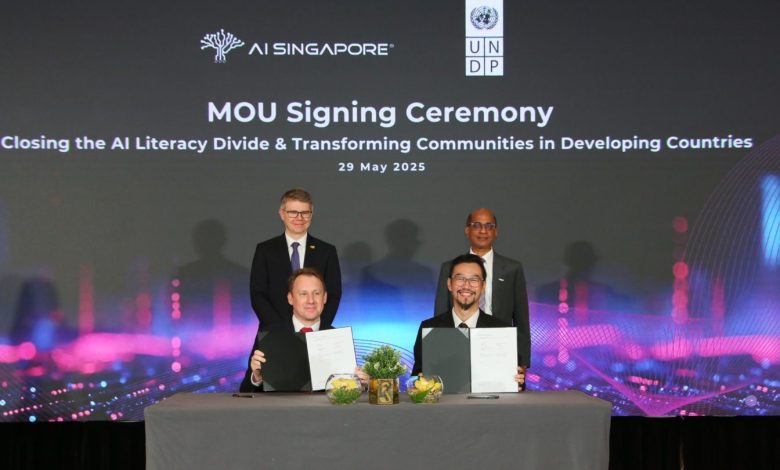
AI Impact Summit 2026 has officially concluded in Singapore, marking a watershed moment in the history of human-technology relations. As delegates from 140 nations, including the leaders of the G20 and executives from the world’s most powerful technology firms, depart the Sands Expo and Convention Centre, the mood is one of cautious resolve. The three-day summit, which ran from February 12 to February 14, was not merely a trade show or a showcase of futuristic gadgets; it was a crisis management assembly designed to address the “Agentic Shift”—the rapid transition of Artificial Intelligence from passive content generators to autonomous agents capable of executing complex labor without human oversight.
The resulting framework, dubbed the “Singapore Accord,” establishes the first enforceable global protocols for the deployment of Autonomous Artificial Agents (AAAs), mandates transparency in algorithmic energy consumption, and lays the groundwork for a Universal Basic Compute (UBC) program. As the world stands on the precipice of the “Fourth Industrial Revolution’s Second Phase,” the decisions made here will define the economic and social fabric of the next decade. The summit addressed the colliding realities of exponential technological capability and finite physical resources, specifically the energy grid and the human labor market.
The Singapore Accord: A New Digital Constitution
The centerpiece of the AI Impact Summit 2026 is the Singapore Accord, a binding treaty signed by the US, China, the EU, and India, among others. Unlike previous voluntary safety commitments, this accord carries the weight of international trade law. The key provisions focus on “liability and traceability.” In a world where AI agents can negotiate contracts, move capital, and write code, the question of “who is responsible?” had become legally murky. The Accord establishes that the deployer of an autonomous agent retains full strict liability for its actions, a move that is expected to cool the overheating “wild west” of autonomous financial trading bots.
Furthermore, the Accord mandates that all high-level agents must carry a cryptographically secure “Digital DNA” signature, allowing regulators to trace any rogue action back to its source model and operator. This provision was hotly contested by open-source advocates but ultimately passed due to security concerns regarding the proliferation of deep-fake phishing agents.
From Generative to Agentic: The Workforce Shift
The primary technological theme of the summit was the undeniable shift from Generative AI (chatbots that write text) to Agentic AI (systems that perform work). In 2024 and 2025, the world marveled at models that could write poetry. By early 2026, the focus has entirely shifted to models that can manage supply chains, debug enterprise software stacks, and handle end-to-end customer service resolution without human intervention. This evolution is thoroughly documented in our analysis of ChatGPT in 2026 and the era of agentic AI, which highlights how OpenAI’s “Operator” models have begun to replace entry-level cognitive tasks.
The economic implications are staggering. The International Labor Organization (ILO) presented data at the summit suggesting that Agentic AI could displace 15% of global white-collar administrative roles by the end of the year. However, tech leaders argued that this is an efficiency boom, not a job apocalypse. They point to the rise of “Agent Orchestrators”—humans who manage fleets of AI workers—as the new dominant career path. The friction between these two viewpoints dominated the plenary sessions, with labor unions demanding “automation taxes” to fund retraining programs.
The DeepSeek Shock: Efficiency Over Scale
A specter haunted the hallways of the summit: the “DeepSeek Shock.” The Chinese AI lab’s release of DeepSeek-V4 in early February 2026 fundamentally altered the trajectory of AI development. By achieving performance parity with Western frontier models at a fraction of the training cost and energy usage, DeepSeek proved that the “Scale Era” (simply adding more GPUs) is yielding to the “Architecture Era.” This has massive geopolitical implications, as it suggests that US chip sanctions may be less effective than previously thought if software efficiency can outpace hardware restrictions.
Delegates discussed how this efficiency allows for powerful AI to run on consumer-grade hardware, decentralizing power away from the massive hyperscalers. For a detailed breakdown of this architectural revolution, readers should consult our report on DeepSeek and the rise of open reasoning models, which explains how they managed to decouple intelligence from massive compute costs. This democratization poses a regulatory nightmare, as the Singapore Accord’s tracking mechanisms are harder to enforce on decentralized, open-weight models running on local devices.
Energy Crisis: Nuclear Partnerships and Power Caps
Perhaps the most tangible constraint discussed at the AI Impact Summit 2026 was energy. The voracious appetite of data centers has begun to destabilize national power grids. In 2026, AI training and inference are projected to consume over 4% of the world’s total electricity supply, a figure that has doubled in just two years. The summit saw the announcement of three major “Nuclear-Compute Partnerships,” where tech giants have directly funded the construction of Small Modular Reactors (SMRs) to power their Gigawatt-class clusters off-grid.
| Metric | 2024 Status | 2026 Summit Report | YoY Change |
|---|---|---|---|
| Global Data Center Energy | 460 TWh | 1,050 TWh (Est.) | +128% |
| Avg. Cost per 1M Tokens | $10.00 (GPT-4) | $0.28 (DeepSeek V4/GPT-5) | -97% |
| Agentic Capabilities | Experimental (AutoGPT) | Enterprise Standard (Agentic Workflow) | Mass Adoption |
| Regulatory Model | Voluntary Guidelines | Binding Liability (Singapore Accord) | Enforcement |
| Primary Constraint | GPU Availability | Power Availability | Shift to Energy |
The “Green Compute Pledge” signed at the summit sets a cap on carbon emissions for training runs, forcing companies to seek renewable or nuclear solutions. The International Energy Agency (IEA) warned that without these caps, AI growth would be mathematically impossible by 2028. For further context on the global energy landscape, the International Energy Agency’s 2026 Electricity Report provides crucial data on how data center loads are reshaping grid planning.
Universal Basic Compute: Redefining Social Welfare
One of the most radical concepts to graduate from fringe theory to serious policy at the summit was “Universal Basic Compute” (UBC). Unlike Universal Basic Income (UBI), which distributes cash, UBC proposes distributing a guaranteed quota of cloud processing power to every citizen. The logic is that in a digital economy where compute is the primary factor of production, access to it is a fundamental right. Proponents argue that giving citizens access to their own sovereign AI agents empowers them to compete economically, rather than just surviving on handouts.
Sam Altman and other tech luminaries endorsed pilot programs for UBC, suggesting that “compute wallets” could become as common as bank accounts. This aligns with the broader trend of democratizing access to the tools of creation, ensuring that the benefits of the AI revolution are not solely concentrated in the hands of Silicon Valley and Shenzhen.
Corporate Battlegrounds: Google, Amazon, and Meta
While politicians signed treaties, the corporate wars raged in the exhibition halls. The strategy for 2026 has diverged significantly among the “Magnificent Seven.” Google has doubled down on its ecosystem integration, embedding its Gemini Ultra 2.0 agents deep into the Android OS and Workspace, effectively creating an ambient intelligence layer that anticipates user needs before they are vocalized. This “ecosystem lock-in” is the subject of intense antitrust scrutiny, as detailed in our coverage of Google’s AI-first ecosystem and antitrust battles.
Meanwhile, Amazon has taken a strictly pragmatic approach, dominating the B2B layer of the Agentic Economy. Their “Olympus” model is less about creative writing and more about logistical perfection, controlling millions of autonomous purchasing agents that now drive global commerce. Their strategy is fully explored in our report on Amazon’s dominance in the agentic AI space. Conversely, Meta has continued its “scorched earth” open-source strategy, releasing Llama 5 with capabilities that rival closed models, aiming to commoditize the intelligence layer to drive users toward their social platforms, a tactic analyzed in our Facebook 2026 AI report.
Sovereign AI: National Security Imperatives
A critical outcome of the AI Impact Summit 2026 is the solidification of “Sovereign AI” as a national security priority. Nations like France, Japan, and the UAE announced massive state-funded clusters, declaring that reliance on foreign AI models for critical infrastructure is no longer acceptable. The “Digital Sovereignty” working group at the summit produced a framework for how nations can build indigenous models that respect local languages, cultures, and laws, effectively Balkanizing the internet into distinct “AI zones.”
This fragmentation challenges the vision of a unified global internet but is seen as necessary for cultural preservation. For instance, India’s “BharatGPT” initiative was showcased as a model for how the Global South can leapfrog development stages by building AI that speaks 22 local languages and understands local agricultural contexts.
Future Outlook: The Road to 2027
As the AI Impact Summit 2026 closes, the path forward is fraught with both peril and promise. The Singapore Accord provides a fragile guardrail for a technology that is evolving faster than the ink can dry on the page. The immediate future will see a race to implement the mandatory “Digital DNA” standards and a scramble to secure clean energy for the next generation of 100-Gigawatt data centers.
The consensus is that 2026 is the year AI gets “real”—moving from the novelty of chatbots to the gritty, high-stakes reality of autonomous agents managing our money, our power grids, and our legal systems. The leaders leaving Singapore know that the decisions made this week will likely determine whether this transition leads to a golden age of abundance or a fragmented world of digital inequality.