Academic Misrepresentation: The Galgotias Unitree Robot Scandal
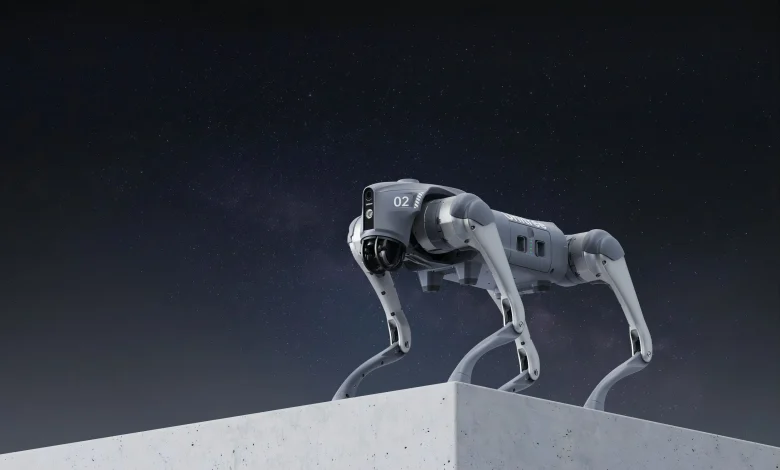
Table of Contents
- The Academic Misrepresentation Scandal Unfolds
- Orion vs. Unitree: The Technical Forensics
- Galgotias’ Defense and Government Action
- A History of Rebranding: The Lovely Professional University Precedent
- Social Media’s Role in Exposing Academic Fraud
- Data Analysis: Claimed Innovation vs. Reality
- Ethical Implications for ‘Make in India’
- The Future of Research Integrity in Indian Universities
Academic misrepresentation has emerged as a critical threat to the credibility of India’s burgeoning educational and technological sectors. In a startling incident that has captivated the nation, Galgotias University was unceremoniously removed from the prestigious India AI Impact Summit 2026 in New Delhi after being accused of displaying a rebranded Chinese robot as an indigenous innovation. The controversy, which unfolded on February 18, 2026, centers around a quadruped robot named "Orion," which the university claimed was developed by its Centre of Excellence under a massive ₹350 crore investment. However, eagle-eyed technology enthusiasts and netizens quickly identified the machine not as a novel creation, but as the Unitree Go2, a commercially available robot from the Chinese firm Unitree Robotics.
This scandal has reignited fierce debates regarding academic plagiarism, the pressure to demonstrate innovation, and the ethics of "sticker engineering" in Indian higher education. As the government pushes for Atmanirbhar Bharat (Self-Reliant India), incidents where institutions rebrand imported technology as "Made in India" undermine genuine research efforts and public trust.
The Academic Misrepresentation Scandal Unfolds
The sequence of events began innocuously enough at the Bharat Mandapam, where the Ministry of Electronics and Information Technology (MeitY) was hosting the global summit. Galgotias University had set up a prominent stall to showcase its technological advancements. A video featuring Professor Neha Singh went viral, in which she introduced "Orion" as a surveillance and monitoring robot "developed by the Centre of Excellence at Galgotias University." She elaborated on its capabilities, including moonwalking and 360-degree surveillance, implying that the hardware and software were the fruits of the university’s substantial R&D budget.
The footage, intended to bolster the university’s reputation, instead became its undoing. Within hours, the clip circulated on Reddit and X (formerly Twitter), where the tech community dissected the robot’s visual markers. The consensus was immediate: "Orion" was a Unitree Go2, a mass-produced quadruped robot available for approximately $1,600 to $2,800 (₹1.3 to ₹2.3 Lakhs). The discrepancy between the university’s claims of a multi-crore indigenous development and the reality of an off-the-shelf Chinese import sparked a firestorm of criticism labeled as educational fraud allegations.
Orion vs. Unitree: The Technical Forensics
To understand the depth of this academic misrepresentation, one must look at the hardware. The Unitree Go2 is a distinct piece of engineering. It features a unique 4D LiDAR sensor placed near the "head," a specific joint articulation style, and a recognizable battery compartment. The "Orion" robot displayed by Galgotias possessed every single one of these trademark design elements. Even the gait analysis—the way the robot walked and balanced itself—matched the Unitree proprietary control algorithms perfectly.
Critics pointed out that genuine robotics research involves visible iterations. A university building a quadruped from scratch would typically have prototypes showing exposed wiring, custom-machined aluminum or 3D-printed parts, and a raw, industrial aesthetic. The "Orion" was polished, with injection-molded plastic casings identical to Unitree’s factory finish. The only modification appeared to be the application of university stickers, a practice derisively known as "sticker engineering."
Galgotias’ Defense and Government Action
The fallout was swift. The Ministry of Electronics and IT, aiming to preserve the integrity of the summit, ordered Galgotias University to vacate their stall immediately. Reports indicate that power to their pavilion was cut to prevent further display of the misleading exhibit. IT Secretary S. Krishnan issued a stern statement, emphasizing that the government would not tolerate products misrepresented as original creations, as it dilutes the brand of genuine Indian innovation.
In response to the backlash, Galgotias University issued a clarification, attributing the incident to a "miscommunication" and "ill-informed staff." They stated that there was no institutional intent to misrepresent the robot and that the presenter, in her enthusiasm, gave factually incorrect information. The university claimed the robot was merely an exhibit to demonstrate the tools available to their students, rather than a product of their own manufacturing. However, this defense did little to quell the social media accountability campaign, as earlier press materials had heavily implied indigenous development.
A History of Rebranding: The Lovely Professional University Precedent
This incident is not an isolated case in the Indian academic landscape. It closely echoes the Lovely Professional University controversy from previous years, where similar accusations of tech rebranding surfaced. In that instance, a "Hexapod" robot claimed by students and faculty as a novel invention was identified by internet sleuths as a standard kit available on enthusiast electronics sites.
The pattern is concerning. Private universities, in a bid to attract students and boost their rankings (such as NIRF), are under immense pressure to showcase cutting-edge research. This pressure creates an environment ripe for academic misrepresentation, where purchasing a complex piece of foreign technology and writing a layer of code on top of it is presented as building the technology from the ground up. While using a Unitree robot for research is a standard and acceptable practice, claiming to have invented the robot itself is a violation of research ethics.
For a deeper understanding of how these claims impact India’s global standing, one can look at the broader economic context. The push for genuine manufacturing is central to recent international agreements, such as the India-US trade deal, which emphasizes intellectual property rights and authentic technological exchange.
Social Media’s Role in Exposing Academic Fraud
The role of digital platforms in this exposé cannot be overstated. In 2026, the trust economy relies heavily on decentralized verification. Just as we see in the state of digital news, where audiences demand transparency, the academic sector is now subject to the same scrutiny. Subreddits dedicated to engineering and robotics have become unofficial watchdogs, capable of identifying components and sourcing original manufacturers within minutes of a press release.
Comedians and influencers also joined the fray. Notable figures like Atul Khatri and Vir Das satirized the event, with jokes about "adopting" the abandoned robot. This cultural mockery serves a serious function: it shames institutions into compliance more effectively than regulatory bodies often can. The "Made in India vs. Assembled in India" debate is no longer just a policy discussion; it is a meme-fueled public trial.
Data Analysis: Claimed Innovation vs. Reality
To clarify the extent of the rebranding, the following table compares the claims made regarding the "Orion" robot against the known specifications of the Unitree Go2.
| Feature | Galgotias "Orion" Claims | Unitree Go2 (Reality) |
|---|---|---|
| Origin | Indigenous (Centre of Excellence) | Unitree Robotics (Hangzhou, China) |
| Development Cost | Part of ₹350 Crore Investment | Retail Price: ~$1,600 – $2,800 USD |
| Key Capabilities | Moonwalking, Surveillance, "All shapes & sizes" | Standard proprietary gait algorithms, 4D LiDAR |
| Sensor Tech | In-house developed sensors | Unitree self-developed 4D LiDAR L1 |
| Status | University Innovation | Mass-market Consumer Product |
Ethical Implications for ‘Make in India’
The Unitree Robotics scandal strikes a blow to the spirit of the ‘Make in India’ initiative. When universities engage in rebranded technology schemes, they divert attention and resources away from students who are genuinely trying to innovate with limited budgets. True innovation is slow, difficult, and often visually unimpressive in its early stages. By presenting a finished, high-gloss foreign product as student work, universities set an unrealistic standard that honest innovation cannot compete with.
Furthermore, this raises questions about intellectual property in academia. Did the university use the open-source SDK provided by Unitree to add value, or did they simply remote-control the device? If it was the former, the correct academic presentation would be "Algorithm development using a Unitree platform." The claim of hardware development is where the ethical breach lies. This distinction is crucial in the era of AI, where the software layer—like the "AI operating layers" discussed in our ChatGPT Prism report—is often where the real value is added, but the physical robot grabs the headlines.
The Future of Research Integrity in Indian Universities
The Galgotias incident must serve as a watershed moment for Indian academia. University PR scandals of this magnitude damage the reputation of Indian engineers globally. To restore trust, universities must move away from vanity projects and focus on transparent, documented research. Regulatory bodies like the UGC and AICTE need to implement stricter audits for "Centres of Excellence" to ensure that the funding is used for actual R&D, not just for procuring expensive toys for photo ops.
As we look toward a future dominated by AI and robotics, the integrity of the creators is as important as the capability of the machines. Whether it is a massive tech giant betting trillions on data centers (read more here) or a student lab building a simple rover, the principles of honesty and attribution remain the bedrock of science. The "Orion" robot may have been capable of moonwalking, but it could not sidestep the truth.
For more on academic integrity and technology standards, refer to external resources on scientific misconduct and retraction data.