Christy Carlson Romano Reveals Positive Cancer Screening Results: Star Fights for Answers
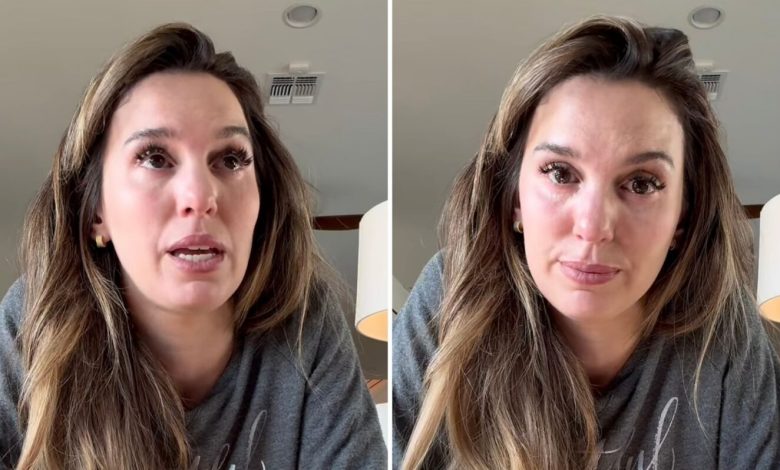
Table of Contents
- Breaking: The Emotional Revelation
- Decoding the Results: What a Positive Screening Means
- Family Legacy: The Weight of Genetic History
- The James Van Der Beek Connection: A Community in Grief
- Fighting the System: The Battle for a PET Scan
- Comparative Analysis of Cancer Screening Methods
- Navigating Scanxiety: The Mental Toll of Waiting
- A Call to Action: Prioritizing Preventative Health
- Hollywood and Fan Support for the Disney Alum
Christy Carlson Romano has sent shockwaves through the entertainment world and the wellness community alike by sharing a deeply personal and emotional health update. On Tuesday, February 17, 2026, the celebrated actress and podcast host revealed that she received a "positive" result from a recent comprehensive cancer screening. This revelation has sparked an immediate global conversation about the vital importance of early detection, the complexities of genetic risk factors, and the often-daunting obstacles patients face when navigating the healthcare insurance system.
As a beloved figure known for her iconic roles as Ren Stevens in Even Stevens and the voice of Kim Possible, Romano has spent decades in the public eye. However, her latest role is perhaps her most vulnerable yet: a vocal advocate for preventative medicine amidst her own terrifying uncertainty. In a tearful video posted to Instagram, Romano detailed the stark contrast between her results and those of her husband, Brendan Rooney, while opening up about the heavy family history that compelled her to get tested in the first place.
Breaking: The Emotional Revelation
The news broke late Tuesday when Romano uploaded a raw, unfiltered video addressing her millions of followers. Visibly shaken, she explained that she and her husband had decided to undergo advanced cancer screenings as a precautionary measure. While Rooney’s results returned completely negative, offering a moment of relief, Romano’s outcome was drastically different.
"Mine did not come back negative," she stated, fighting back tears. "So basically what that means is, I may have stageable cancer." The phrasing here is critical; a positive screening is not a final diagnosis of a specific stage, but it indicates the presence of markers or anomalies that require immediate, high-level investigation—specifically a PET scan—to determine the location, nature, and severity of the disease.
This update comes at a particularly vulnerable time for the 41-year-old star. She referenced being "about 367 days" past a traumatic facial injury she sustained in February 2025 during a clay pigeon shooting accident. To face a potential cancer diagnosis just as she was recovering physically and emotionally from that event highlights the relentless nature of her recent health journey. Currently filming a project in Florida, Romano admitted she was in "disbelief" upon receiving the news, initially trying to bury herself in her work before the gravity of the situation set in.
Decoding the Results: What a Positive Screening Means
For many fans, the terminology used in advanced screenings can be confusing. It is essential to understand what a "positive" result implies in this context. Modern preventative medicine often utilizes multi-cancer early detection (MCED) tests or liquid biopsies that look for biological signals—such as circulating tumor DNA (ctDNA)—in the bloodstream. These tests can signal the presence of cancer before symptoms appear, but they are generally screening tools rather than diagnostic conclusions.
Romano’s disclosure that she needs a PET (Positron Emission Tomography) scan confirms that her medical team is looking to identify metabolic hotspots in the body where cancer cells might be active. The PET scan is a crucial next step because it provides the "map" that doctors need to biopsy or treat the suspected area. Until this scan is performed, the star remains in a terrifying limbo, knowing something is wrong but not knowing exactly what or where it is.
Family Legacy: The Weight of Genetic History
The decision to screen early was not random; it was driven by a painful family legacy. Romano has been transparent about the fact that cancer has ravaged her immediate family. In her video, she detailed how both of her parents battled the disease. While her mother is a survivor who "beat it," her father tragically "eventually didn’t." Furthermore, she lost her maternal grandmother to lung cancer.
This genetic predisposition places Romano in a higher-risk category, a reality she acknowledges with solemnity. "Cancer is everywhere," she noted, explaining her motivation. For individuals with a strong family history, standard screening guidelines (like starting mammograms at 40) are often accelerated or supplemented with more advanced genetic testing and whole-body screenings. Her story serves as a stark reminder that family health history is one of the most potent tools a patient has. Knowing one’s risk profile can empower proactive decision-making, even if the results are frightening.
The James Van Der Beek Connection: A Community in Grief
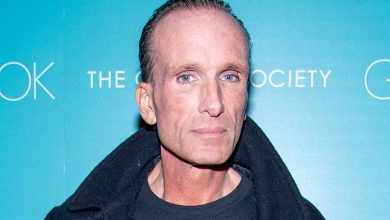
A poignant element of Romano’s announcement was her tribute to fellow actor and Austin, Texas resident, James Van Der Beek. The Dawson’s Creek star passed away on February 11, 2026, after a brave battle with colorectal cancer. His death appears to have been a significant catalyst for Romano’s urgency in getting tested.
Romano described Van Der Beek as a "pillar of our community" in Austin, noting that she had met him and his family multiple times. "They always were raising money for the most amazing charities, and he’s not with us anymore," she lamented. The loss of a contemporary and a neighbor brought the reality of the disease home, reinforcing her statement that "Cancer is everywhere." This connection highlights a phenomenon often seen in public health: when a high-profile figure passes away or shares a diagnosis, it often triggers a "ripple effect" of awareness, prompting peers and fans to seek out their own screenings.
Fighting the System: The Battle for a PET Scan
Perhaps the most infuriating aspect of Romano’s update is her struggle to access the necessary follow-up care. Despite having a positive screening result indicating potential malignancy, she revealed she is "fighting with companies" to get the PET scan covered by insurance. This bureaucratic hurdle is a devastatingly common reality for millions of patients.
Insurance providers often classify advanced screenings or immediate follow-up PET scans as "investigational" or require a confirmed biopsy before authorizing expensive imaging. This creates a dangerous paradox where a patient cannot get a biopsy because they don’t know where the tumor is, but they cannot get the scan to find the tumor because they don’t have a biopsy confirmation. Romano’s public frustration sheds light on these systemic failures. "I’m sure people think I’m overreacting, but I’m not," she asserted, citing her two young daughters, Isabella and Sofia, as her primary reason to fight for every possible answer.
Comparative Analysis of Cancer Screening Methods
To better understand the medical journey Romano is undertaking, it is helpful to compare the various screening modalities available today. The table below outlines the differences between standard screenings and the advanced diagnostics she is now pursuing.
| Screening Method | Primary Function | Detection Capability | Typical Use Case |
|---|---|---|---|
| Standard Mammography | X-ray imaging of breast tissue | Detects masses, calcifications, and lumps | Routine annual screening for women 40+ |
| Liquid Biopsy (Blood Test) | Analyzes blood for DNA fragments from tumors | Detects presence of cancer signals (MCED) | Early detection for high-risk patients; screening for multiple cancers |
| PET Scan (Positron Emission Tomography) | Uses radioactive tracers to visualize metabolic activity | Shows where cancer is active and if it has spread (Staging) | Follow-up to confirm diagnosis, staging, or monitoring treatment |
| MRI (Magnetic Resonance Imaging) | Uses magnetic fields for detailed soft tissue images | High-resolution structural imaging | High-risk breast screening, brain, or spinal scans |
| Colonoscopy | Visual inspection of the colon | Detects polyps and colorectal cancer | Routine screening starting at age 45 |
Navigating Scanxiety: The Mental Toll of Waiting
The period between a suspicious finding and a confirmed diagnosis is often described by psychologists as "scanxiety." For Romano, this anxiety is compounded by her public status and the logistical nightmare of insurance approvals. The mental toll of knowing one has a "positive" marker but no definitive "stage" or treatment plan is immense.
Romano’s candidness about her fear—admitting she is "nervous and a bit scared"—normalizes the emotional response to health crises. In her video, she leaned on her faith, stating, "It’s time to have a strong sense of faith and know that it’s in God’s hands." This surrender of control, coupled with a fierce determination to fight for medical access, paints a picture of resilience. For her fans, seeing a childhood hero navigate such adult fears provides a sense of solidarity. It validates the terrifying uncertainty that accompanies any cancer scare.
A Call to Action: Prioritizing Preventative Health
Throughout her ordeal, Romano has maintained a clear message: get screened. Her "positive" result, while terrifying, is theoretically a success story of preventative medicine because it has caught a potential issue before symptoms became undeniable or catastrophic. If the PET scan reveals a treatable early-stage lesion, the screening saved her life.
Health experts consistently emphasize that early detection increases survival rates exponentially across almost all cancer types. For breast cancer, the 5-year survival rate is 99% when detected at a localized stage. By sharing her "not negative" result, Romano is urging women, particularly those in their 40s or with family histories, to stop delaying their appointments. Her advocacy transforms her personal crisis into a public service, potentially saving lives by encouraging others to push for the tests their doctors might otherwise delay.
For more information on recommended screening timelines, readers can consult the American Cancer Society guidelines regarding early detection.
Hollywood and Fan Support for the Disney Alum
The outpouring of love for the Cadet Kelly star has been swift. Fans who grew up watching her on Disney Channel have flooded her social media with prayers and well-wishes. In the wake of James Van Der Beek’s passing, the entertainment community in Austin and beyond is rallying around its members. Romano’s willingness to be vulnerable—referencing her upcoming memoir and her recent trauma from the shooting accident—has endeared her even more to a public that values authenticity.
As Christy Carlson Romano awaits her PET scan and the subsequent results, her story stands as a developing narrative of courage. She is fighting a multi-front war: against a potential disease, against the grief of losing friends and family, and against a healthcare system that often makes survival an administrative struggle. Her journey serves as a critical reminder that health is fragile, prevention is powerful, and even the strongest voices need support when the cameras stop rolling.