Peter Greene cause of death accidental self-inflicted gunshot revealed
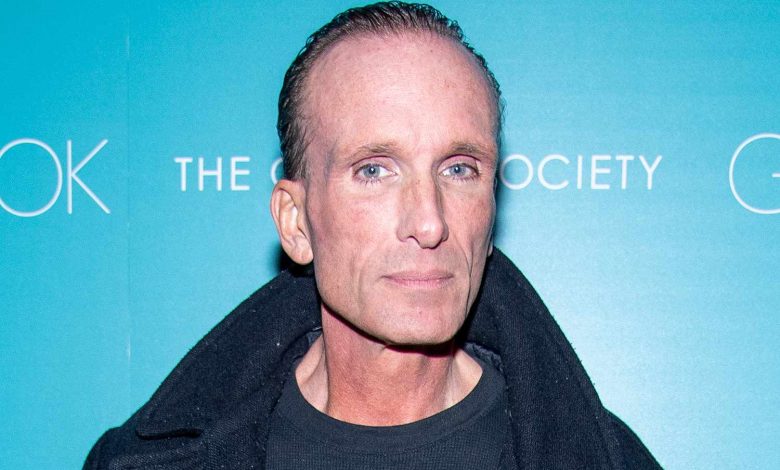
Table of Contents
- The Medical Examiner’s Findings: A Tragic Accident
- Discovery at Clinton Street: The Welfare Check
- Understanding the Injury: Left Axilla and Brachial Artery
- A Villain on Screen, A Gentle Spirit Off Screen
- The Westies Reference: Deciphering the Note
- Manager Gregg Edwards Remembers Peter Greene
- Overcoming Shadows: A Life of Resilience
- Hollywood Reacts and Notable Filmography
Peter Greene cause of death accidental self-inflicted gunshot wound has been officially confirmed by the New York City Office of Chief Medical Examiner, ending weeks of speculation surrounding the sudden passing of the celebrated character actor. Greene, 60, best known for his chilling portrayals of villains in 1990s cult classics like Pulp Fiction and The Mask, was found deceased in his Lower East Side apartment in December 2025. The release of the autopsy report this Thursday, February 19, 2026, provides a tragic conclusion to the investigation, citing a fatal injury to the brachial artery caused by the mishandling of a firearm. This detailed report analyzes the medical findings, the circumstances of his discovery, and the enduring legacy of an actor who defined a generation of cinematic antagonism.
The Medical Examiner’s Findings: A Tragic Accident
The extensive report released by the medical examiner categorizes the manner of death as strictly accidental. Forensic pathologists determined that Greene suffered a single gunshot wound to the left axilla (the medical term for the armpit). The trajectory of the bullet proved catastrophic, severing the brachial artery—the major blood vessel supplying the arm—which resulted in rapid and extensive exsanguination (blood loss).
According to the official document, there were no signs of foul play or third-party involvement. The findings align with evidence collected at the scene, suggesting that Greene may have been handling a firearm when it inadvertently discharged. The specific location of the entry wound in the axilla is consistent with accidental discharge scenarios often seen when a weapon is being holstered or adjusted under the arm. Toxicology reports were not highlighted as a contributing factor to the immediate cause of death, focusing instead on the mechanical trauma of the gunshot.
Discovery at Clinton Street: The Welfare Check
The sequence of events leading to the discovery of Greene’s body paints a somber picture of his final days. On December 12, 2025, a Lower East Side apartment welfare check was initiated by the building’s landlord after neighbors expressed concern. Residents of the Clinton Street building reported hearing holiday music playing continuously from Greene’s ground-floor unit for over 24 hours, a disruption that was uncharacteristic for the typically considerate tenant.
Upon entering the apartment, authorities found Greene facedown. The scene was described as containing significant blood loss, consistent with the arterial injury later confirmed by the autopsy. Reports indicate that the actor had been dead for some time before discovery. The isolation of the incident underscores the private nature of Greene’s later years, despite his continued activity in the film industry. The police investigation quickly ruled out homicide, a conclusion now scientifically backed by the medical examiner’s accidental ruling.
| Event Timeline | Details |
|---|---|
| December 10, 2025 | Last known contact. Manager Gregg Edwards speaks with Greene about upcoming minor surgery. Greene described as “calm” and “normal.” |
| December 11, 2025 | Neighbors begin hearing continuous music from Greene’s apartment. |
| December 12, 2025 | Landlord conducts welfare check. Peter Greene found deceased. Police secure the scene. |
| December 13, 2025 | News of death breaks. Manager Gregg Edwards confirms passing. Tributes pour in. |
| February 19, 2026 | Medical Examiner releases report. Cause of death confirmed as accidental gunshot to left axilla. |
Understanding the Injury: Left Axilla and Brachial Artery
To understand the fatality of the left axilla gunshot wound, it is necessary to examine the anatomy of the upper arm. The brachial artery is a continuation of the axillary artery and is responsible for delivering oxygenated blood to the arm, forearm, and hand. It is a high-pressure vessel.
Medical experts note that injuries to the brachial artery in the axillary region are particularly dangerous due to the difficulty in applying effective tourniquets or direct pressure. The axilla is a recessed anatomical space protected by the shoulder girdle, making immediate hemorrhage control challenging for a victim acting alone. In Greene’s case, the severance of this artery would have led to unconsciousness within seconds and death within minutes due to hypovolemic shock. This medical reality explains why emergency services, had they been called immediately, might still have struggled to save him given the severity of the vascular compromise.
A Villain on Screen, A Gentle Spirit Off Screen
While the circumstances of his death are tragic, Peter Greene’s life was defined by a remarkable ability to embody menace. He burst onto the scene in the early 1990s, possessing a gaunt, intense visage that directors found perfect for antagonism. He is perhaps best immortalized as Zed, the sadistic security guard in Quentin Tarantino’s 1994 masterpiece Pulp Fiction. The line “Zed’s dead, baby,” spoken by Bruce Willis’s character, became one of the most quoted lines in cinema history—a darkly ironic footnote now to the actor’s real-life passing.
That same year, Greene showcased his range by playing Dorian Tyrell, the suave, high-rolling mobster in The Mask opposite Jim Carrey. Unlike the grimy, terrifying Zed, Tyrell was sophisticated and ambitious, proving Greene could play different shades of evil. He continued this streak as Redfoot in The Usual Suspects (1995), a fence with a memorable flip of a cigarette that Greene reportedly improvised after a real on-set mistake.
However, critics often point to his lead role in Clean, Shaven (1993) as his artistic peak. Playing a man suffering from schizophrenia and attempting to regain custody of his daughter, Greene delivered a harrowing, empathetic performance that stripped away the “villain” caricature, revealing a profound depth of raw talent.
The Westies Reference: Deciphering the Note
A peculiar detail emerging from the police report involves a handwritten note found posted to the door of Greene’s apartment. The note read, “I’m still a Westie.” This Westies gang reference has sparked curiosity among fans and historians. The Westies were a notorious Irish-American organized crime gang based in Hell’s Kitchen, Manhattan, active primarily from the 1960s through the 1980s.
Greene, born in Montclair, New Jersey, was of Irish descent and spent his formative acting years in New York City during the tail end of the Westies’ era. While there is no evidence suggesting Greene was a criminal member of the gang, the note likely reflects a personal identification with the gritty, survivalist spirit of the old New York Irish working class. In Hollywood, Greene was often typecast as Irish mobsters (such as in The Black Donnellys), and this persona may have bled into his personal identity or been a reference to a role he was preparing for. It stands as a final, enigmatic declaration of identity from an actor who thrived on ambiguity.
Manager Gregg Edwards Remembers Peter Greene
The confirmation of the Peter Greene cause of death accidental self-inflicted gunshot report has been met with sorrow by his inner circle. Gregg Edwards manager of Greene for over a decade, provided a heart-wrenching statement. Edwards emphasized the disconnect between Greene’s terrifying screen presence and his actual personality.
“Nobody played a bad guy better than Peter,” Edwards told the press. “But he also had, you know, a gentle side that most people never saw, and a heart as big as gold. He was a great friend who would give you the shirt off his back.” Edwards revealed that in their final conversation on December 10, Greene was in good spirits, looking forward to a minor medical procedure and discussing future projects, including an independent film titled Mascots with Mickey Rourke.
Overcoming Shadows: A Life of Resilience
Greene’s journey was not without its hurdles. In the mid-1990s, at the height of his fame, he struggled publicly with a heroin addiction. This battle with substance abuse threatened to derail his career, yet he managed to pull himself back from the brink. In interviews later in his life, Greene was candid about these struggles, hoping his story could assist others.
By the time of his death in late 2025, reports indicate that Greene had been sober for several years. His return to steady work in television shows like Chicago P.D., Justified, and For Life demonstrated his reliability and enduring talent. The accidental nature of his death is particularly poignant given that he had survived the slow-motion self-destruction of addiction, only to succumb to a sudden, mechanical tragedy.
Hollywood Reacts and Notable Filmography
The news of the character actor obituary details has rippled through Hollywood. Colleagues remember him as a “pro’s pro,” an actor who could walk onto a set and instantly raise the stakes of a scene with a single glare. While he never achieved the A-list stardom of his Pulp Fiction co-stars, his face was unmistakable, and his contribution to 90s cinema is indelible.
For fans wishing to revisit his work, the following films represent the essential Peter Greene canon:
- Laws of Gravity (1992): The indie debut that put him on the map.
- Clean, Shaven (1993): A critically acclaimed psychological portrait.
- Pulp Fiction (1994): As Zed, the embodiment of nightmare.
- The Mask (1994): As Dorian Tyrell, a comic-book villain brought to life.
- The Usual Suspects (1995): As Redfoot, a memorable criminal associate.
- Training Day (2001): A brief but impactful role as a corrupt narcotics officer.
The final report from the Medical Examiner closes the book on the physical cause of Peter Greene’s death, but the artistic cause of his immortality remains his unique, menacing, and vulnerable body of work. For more information on firearm safety and accident prevention, readers can visit Gun Violence Archive.