Mikaela Shiffrin Wins Historic Gold at Milano Cortina 2026: The Drought Ends
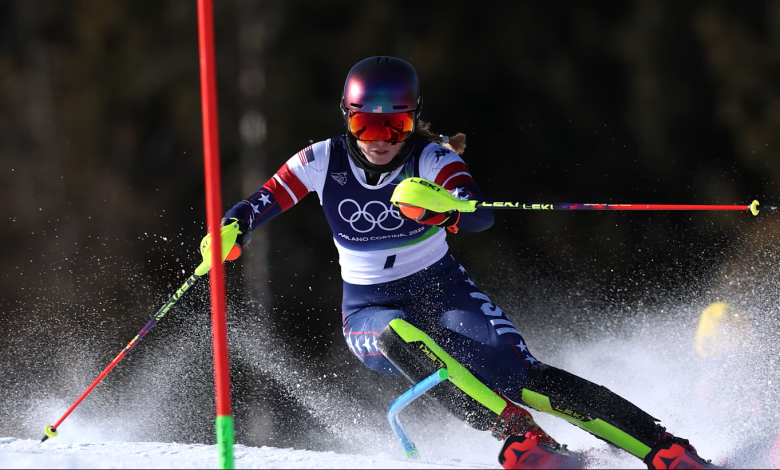
Table of Contents
- A Historic Victory on the Tofane Slopes
- Run One: A Tactical Masterclass
- Run Two: Sealing the Legacy
- The Podium Battle: Rast and Swenn-Larsson
- Ending the Eight-Year Gold Drought
- Mental Resilience and the Beijing Exorcism
- Technical Analysis: The Shiffrin Slalom Evolution
- Cementing GOAT Status: The Numbers
- The Future of American Alpine Skiing
Mikaela Shiffrin has officially reclaimed her throne atop the Olympic pantheon. In a performance that will be studied by alpine historians for decades, the American superstar obliterated the field at the Tofane Alpine Skiing Centre on February 18, 2026, capturing the gold medal in the women’s slalom with a combined time of 1:39.10. This victory does more than add another medal to her collection; it emphatically ends an eight-year gold medal drought that had loomed over her otherwise flawless career since the PyeongChang Games in 2018. By finishing a staggering 1.50 seconds ahead of Switzerland’s Camille Rast, Shiffrin secured the largest margin of victory in an Olympic slalom since 1998, silencing critics and cementing her status as the greatest alpine skier of all time.
A Historic Victory on the Tofane Slopes
The atmosphere in Cortina d’Ampezzo was electric as the final skiers descended the Olympia delle Tofane course. Known for its technical demand and icy, unforgiving surface, the venue has been a staple of the World Cup circuit, but the Olympic stage brings a pressure that transcends typical competition. Shiffrin, who had finished a disappointing 11th in the giant slalom just days prior, entered the slalom event with the weight of the world on her shoulders. The narrative of her “Olympic curse”—born from the six winless races in Beijing 2022—was the subtext of every broadcast and article leading up to the race.
However, when Shiffrin pushed out of the start gate, the narrative shifted instantly. She skied with a liberation that had been missing in her recent Olympic appearances. Her victory marked her third career Olympic gold medal, making her the most decorated American alpine skier in Olympic history, surpassing the records she previously shared with Ted Ligety and Andrea Mead Lawrence. This triumph also ties her with other American winter sports legends like Shaun White, placing her in the highest echelon of global sporting icons.
Run One: A Tactical Masterclass
The foundation of this historic gold was laid in the opening run. While other competitors struggled with the rhythmic changes in the “Schuss” and “Duca d’Aosta” sections of the course, Shiffrin delivered a run that was technically flawless. She clocked a time of 47.13 seconds, instantly putting a 0.82-second gap between herself and the nearest competitor. To put this in perspective, in the world of elite slalom, a gap of nearly a second in the first run is virtually insurmountable unless the leader makes a catastrophic error.
Her first run was characterized by an aggressive line that challenged the gates without sacrificing balance. Where rivals like Lena Dürr (Germany) and Petra Vlhová (Slovakia) found themselves fighting to regain their edge on the steep “Scarpadon” section, Shiffrin’s skis seemed to accelerate out of every turn. Analysts noted that her “stivot”—the steering phase of the turn—was minimal, allowing her to maintain maximum velocity. This wasn’t defensive skiing; it was an assertion of dominance reminiscent of her 2014 Sochi breakthrough.
Run Two: Sealing the Legacy
Leading after the first run is a position Shiffrin has been in hundreds of times, but at the Olympics, the psychology is different. With the track deteriorating and the shadows lengthening over Cortina, the second run required a blend of caution and aggression. Camille Rast, skiing just before Shiffrin, had put down a blistering run to take the lead, putting immense pressure on the American.
Shiffrin’s response was exquisite. Rather than skiing to protect her lead, she extended it. Her split times flashed green at every interval. By the time she reached the final flush, her advantage had ballooned to over a second. She crossed the finish line with arms raised, a release of tension that was palpable to the thousands in attendance. The 1.50-second margin was not just a win; it was a statement. In a sport decided by hundredths of a second, Shiffrin had won by a landslide.
| Rank | Athlete | Country | Run 1 | Run 2 | Total Time | Difference |
|---|---|---|---|---|---|---|
| 1 | Mikaela Shiffrin | USA | 47.13 | 51.97 | 1:39.10 | – |
| 2 | Camille Rast | SUI | 48.55 | 52.05 | 1:40.60 | +1.50 |
| 3 | Anna Swenn-Larsson | SWE | 48.60 | 52.21 | 1:40.81 | +1.71 |
| 4 | Wendy Holdener | SUI | 48.90 | 52.13 | 1:41.03 | +1.93 |
| 5 | Katharina Truppe | AUT | 49.01 | 52.09 | 1:41.10 | +2.00 |
The Podium Battle: Rast and Swenn-Larsson
While Shiffrin occupied a league of her own, the battle for silver and bronze was fierce. Camille Rast, the 26-year-old Swiss sensation, secured the silver medal, confirming her arrival among the sport’s elite. Rast’s performance was a redemption arc of its own, having battled injuries in previous seasons. Her aggressive second run applied pressure to the field, and she was the only skier to come within 1.5 seconds of Shiffrin.
The bronze went to Sweden’s veteran Anna Swenn-Larsson. At 34 years old, Swenn-Larsson’s longevity and persistence were rewarded with her first Olympic medal. It was a poignant moment for the Swede, who has spent her career in the shadow of Shiffrin and Vlhová. Her technical precision on the icy bottom section allowed her to edge out Wendy Holdener by just over two-tenths of a second. This podium composition—a legend, a rising star, and a persistent veteran—perfectly encapsulated the current landscape of women’s alpine skiing.
Ending the Eight-Year Gold Drought
To understand the magnitude of this victory, one must look back at the timeline. Shiffrin won slalom gold at Sochi 2014 as a teenager and giant slalom gold at PyeongChang 2018. However, the years following 2018 were tumultuous. The unexpected death of her father, Jeff Shiffrin, in 2020, combined with the isolation of the pandemic and a back injury, created a perfect storm of adversity leading into Beijing 2022. Her failure to finish three races in China led to unfair scrutiny and questions about her mental fortitude.
The 2026 victory at Cortina exorcises those demons completely. It ends an eight-year gap between Olympic gold medals, a rare feat in a sport that punishes aging bodies. This resilience draws parallels to other sporting giants who have reinvented themselves to stay at the top. Much like the longevity seen in Alex Ovechkin’s pursuit of history, Shiffrin has adapted her training and recovery to maintain explosive power into her 30s. Her ability to bounce back from the Beijing nadir to the Milano Cortina zenith is arguably a greater achievement than her initial rise to stardom.
Mental Resilience and the Beijing Exorcism
The psychological component of Shiffrin’s 2026 run cannot be overstated. In post-race interviews, she admitted to having “nightmares” about the Olympic course, fearing a repeat of the DNFs that haunted her in 2022. “I wanted to be free, I wanted to unleash,” she told reporters. “It’s not easy to do that when the world is watching and waiting for you to fail.”
This mental fortitude aligns with a broader trend of elite female athletes prioritizing mental health and tactical psychology. Similar to the aggressive evolution seen in Aryna Sabalenka’s recent dominance, Shiffrin utilized a new mental framework that focused on the process of skiing rather than the outcome of winning. By detaching herself from the medal expectations, she found the flow state that had eluded her in high-pressure moments recently. Her tribute to her father after the race—looking skyward and touching her heart—was a reminder that her motivation has evolved from pure competitive drive to a deeper, personal legacy.
Technical Analysis: The Shiffrin Slalom Evolution
Technically, Shiffrin in 2026 is a different skier than she was in 2014. The slalom discipline has evolved with equipment changes and course setting trends, and Shiffrin has been the primary driver of that evolution. Her equipment setup at Milano Cortina featured a slightly stiffer tail on her Atomic skis, allowing for quicker rebound out of the tight combinations on the Tofane lower section.
The Tofane course is unique because of its undulating terrain. It requires skiers to constantly adjust their fore-aft balance. Shiffrin’s ability to keep her center of mass perfectly over her boots, even when hitting ruts or ice patches at 40 mph, is biomechanically superior to her peers. While competitors like Rast rely on raw athleticism to recover from mistakes, Shiffrin’s technique prevents those mistakes from happening in the first place. Her “quiet” upper body—a hallmark of her style—was immovable throughout both runs, isolating her leg movement and ensuring efficient energy transfer.
Cementing GOAT Status: The Numbers
With this victory, the debate is effectively over. Mikaela Shiffrin is the Greatest of All Time (GOAT) in alpine skiing. The numbers are staggering: 108 World Cup wins (as of February 2026), 3 Olympic Golds, and records in virtually every discipline. She has eclipsed the 86-win record of Ingemar Stenmark and the women’s record of Lindsey Vonn long ago, but the third Olympic gold validates her dominance on the biggest stage of all.
Her resume now boasts victories across 12 years of Olympic competition. This longevity is rare in alpine skiing, where knee injuries typically shorten careers. Shiffrin’s meticulous approach to physical therapy and load management has allowed her to avoid the career-ending injuries that claimed stars like Vonn. In the context of American sports, her 2026 season rivals the impact of major team dynasties, such as the reimagined success of the Golden State Warriors, proving that individual brilliance can sustain over eras just as effectively as team systems.
The Future of American Alpine Skiing
Shiffrin’s victory also serves as a beacon for the next generation of American skiers. While she remains the face of the team, her mentorship has been crucial for younger athletes. The US Ski Team has faced challenges in depth recently, but Shiffrin’s presence provides a template for success. Just as Ben Shelton has energized American tennis, Shiffrin’s continued excellence inspires a new wave of racers who are now seeing that technical precision trumps raw risk-taking.
As the Milano Cortina Games conclude, the question inevitably turns to the future. Will Shiffrin compete in 2030? At 30 years old, she has hinted that she is taking it season by season. However, with her body healthy and her passion for the sport visibly renewed by this gold medal, the possibility remains. For now, the skiing world celebrates a champion who didn’t just win a race, but reclaimed her narrative. The drought is over, and the queen of slalom reigns supreme once more.
For more detailed statistics on the 2026 Winter Games, visit the official FIS Skiing website.