SpaceX Acquires xAI: The $1.25 Trillion Merger Redefining Orbit
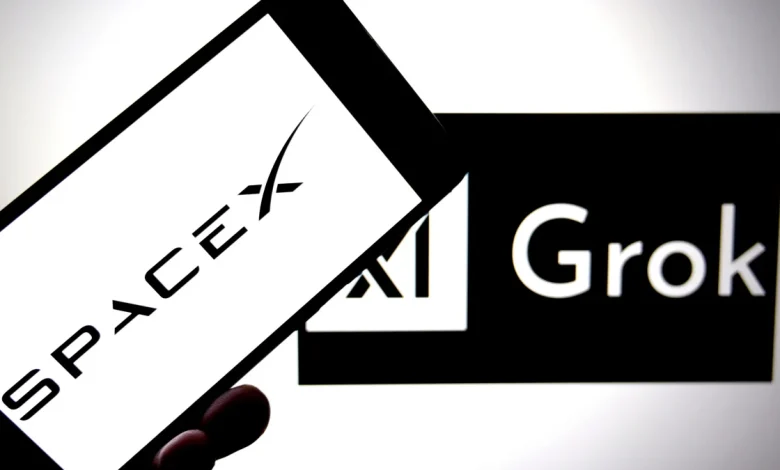
Table of Contents
- The Financial Singularity: Inside the $1.25 Trillion Valuation
- Project ‘Sentient Sun’: The Physics of Orbital Compute
- Starship’s Role: The Logistics of a Million Satellites
- Regulatory Firestorms: FCC Filings and Debris Risks
- The AI Arms Race: China’s Three-Body Constellation
- Economic Impact on Terrestrial Hyperscalers
- Future Outlook: The Kardashev Leap
SpaceX has shattered global financial records and redefined the trajectory of human technological evolution with its official acquisition of xAI, a merger that values the combined entity at a staggering $1.25 trillion. Announced on February 2, 2026, this historic consolidation creates a vertical monopoly on intelligence, energy, and transport, effectively birthing what analysts are calling the "Muskonomy Singularity." The acquisition is not merely a financial maneuver; it is the foundational step for "Sentient Sun," an audacious project to launch a constellation of one million solar-powered orbital data centers that promises to bypass Earth’s crumbling power grids and deliver unlimited AI inference capacity from the vacuum of space.
The Financial Singularity: Inside the $1.25 Trillion Valuation
The merger, executed via a complex stock swap, integrates xAI as a wholly-owned subsidiary of SpaceX, combining the logistical dominance of the Starship launch system with the generative capabilities of the Grok 3.5 large language model. Wall Street has reacted with a mixture of awe and trepidation, as the combined valuation of $1.25 trillion places the private entity within striking distance of public giants like Alphabet and Amazon. This valuation is predicated not on current revenue, but on the projected exponential growth of the Sentient Sun orbital data network, which aims to capture 20% of the global AI compute market by 2032.
Financial analysts suggest that this consolidation serves a dual purpose. First, it solves xAI’s liquidity challenges, providing the AI startup with direct access to SpaceX’s massive capital reserves and revenue from government contracts. Second, it insulates the AI development roadmap from the volatility of public markets, allowing for long-term R&D investments that quarterly reports would typically punish. The merger has also reignited rumors of a potential IPO in June 2026, a move that could be the largest public listing in history, potentially eclipsing the debut of Saudi Aramco. For a deeper dive into the structural mechanics of this deal, read our analysis on the Muskonomy Singularity and the pivot to orbital compute.
Project ‘Sentient Sun’: The Physics of Orbital Compute
At the heart of this merger lies the "Sentient Sun" initiative, a plan to deploy high-performance compute nodes aboard modified Starlink V3 satellites. The physics favoring this approach are undeniable. Terrestrial data centers are currently constrained by three factors: land availability, cooling water scarcity, and, most critically, power grid capacity. In orbit, these constraints vanish or invert. Solar panels in low Earth orbit (LEO) receive unfiltered sunlight 24/7, operating at efficiencies 4-8 times higher than ground-based arrays due to the lack of atmospheric interference and night cycles.
Furthermore, the vacuum of space provides a limitless heat sink for radiative cooling systems, eliminating the need for the millions of gallons of water consumed daily by hyperscale facilities on Earth. The proposed Starlink V3 satellites are equipped with terabit-class laser optical links, creating a mesh network capable of routing petabytes of training data and inference requests above the atmosphere. This architecture promises to reduce global latency for AI services by routing traffic through the vacuum of space—where light travels 47% faster than in fiber-optic cables—rather than congested terrestrial backbones.
| Metric | Terrestrial Data Center | Orbital Data Center (Sentient Sun) |
|---|---|---|
| Power Source | Grid / Intermittent Solar | Continuous Unfiltered Solar |
| Cooling Mechanism | Water/Air Exchange (Resource Heavy) | Radiative Vacuum Cooling (Passive) |
| Latency (Global) | Variable (Fiber congestion) | Low (Speed of light in vacuum) |
| Deployment Cost | High (Land, Construction) | High (Launch costs, decreasing with Starship) |
| Maintenance | Physical Access Possible | Impossible (Must be redundant/disposable) |
Starship’s Role: The Logistics of a Million Satellites
The feasibility of launching one million satellites rests entirely on the operational maturity of the Starship launch vehicle. With a payload capacity exceeding 150 metric tonnes in its fully reusable configuration, Starship creates an economy of scale previously unimaginable. SpaceX’s filing with the FCC on January 30, 2026, outlines a deployment schedule that would see "trains" of data center satellites launched weekly from Starbase in Texas and the Kennedy Space Center. Unlike traditional communications satellites, these orbital nodes are heavy, packed with GPU clusters and massive radiator arrays, necessitating the heavy-lift capability that only Starship can provide.
The synergy between the two companies becomes apparent here: xAI designs the specialized, radiation-hardened ASICs (Application-Specific Integrated Circuits) optimized for low-power inference, while SpaceX provides the bus and the ride. This vertical integration allows for rapid iteration; if a generation of chips proves faulty or inefficient, the next batch of satellites can be upgraded within weeks, a "hardware-rich" development cycle that mirrors the software updates of the Tesla fleet.
Regulatory Firestorms: FCC Filings and Debris Risks
However, the path to orbit is paved with regulatory hurdles. The sheer scale of the proposed constellation has triggered immediate backlash from astronomers, environmental groups, and rival nations. The FCC filing is currently under intense scrutiny, with concerns cited regarding orbital congestion and the potential for the Kessler Syndrome—a cascading collision event that could render LEO unusable. Critics argue that adding a million satellites to an already crowded environment is reckless, regardless of the economic benefits.
Moreover, the timeline for approval is complicated by the ongoing political gridlock in Washington. The broader government shutdown of 2026 has furloughed key staff at regulatory agencies, slowing the review process for new spectrum allocations and launch licenses. SpaceX has signaled it may seek licenses through international jurisdictions if the US regulatory apparatus remains paralyzed, highlighting the tension between national oversight and the supranational nature of orbital commerce.
The AI Arms Race: China’s Three-Body Constellation
The Sentient Sun project has also accelerated the militarization and commercialization of space by rival powers. In response to the SpaceX-xAI news, Chinese state media highlighted the accelerated deployment of the "Three-Body Computing Constellation," a rival network aiming for 1,000 peta-operations per second (POPS). This geopolitical dimension transforms the merger from a business deal into a matter of national security. The US Department of Defense has reportedly expressed interest in reserving a portion of the Sentient Sun network for classified, air-gapped simulations, leveraging the ultimate physical security of an asset located 500 kilometers above Earth.
This race echoes the dynamics seen in the lunar sector, where the NASA Artemis II mission status remains a critical benchmark for American prestige. Just as Artemis aims to return humans to the Moon, Sentient Sun aims to permanently industrialize the orbital commons, effectively extending the US economic zone into the vacuum of space.
Economic Impact on Terrestrial Hyperscalers
The implications for terrestrial cloud providers like Amazon Web Services (AWS), Google Cloud, and Microsoft Azure are profound. If SpaceX can offer inference at a fraction of the cost by eliminating electricity bills and land leases, the margins of terrestrial data centers could collapse. Analysts foresee a bifurcation of the market: mission-critical, low-latency banking and military applications may remain on Earth (fiber-connected), while the massive, energy-hungry workloads of AI model training and batch inference migrate to orbit. This shift could alleviate the pressure on Earth’s energy grids, which are currently straining under the load of the AI boom.
Furthermore, the democratization of orbital compute could reshape the information landscape. As discussed in reports regarding the state of digital news in 2026, the cost of content generation and verification is a primary bottleneck. Cheaper, space-based inference could lower the barrier to entry for real-time translation, fact-checking, and personalized news delivery, fundamentally altering the trust economy of the internet.
Future Outlook: The Kardashev Leap
Elon Musk has described the Sentient Sun project as humanity’s first step toward becoming a Kardashev Type II civilization—one that harnesses the full energy of its host star. While hyperbole is a staple of the Musk brand, the engineering principles hold water. By moving the most energy-intensive industry of the 21st century—intelligence processing—off-planet, humanity can continue to scale its digital ambitions without cooking the biosphere. The $1.25 trillion bet is not just on a company, but on a new industrial revolution where the factory floor is zero-gravity and the power plant is the sun itself.
Investors and observers alike are now watching the skies—and the SEC filings—with bated breath. As the first test nodes prepare for launch aboard the next Starship flight, the boundary between science fiction and quarterly earnings has never been thinner. The success of this merger will likely determine whether the future of AI is grounded in silicon valleys or orbiting among the stars.
For more detailed financial data on the merger, investors are encouraged to review the Form 8-K filings available on the SEC EDGAR database.