Artemis II Countdown: NASA Targets March Launch After Critical February Tests
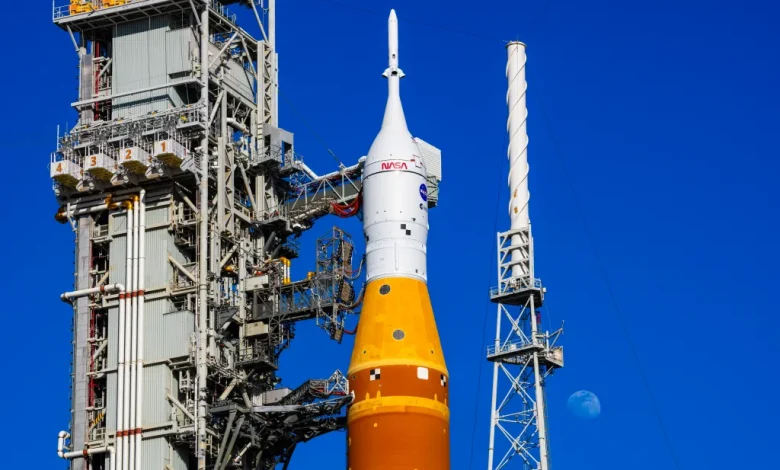
Table of Contents
- Artemis II Mission Status: Critical Updates
- Wet Dress Rehearsal: The February 19 Milestone
- Crew Readiness and Quarantine Protocols
- Trajectory Analysis: The Hybrid Free Return
- Technical Specifications: SLS Block 1 Performance
- Weather Constraints and Launch Windows
- Political Landscape: Budget and Mars Ambitions
- Comparative Analysis: Artemis vs. Apollo
- Health Safety: Lessons from Recent Crises
- Future Outlook: The Path to Artemis III
Artemis II stands poised on Launch Complex 39B at the Kennedy Space Center, a towering symbol of humanity’s renewed ambition to explore the cosmos. As of February 19, 2026, NASA engineers are conducting the final, critical Wet Dress Rehearsal (WDR) to certify the Space Launch System (SLS) rocket for its scheduled liftoff. Following a series of technical delays involving liquid hydrogen leaks and crew module valve adjustments in January, the agency has reset the target launch window to no earlier than March 6, 2026. This mission marks the first time in over 50 years that humans will venture beyond Low Earth Orbit (LEO), aiming to loop around the Moon and return safely, paving the way for sustained lunar exploration.
Artemis II Mission Status: Critical Updates
The atmosphere at Cape Canaveral is electric yet tense. The Artemis II mission, designed to test the Orion spacecraft’s life support systems with a crew of four, faces its decisive moment today. NASA Mission Management Team leaders have confirmed that if today’s propellant loading procedures—known as the Wet Dress Rehearsal—proceed without the leakage issues that plagued the January attempts, the March 6 launch date will be locked in. This 10-day mission is not just a test flight; it is the culmination of decades of engineering and the first tangible step toward the Artemis III lunar landing.
Recent reports indicate that the ground systems modifications are holding steady. The mobile launcher, which underwent significant repairs after the Artemis I launch, is performing within nominal parameters. However, the pressure is mounting. Any further scrub could push the mission into the April launch window, complicating the orbital dynamics required for the specific lunar trajectory.
Wet Dress Rehearsal: The February 19 Milestone
Today’s operation involves loading over 700,000 gallons of cryogenic super-cooled liquid oxygen and liquid hydrogen into the SLS core stage and interim cryogenic propulsion stage (ICPS). The procedure is an exact replica of launch day, stopping just seconds before engine ignition. For deep insights into the countdown procedure, our comprehensive guide to the Artemis II final countdown offers a minute-by-minute breakdown of what the launch control team is monitoring right now.
Engineers are paying particular attention to the quick-disconnect umbilicals, the hardware responsible for the hydrogen leaks detected during the January 2026 simulations. The retorquing of the valve seals on the Orion crew module hatch has also been completed, ensuring the capsule maintains pressurized integrity during the vacuum phase of the flight.
Crew Readiness and Quarantine Protocols
The four astronauts entrusted with this historic journey—Commander Reid Wiseman, Pilot Victor Glover, and Mission Specialists Christina Koch and Jeremy Hansen—have officially entered their pre-flight medical quarantine. This period is vital to ensure no viral pathogens are introduced into the closed environment of the Orion capsule.
Victor Glover, set to become the first person of color to travel around the Moon, has been running final simulations in the erratic launch abort scenarios. Meanwhile, Jeremy Hansen of the Canadian Space Agency (CSA) is finalizing the checkouts for the optical navigation experiments scheduled for Day 3 of the mission. The crew’s psychological readiness is reportedly high, bolstered by the resolution of the technical glitches that caused the winter delays.
Trajectory Analysis: The Hybrid Free Return
Unlike the Apollo missions which entered a full lunar orbit, Artemis II will utilize a “hybrid free return” trajectory. After launch and a check-out orbit around Earth, the ICPS will fire to send Orion toward the Moon. The spacecraft will use the Moon’s gravity to sling itself back toward Earth without requiring a major engine burn for the return trip. This safety-first approach ensures that even if the main engine fails after the Trans-Lunar Injection (TLI), the crew will naturally return to Earth’s atmosphere.
The mission profile includes a unique high-Earth orbit phase lasting 24 hours. During this time, the crew will manually pilot Orion to demonstrate proximity operations, using the spent ICPS stage as a target. This maneuvers validation is critical for future docking with the lunar Gateway station and the Human Landing System (HLS).
| Feature | Apollo 8 (1968) | Artemis II (2026) |
|---|---|---|
| Crew Size | 3 Astronauts | 4 Astronauts |
| Mission Duration | 6 Days | ~10 Days |
| Lunar Interaction | 10 Orbits | Flyby (Hybrid Free Return) |
| Primary Objective | Orbital Mechanics | Life Support Validation |
| Re-entry Speed | 24,696 mph | ~25,000 mph (Skip Entry) |
Technical Specifications: SLS Block 1 Performance
The Space Launch System Block 1 remains the most powerful rocket ever built by NASA, generating 8.8 million pounds of thrust at liftoff. This raw power is necessary to propel the heavier Orion capsule—laden with four humans and life support consumables—out of Earth’s gravity well. The core stage, powered by four RS-25 engines (veterans of the Space Shuttle era), will burn for approximately 8 minutes before separating.
A key upgrade for Artemis II is the environmental control and life support system (ECLSS). Unlike Artemis I, which carried mannequins, this flight effectively tests the CO2 scrubbing and oxygen generation capabilities in deep space radiation environments. The data gathered here is non-negotiable for the feasibility of Mars missions in the late 2030s.
Weather Constraints and Launch Windows
Meteorology plays a pivotal role in the “Go/No-Go” decision. The 45th Weather Squadron is currently monitoring a frontal system in the Atlantic that could impact the recovery zones. Advanced forecasting models are now integrating AI to predict micro-climate shifts around the pad. For a broader understanding of how these technologies function, review our report on advanced meteorology and AI forecasting trends for 2026.
The launch window for March 6 opens at roughly 01:29 UTC. If weather violations occur—such as cumulus clouds within the flight path or high upper-level winds—the window closes quickly due to the precise alignment needed with the Moon. NASA has backup opportunities on March 7 and 9, but a delay beyond that would require a stand-down until April.
Political Landscape: Budget and Mars Ambitions
The Artemis program does not exist in a vacuum; it is heavily influenced by administrative priorities and congressional funding. With the new fiscal year budgets under scrutiny, the success of Artemis II is essential to justify the billions invested in the SLS program. Political analysts suggest that a successful mission will solidify American leadership in space against rising competition from international rivals.
The current administration has emphasized space dominance as a key pillar of national strategy. For more context on the executive branch’s stance on aerospace funding and defense, readers should examine the Donald Trump Presidency Year One status report, which details the allocation of resources for high-priority science and defense initiatives.
Health Safety: Lessons from Recent Crises
Spaceflight safety has been a headline topic following recent orbital incidents. While Artemis II is a fresh mission, the agency is on high alert due to health anomalies observed in long-duration LEO missions earlier this year. Protocols for “medical evacuation” from deep space are virtually non-existent; once Orion leaves Earth orbit, the crew is committed to the full 10-day loop.
NASA has implemented enhanced biometric monitoring for the Artemis II crew, learning from the scares documented in the recent astronaut evacuation and space health crisis. These new protocols ensure that Mission Control can detect early signs of radiation sickness or cardiovascular stress, allowing for adjustments in cabin pressure or activity levels to mitigate risks.
Comparative Analysis: Artemis vs. Apollo
Comparing Artemis II to Apollo 8 reveals how much technology has evolved. Apollo 8 was a bold, risky sprint to beat the Soviet Union, relying on 1960s computing power. Artemis II is a methodical, sustainable step toward permanent residence. The Orion capsule offers significantly more volume than the Apollo Command Module, modern toilets, and private sleeping quarters, crucial for the mental health of a mixed-gender crew.
Furthermore, Artemis II will test a “skip entry” technique upon return. Instead of a direct plunge into the atmosphere, Orion will dip into the upper atmosphere, skip out like a stone across a pond to bleed off speed and manage heat, and then re-enter for splashdown. This technique reduces the G-forces experienced by the astronauts and allows for a more precise landing target off the coast of San Diego.
Future Outlook: The Path to Artemis III
Should Artemis II succeed, the clock immediately starts for Artemis III, the mission destined to return boots to the lunar surface. The data collected from the heat shield performance during the 25,000 mph reentry will be the final certification needed for the human landing system. NASA is already fabricating the hardware for Artemis III, but its schedule is entirely dependent on the telemetry gathered over the next two weeks.
As the sun sets over Launch Complex 39B today, the world watches. The giant orange rocket, bathed in floodlights, is more than a machine; it is a vessel of human hope. The coming days will determine if 2026 is recorded in history books as the year humanity truly returned to the stars. Track the official Artemis II mission updates here.