Yahoo Mail storage dominance: 1TB capacity vs competitors in 2026
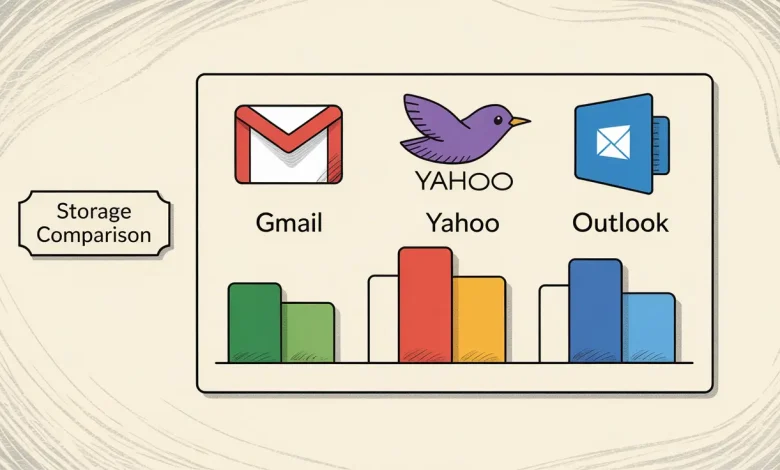
Table of Contents
- The Unrivaled Capacity of Yahoo Mail Storage
- 2026 Email Storage Wars: A Comparative Analysis
- The ‘Account Full’ Paradox: Why It Happens with 1TB
- Yahoo Mail Plus: Beyond Storage Limits
- Managing Large Attachments and Digital Hoarding
- Security Infrastructure and Data Centers
- The Future of Cloud Email and AI Integration
- Step-by-Step Inbox Optimization Guide
Yahoo Mail storage continues to stand as a formidable outlier in the personal email landscape of 2026, offering a staggering 1TB (1,000 GB) of free storage capacity that significantly dwarfs the offerings of its primary competitors. In an era where digital accumulation is the norm and high-resolution media files clutter cloud drives, the sheer volume of space provided by Yahoo remains a critical selling point. While tech giants like Google and Microsoft have pivoted towards integrated workspace ecosystems with shared storage caps, Yahoo has maintained its commitment to massive mailbox capacity, positioning itself as the premier choice for digital hoarders and users tired of constant deletion warnings. However, recent trends indicate a surge in user queries regarding ‘Account Full’ errors despite this high limit, suggesting a need for deeper understanding of mailbox management, attachment protocols, and the nuances of the Yahoo Mail Plus subscription.
The Unrivaled Capacity of Yahoo Mail Storage
To put the Yahoo Mail storage limit into perspective, 1TB is approximately equivalent to 60 million emails of average size, or roughly 6 million emails with standard document attachments. This capacity is effectively infinite for the average user, designed to ensure that one never has to delete a message to make room for new incoming mail. This strategy contrasts sharply with the ‘storage anxiety’ prevalent among users of other platforms, where the 15GB free tier is rapidly consumed by photo backups and drive documents.
The persistence of this 1TB offer in 2026 highlights a strategic divergence. While other providers monetize storage expansion, Yahoo leverages storage as a loss leader to maintain user retention and ad revenue. This massive bucket of digital space allows users to treat their inbox as a searchable archive of their digital lives, spanning decades of correspondence without the looming threat of a bounce-back due to quota limits. However, the infrastructure required to support this is immense. The reliance on advanced data centers mimics the scale seen in other high-tech sectors, similar to how SpaceX has invested heavily in orbital data centers to manage the data deluge of the future. Yahoo’s terrestrial server farms must manage petabytes of data daily, ensuring redundancy and uptime for millions of active accounts.
2026 Email Storage Wars: A Comparative Analysis
Understanding the value of Yahoo’s offering requires a direct comparison with the market leaders. In 2026, the email ecosystem is dominated by three major players, each with a distinct philosophy regarding free storage.
| Feature | Yahoo Mail (Free) | Gmail (Free) | Outlook.com (Free) |
|---|---|---|---|
| Storage Capacity | 1 TB (1,000 GB) | 15 GB (Shared with Drive/Photos) | 15 GB (Mail) / 5 GB (OneDrive) |
| Attachment Limit | 25 MB | 25 MB | 20 MB |
| Ecosystem | Email Focused | Integrated Workspace | Office Integration |
| Ad Policy | Ads in Inbox | Promotional Tabs/Ads | Ads in Inbox |
| Paid Upgrade Focus | Ad-removal & Support | More Storage | More Storage & Security |
As illustrated, Yahoo Mail storage is nearly 66 times larger than the free tier provided by Gmail. Crucially, Gmail’s storage is shared across Google Drive and Google Photos. Once that 15GB is filled with 4K videos or backups, incoming emails stop. Yahoo’s storage is dedicated exclusively to email, meaning heavy usage of other Yahoo services (if any) does not encroach on mailbox capacity. This separation is vital for professional users who cannot afford to miss correspondence due to a full photo library.
The ‘Account Full’ Paradox: Why It Happens with 1TB
Despite the massive allowance, a confusing trend in 2026 involves users reporting “Account Full” or “Quota Exceeded” errors. If 1TB is so vast, how are users hitting limits? The answer often lies not in the total byte count, but in other hidden architectural constraints.
Inode and Message Count Limits
Email systems often have limits on the total number of files (inodes) allowed, regardless of their size. A user with millions of tiny automated notification emails might hit a database row limit before they hit the 1TB storage limit. Cleaning up millions of old newsletters is often necessary to restore database health.
The ‘Trash’ and ‘Sent’ Folder Traps
Users frequently delete emails to clear space but fail to empty the Trash folder. In Yahoo Mail, items in Trash still count towards the quota. Furthermore, the Sent folder is often overlooked. High-volume senders who attach large files to outgoing mails can rapidly accumulate gigabytes of data without realizing it. Digital hygiene involves checking these often-ignored directories.
Glitch or Reality?
Sometimes, the error is a synchronization issue, particularly for users accessing mail via third-party clients (IMAP/POP) on mobile devices. Ensuring that the client is correctly syncing deletion actions back to the server is paramount. In rare cases, service outages or backend updates can trigger false flags. For instance, broad service disruptions, similar to the analysis of the February 3, 2026 ChatGPT outage, can temporarily affect quota reporting systems across cloud platforms.
Yahoo Mail Plus: Beyond Storage Limits
Given that the free tier offers 1TB, the value proposition of Yahoo Mail Plus (formerly Yahoo Mail Pro) is often misunderstood. Many users assume the subscription buys more space. In reality, the Plus subscription is primarily about experience and security rather than capacity.
The core benefits of Yahoo Mail Plus in 2026 include:
- Ad-Free Experience: The removal of banner ads and sponsored emails creates a cleaner, faster interface.
- Disposable Email Addresses: Enhanced privacy features allowing users to generate burner addresses for online shopping.
- Priority Customer Support: Access to live agents, a rarity in the free email market.
- Domain Blocking: Advanced filters to block entire domains, useful for stopping spam waves.
This shift from monetization-via-storage to monetization-via-features reflects a broader industry trend. We saw a similar market correction described in the SaaSpocalypse explanation, where companies had to pivot from purely usage-based pricing to value-based feature sets to retain subscribers. For Yahoo, the