Red Gerard: From Overslept Teen to 2026 Milano Cortina Veteran
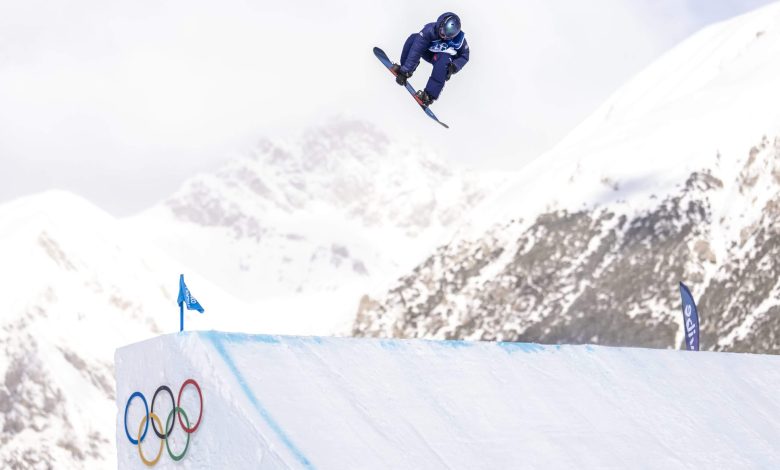
Table of Contents
Red Gerard stands at the precipice of the Livigno Snowpark, the Italian Alps stretching infinitely behind him, a stark contrast to the casual, chaotic energy that defined his viral introduction to the world eight years ago. As the 2026 Milano Cortina Winter Olympics reach their fever pitch on February 18, the narrative surrounding the 25-year-old American snowboarder has shifted dramatically. No longer the 17-year-old who famously overslept after a Netflix binge to win gold in PyeongChang, Gerard arrives in Italy as a seasoned veteran, a team leader, and an athlete seeking redemption after a rocky start to these Games. While the media cycle continues to resuscitate the “overslept” folklore, the reality on the slopes of Livigno is one of calculated precision, intense pressure, and a fight for slopestyle supremacy.
Red Gerard: The 2026 Milano Cortina Return
The anticipation for Red Gerard’s performance in Milano Cortina has been building since his narrow miss at the Beijing 2022 Games. Now, in February 2026, the stakes have never been higher. The atmosphere in the Olympic Village is different for Gerard this time; he is no longer the underdog kid from Silverthorne, Colorado, but a headliner for the U.S. Ski & Snowboard Team. His journey to Italy has been marked by a transition from teenage prodigy to an established icon of the sport, mirroring the trajectory of other young stars who have had to mature under the global spotlight, much like the career evolution seen in tennis phenom Coco Gauff.
The 2026 Games have presented a mixed bag for Gerard thus far. Earlier in the week, he suffered a disappointing exit in the Big Air qualifications, failing to make the 12-man final cut. This setback has placed immense weight on today’s Slopestyle event—his signature discipline. The narrative is no longer about a lucky run; it is about resilience. Can the former champion compartmentalize the failure of the Big Air event and execute a flawless run in Slopestyle? The answer lies in his matured mental game, a sharp departure from the carefree attitude of 2018.
The Resurrection of the ‘Overslept’ Narrative
Despite his professional growth, the ghost of 2018 persists. The story of Red Gerard oversleeping on the morning of his PyeongChang final, losing his team jacket, and borrowing a coat to win the United States’ first gold medal of those games remains one of the most viral moments in Olympic history. As anticipation for his 2026 run grew, major networks retweeted and replayed the clip, cementing it as his origin story.
However, Gerard has often expressed a complex relationship with this narrative. While it made him a household name—catapulting him onto talk shows and cereal boxes—it also threatened to overshadow his technical prowess. In 2026, Gerard’s routine is unrecognizable compared to that fateful morning in Korea. He works with sports psychologists and follows a strict regimen, ensuring that “oversleeping” is a statistical impossibility. The media’s fascination with the “slacker snowboarder” trope belies the intense discipline required to maintain a top-5 world ranking for nearly a decade. This tension between public perception and private dedication is a common theme for athletes who rise to fame early, a dynamic visible across sports, from the courts of the Australian Open to the slopes of Italy.
PyeongChang to Livigno: A Career Evolution
To understand the Red Gerard of 2026, one must analyze the data behind his evolution. The following table contrasts the raw talent of his teenage years with the refined veteran profile he brings to Milano Cortina.
| Attribute | PyeongChang 2018 | Milano Cortina 2026 |
|---|---|---|
| Age | 17 (Youngest Snowboard Gold Medalist) | 25 (Veteran Leader) |
| World Ranking (Slopestyle) | Top 10 | Top 3 (Entering Games) |
| Signature Style | Creative lines, side-hits, unpredictable | Technical precision, massive amplitude, switch backside triples |
| Sponsors | Burton | Arbor Snowboards (Pro Model Released Jan 2026) |
| Pre-Race Routine | Netflix, Oversleeping, Panic | Structured visualization, Physio, Early wake-up |
| Family Presence | 18 family members (shotgunning beers) | 30+ family members (organized cheering section) |
The Beijing Gap and X Games Dominance
The road to 2026 was paved with the heartbreak of Beijing 2022. Finishing fourth, just off the podium, was a pivotal moment for Gerard. It stripped away the “happy-go-lucky” veneer and ignited a fierce competitive drive. He didn’t want to be just the kid who won once; he wanted to be a dynasty. This shift in mindset aligns with the ethos of championship teams, similar to the relentless reinvention seen in the Golden State Warriors’ 2026 resurgence, where veteran experience becomes a weapon.
Between 2024 and 2025, Gerard went on a tear. He secured back-to-back X Games Gold medals in Slopestyle, proving that his technical rail game and jump prowess were superior to the younger generation of “spin-to-win” cyborgs. His victory in Aspen in January 2025 was particularly telling; he landed a switch backside triple cork 1620, a trick that is now the baseline requirement for an Olympic medal. This recent dominance is why the anticipation for his Milano Cortina performance is so palpable—he is statistically in the prime of his career.
Livigno Snowpark: A Course for Veterans
The venue for the 2026 snowboarding events, the Livigno Snowpark, is a beast of a course that favors the all-around rider. Unlike the manicured, almost video-game-like jumps of Beijing, Livigno incorporates natural terrain features and technical rail sections that demand creativity—Gerard’s bread and butter. The course designers have built a “flow” section at the top, allowing riders to choose different lines rather than a single fixed path. This plays directly into Gerard’s strengths, as he grew up riding backyard setups in Silverthorne that emphasized improvisation.
However, the jumps at Livigno are massive, with tables exceeding 70 feet. This requires immense speed and commitment. Gerard’s ability to generate speed out of the rail section will be the deciding factor. The snow conditions in the Italian Alps in February 2026 have been variable, with icy mornings giving way to slushier afternoons. As a veteran, Gerard’s experience in adapting to changing snow conditions—something he deals with constantly in the Colorado backcountry—gives him a distinct edge over competitors who train exclusively on airbags and perfect resort parks.
The 2026 Competitive Field
While the focus is on Gerard, the field in Italy is stacked. The rivalry with Canada’s Mark McMorris continues, even as both enter the veteran stages of their careers. McMorris, arguably the greatest slopestyle rider of all time, is also seeking a final Olympic glory. Then there is the Chinese phenom Su Yiming, who won gold in Big Air in 2022 and silver in Slopestyle. Yiming has revolutionized the sport with 1980-degree spins, pushing the physical limits of rotation.
Gerard’s strategy in 2026 has been to counter the “spin war” with style and execution. Judges in the 2025-2026 season have begun to reward unique axis rotations and grab-holding over simple spin count. If Gerard can land a clean 1620 with a unique grab (like his signature roast beef or stale fish), he can outscore a sloppy 1800. This tactical shift is a gamble, but one necessitated by the physics of the human body. The anticipation for the final scores will likely come down to this philosophical battle: style vs. rotation.
Gear and Tech: The Arbor Transition
A significant change in Gerard’s 2026 campaign is his equipment. After years with Burton, Gerard made a headline-grabbing switch to Arbor Snowboards in January 2026, launching his first pro model just weeks before the Olympics. This move was risky—changing equipment right before the biggest event of a four-year cycle is unheard of. However, the new board, designed specifically for his riding style, features a camber profile that offers more pop on the massive Livigno jumps.
His goggle tech has also advanced. Riding for Oakley, he utilizes Prizm lens technology essential for the flat-light conditions often found in the Italian Alps. The visibility at Livigno can change in minutes, and having the right lens can be the difference between spotting a landing and crashing out. This attention to technical detail underscores his transition from a kid who just grabbed his board and ran, to a professional who treats his gear like a Formula 1 car.
Defining a Legacy Beyond the Meme
Ultimately, Red Gerard’s 2026 Milano Cortina appearance is about cementing a legacy that transcends a viral video. While the “overslept” story is a fun anecdote that humanized an Olympian, it does not define his contribution to the sport. He is a bridge between the core snowboarding culture of filming backcountry video parts and the high-performance world of Olympic competition. His influence extends to his hometown, where his success has fueled a boom in youth participation, similar to the regional pride seen in Colorado’s basketball culture.
As the world watches him drop in for his final runs in Italy, the anticipation isn’t just for a medal; it’s for the completion of an arc. If he lands on the podium, he joins the pantheon of snowboarding greats like Shaun White and Jamie Anderson—athletes who spanned eras and stayed relevant. If he doesn’t, he still walks away as the man who changed how the general public views snowboarders: not just as rebels, but as complex, high-performing athletes who might just need an extra alarm clock now and then. For real-time updates on his performance and official results, fans can check the US Ski & Snowboard official site.
The 2026 Milano Cortina Winter Olympics will be remembered for many things, but in the world of action sports, it will be defined by whether Red Gerard could wake up the world one last time.