Greenland Tariffs 2026: Global Trade Crisis & Economic Impact Report
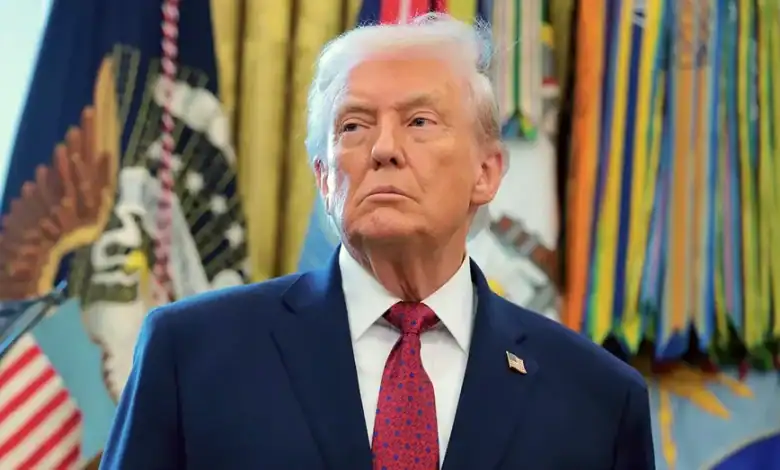
Table of Contents
- Greenland Tariffs: The 2026 Trade War Escalation
- The “Arctic Security Tariff” Ultimatum
- The Davos Detente: Analyzing the “Framework” Deal
- Rare Earth Minerals & Tech Sector Impact
- Nvidia’s Supply Chain Vulnerability
- Retail & Consumer Goods Inflation Risks
- Walmart’s Strategic Pivot
- Financial Markets: The Safe Haven Shift
- The EU Response: Activating the “Trade Bazooka”
- Future Outlook: The Road to the June Deadline
Greenland Tariffs have officially redefined the geopolitical landscape of early 2026, marking one of the most volatile periods in transatlantic trade relations since the turn of the century. As of February 18, 2026, the global economy is still reeling from the shockwaves sent by the Trump Administration’s January ultimatum: a threatened 10% blanket tariff on eight European nations, contingent on negotiations regarding the sovereignty of Greenland. While a fragile truce was reportedly brokered at the World Economic Forum in Davos, the underlying tensions regarding Arctic resources, rare earth mineral supply chains, and NATO security dynamics remain critically unresolved. This report provides a comprehensive analysis of the “Greenland Crisis,” examining the economic fallout across technology, retail, and financial sectors while forecasting the implications of the looming June 1, 2026, escalation deadline.
Greenland Tariffs: The 2026 Trade War Escalation
The catalyst for the current crisis was the abrupt announcement on January 17, 2026, when President Donald Trump utilized his preferred social media channels to declare a new “Arctic Security Tariff.” The policy, unprecedented in its scope and rationale, linked trade duties directly to territorial acquisition goals. The administration argued that the “hostile” refusal of Denmark to entertain the sale of Greenland—a territory the U.S. deems vital for national security due to the GIUK (Greenland-Iceland-UK) gap and immense rare earth deposits—warranted economic countermeasures.
The proposed tariff schedule was aggressive: an immediate 10% levy on all imports from Denmark, Norway, Sweden, France, Germany, the United Kingdom, the Netherlands, and Finland, effective February 1. Furthermore, the directive included a “snap-back” provision raising the rate to 25% by June 1, 2026, if a “comprehensive deal” for Greenland’s transfer or shared sovereignty was not finalized. This move immediately shaved 2.1% off the S&P 500 and sent European markets into a tailspin, reviving fears of a fragmented global trading system.
The “Arctic Security Tariff” Ultimatum
The specificity of the “Arctic Security Tariff” surprised many trade analysts. Unlike previous trade disputes focused on steel, aluminum, or automotive subsidies, this policy weaponized the U.S. consumer market to achieve a territorial objective. The White House justification rested on the concept of “Resource Sovereignty,” claiming that European allies were effectively freeriding on U.S. Arctic security guarantees while blocking American access to critical strategic assets. For a deeper understanding of the administration’s broader geopolitical strategy during this second term, readers should consult the Donald Trump Presidency Year One Status Report, which details the ideological shift toward transaction-based alliances.
The eight targeted nations—all NATO members—collectively represent over $270 billion in annual exports to the United States. The threat of a 10% duty was not merely a diplomatic signal; it was an economic sledgehammer designed to fracture EU unity. However, the immediate result was a rare display of European cohesion, with the targeted nations issuing a joint statement condemning the move as “economic coercion” and threatening proportional retaliation.
The Davos Detente: Analyzing the “Framework” Deal
The escalation reached its fever pitch during the World Economic Forum in Davos, Switzerland, in late January. Amidst protesters chanting “Hands off Greenland,” high-stakes backroom negotiations between President Trump and NATO Secretary-General Mark Rutte led to a surprise de-escalation. On January 21, Trump announced a “pause” on the February 1 tariffs, citing a newly agreed “Framework of a Future Deal.”
While the administration framed this as a victory, details remain sparse. The “Framework” reportedly allows for expanded U.S. military basing rights and preferential access to Greenland’s mining sector without technically transferring sovereignty—a semantic compromise that allowed both sides to claim a win. However, the June 1 deadline for the 25% tariff hike remains in place, acting as a Sword of Damocles over the global economy. If the finalized treaty fails to meet the White House’s standards for “security and mineral access,” the trade war could reignite with ferocious intensity in Q2 2026.
Rare Earth Minerals & Tech Sector Impact
At the heart of the Greenland dispute is geology, not just geography. Greenland possesses some of the world’s largest undeveloped deposits of rare earth elements (REEs), including neodymium, praseodymium, and dysprosium—materials essential for high-performance magnets, electric vehicle motors, and advanced semiconductors. The U.S. push to secure these assets is a direct response to China’s dominant stranglehold on the REE supply chain, which tightened further in late 2025 with new export restrictions.
| Strategic Asset | Global Market Share (China) | Greenland Potential Impact | Key Industry Risk |
|---|---|---|---|
| Rare Earth Oxides | ~70% | Could supply 25% of global demand | EV Motors, Wind Turbines |
| Gallium | ~90% | Significant undeveloped reserves | Semiconductors, Radar |
| Dysprosium | ~85% | Tanbreez deposit offers alternative | Advanced Magnets |
| Terbium | ~95% | Critical for high-temp operations | Defense Systems |
Nvidia’s Supply Chain Vulnerability
The technology sector has been particularly sensitive to these geopolitical tremors. Nvidia, the bellwether for the AI economy, faces distinct risks associated with rare earth shortages. While Nvidia designs chips, the manufacturing process relies on sophisticated lithography equipment (like that from ASML) and raw materials that are heavily dependent on stable trade flows. The threat of tariffs on European allies—including the Netherlands, home to ASML—created a brief panic in semiconductor stocks.
Analysts have noted that while Nvidia’s immediate production is secured through TSMC in Taiwan, the long-term viability of the “Rubin” and “Blackwell” chip architectures depends on a diversified supply of heavy rare earths. The potential development of Greenland’s Tanbreez project is seen as a vital hedge against Chinese export controls. Investors closely watching this sector should review the Nvidia Stock Analysis Feb 2026, which explores how these geopolitical supply shocks are priced into NVDA’s current valuation.
Retail & Consumer Goods Inflation Risks
Beyond the high-tech sector, the “Greenland Tariffs” threaten the everyday consumer. The targeted European nations are major exporters of pharmaceuticals, machinery, luxury goods, and automotive parts. A 10% to 25% tariff would inevitably bleed into consumer prices, reversing the hard-won gains against inflation achieved in 2024 and 2025.
Walmart’s Strategic Pivot
Retail giants like Walmart have spent the early weeks of 2026 stress-testing their supply chains. The integration of European imports in the “Home” and “Grocery” categories means that tariffs could squeeze margins or force price hikes. In response, major retailers are accelerating their shift toward domestic sourcing and automated logistics to offset potential duty costs.
Walmart’s proprietary AI-driven supply chain systems are currently re-routing orders to avoid tariff-heavy corridors, a move that highlights the growing intersection of logistics and geopolitics. The company’s ability to navigate this trade minefield is critical for its Q1 performance. For a detailed look at how the retail titan is managing these macroeconomic headwinds, the Walmart Strategic Report 2026 offers essential insights into their tariff mitigation strategies.
Financial Markets: The Safe Haven Shift
The uncertainty surrounding the Greenland dispute has triggered a classic “flight to safety” in global financial markets. During the peak of the tariff scare in mid-January, gold prices surged to a record $4,877 per ounce, driven by central bank buying and investor anxiety. The U.S. dollar, usually the ultimate safe haven, showed uncharacteristic weakness against the Swiss Franc and Japanese Yen, reflecting concerns that the weaponization of trade could undermine the dollar’s reserve status.
Interestingly, the cryptocurrency market also reacted to the geopolitical instability. Bitcoin and other major digital assets saw increased volatility, initially dipping before rallying as investors sought assets outside the traditional banking system, which could be subject to sanctions or capital controls. The correlation between geopolitical “black swan” events and crypto asset performance has tightened in 2026. A broader perspective on this trend can be found in the Crypto Prices Market Report Q1 2026, which analyzes the “digital gold” narrative in the context of the current trade crisis.
The EU Response: Activating the “Trade Bazooka”
The European Union’s response to the Greenland ultimatum has been defined by the potential activation of the “Anti-Coercion Instrument” (ACI), colloquially known as the “trade bazooka.” Adopted in 2023 to counter economic bullying, the ACI allows the EU to impose rapid, punitive tariffs on services, intellectual property, and goods from nations attempting to coerce member states.
French President Emmanuel Macron and European Commission President Ursula von der Leyen have signaled that any implementation of the Greenland tariffs would trigger an immediate ACI response, potentially targeting U.S. tech giants and agricultural exports. This escalation ladder—where a territorial dispute over an Arctic island morphs into a digital services tax war—is the primary risk scenario for global businesses in 2026. The standoff has drawn comparisons to historical trade wars, yet the specific inclusion of territorial sovereignty makes this conflict uniquely dangerous.
Future Outlook: The Road to the June Deadline
As the global economy moves toward the spring of 2026, all eyes are on the June 1 deadline. The current “Davos Framework” is a temporary bandage on a deep geopolitical wound. The fundamental divergence remains: the U.S. views Greenland as a necessary acquisition for North American security, while Europe views it as an inviolable part of the Danish Realm.
If negotiations stall, the imposition of 25% tariffs in June would likely tip the Eurozone into recession and drag U.S. GDP growth down by an estimated 0.5% to 1.0%. However, if a creative diplomatic solution is found—perhaps a “lease” model similar to the historic Panama Canal zone or enhanced joint-sovereignty zones—it could unlock a resource boom that benefits Western tech industries for decades. Until then, volatility remains the only certainty. Investors and policymakers alike must remain vigilant, as the distance between a trade truce and a trade war is currently measured in the fine print of a yet-to-be-written treaty.