Undefined Errors: Solving JavaScript’s Oldest Bug in 2026
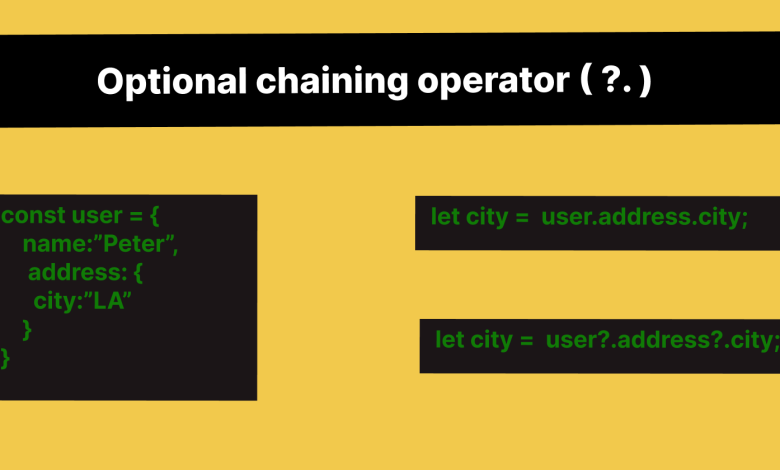
Table of Contents
- The Persistence of Undefined in Modern Development
- Historical Context of the Billion Dollar Mistake
- Advanced Type Safety and Compiler Evolution
- The Role of AI in Predicting Runtime Errors
- Comparative Analysis of Error Handling Models
- Economic Impact of Runtime Crashes
- Best Practices for 2026 Developers
- Future Outlook: Beyond Null and Undefined
Undefined is a term that strikes fear into the hearts of junior developers and causes weary sighs among seasoned software engineers. For over three decades, the concept of a variable existing without a value has plagued the JavaScript ecosystem, leading to the infamous "undefined is not a function" error that has crashed countless applications. As we navigate the technological landscape of 2026, the battle against runtime anomalies has reached a critical turning point. This article provides an authoritative, deep-dive analysis into the state of undefined behavior in modern programming, examining how new ECMAScript standards, advanced TypeScript configurations, and AI-driven static analysis tools are working in concert to eliminate this class of bugs forever.
The Persistence of Undefined in Modern Development
Undefined behavior in software development is not merely a nuisance; it is a fundamental architectural challenge that stems from the dynamic nature of early web scripting languages. In 2026, despite the proliferation of strictly typed languages, the legacy of loose typing continues to influence how modern web applications are built. The core issue lies in the distinction between a variable that has been declared but not assigned a value, and a variable that does not exist at all. In JavaScript, undefined is a primitive type, distinct from null, which is an assignment value representing no value. This subtle difference has historically led to ambiguous code where the intent of the developer is unclear.
Modern frameworks have attempted to mitigate this through rigorous state management and prop validation. However, as applications scale to enterprise levels—often comprising millions of lines of code—the probability of an unhandled undefined state slipping through to production remains statistically significant. The shift towards server-side rendering (SSR) and edge computing has introduced new complexity, as data hydration processes can often result in temporal gaps where data is undefined before the client takes over. Understanding the persistence of this issue requires looking beyond syntax and into the memory management models of browser engines.
Historical Context of the Billion Dollar Mistake
Tony Hoare famously apologized for inventing the null reference, calling it his "billion-dollar mistake." JavaScript took this a step further by introducing both null and undefined. In the early days of the web, this flexibility was a feature, allowing scripts to execute without crashing immediately if data was missing. However, as the web evolved from document viewing to complex application hosting, this permissiveness became a liability. By the mid-2010s, runtime errors related to undefined properties were the number one cause of crashes in React and Angular applications.
The introduction of strict mode in ECMAScript 5 was the first major step in addressing accidental globals and silent errors. Later, the advent of TypeScript brought optional static typing, allowing developers to catch these errors at compile time rather than runtime. Yet, in 2026, legacy codebases and the interoperability between typed and untyped modules mean that undefined continues to be a prevalent issue. The history of this error is a testament to the trade-offs between development velocity and strict correctness.
Advanced Type Safety and Compiler Evolution
Undefined handling has seen a massive overhaul with the latest generation of compilers released in late 2025 and early 2026. The most significant advancement is the standardization of "Sound Null Safety" across the entire JavaScript ecosystem. Unlike previous iterations where strict null checks were optional, modern tooling defaults to a mode where every variable is non-nullable by default unless explicitly declared otherwise.
This shift represents a paradigm change. Compilers now perform deep control flow analysis, tracking the state of variables through closures, async operations, and event loops. If a variable has a mathematical possibility of being undefined, the compiler prevents the build process from completing. This strictness, while frustrating for rapid prototyping, has drastically reduced the incidence of production bugs. Furthermore, new proposals in the ECMAScript pipeline have introduced syntax that safely handles deep object access without the verbose checking required in the past.
The Role of AI in Predicting Runtime Errors
Artificial Intelligence has revolutionized how we detect potential undefined risks. In 2026, IDEs are equipped with Large Language Models (LLMs) that do not just autocomplete code but actively simulate runtime execution paths in the background. These AI agents can predict edge cases that a human reviewer might miss, such as an API returning a 404 error leading to an undefined data object, or a race condition in a React `useEffect` hook.
These tools provide "predictive debugging," highlighting lines of code that are safe syntactically but risky logically. For instance, if a developer accesses a property on an object that comes from an external API, the AI analyzes the API’s schema definition (OpenAPI/Swagger) and warns if the schema allows for optional fields that the code treats as required. This integration of external data contracts into the local development environment is a game-changer for type safety.
Comparative Analysis of Error Handling Models
To understand why JavaScript’s approach to undefined is unique, it is helpful to compare it with other systems languages that have gained popularity in web assembly and backend services.
| Language | Concept of ‘No Value’ | Handling Mechanism | Runtime Risk Level |
|---|---|---|---|
| JavaScript / TypeScript | undefined & null | Optional Chaining (?.), Nullish Coalescing (??), Static Analysis | Medium-Low (High in legacy code) |
| Rust | Option<T> enum | Pattern Matching (match), unwrap() safety | None (Checked at compile time) |
| Go | nil | Explicit error checking (if err != nil) | Medium (Depends on developer discipline) |
| Java | null | Optional<T> wrapper, Annotations | Medium (NullPointerException is still common) |
As shown in the table, while Rust eliminates the concept of null/undefined entirely via the Option type, JavaScript maintains it but wraps it in layers of protective syntax and tooling. The 2026 standard for TypeScript brings it closer to the Rust model, treating undefined as a type that must be "unwrapped" or checked before use, effectively emulating the safety guarantees of systems languages.
Economic Impact of Runtime Crashes
Undefined errors are not just technical debt; they are financial debt. A study conducted in late 2025 estimated that global e-commerce loses over $4.2 billion annually due to client-side JavaScript errors that prevent checkout flows from completing. The majority of these errors were traced back to unhandled undefined exceptions where a user’s cart object or session token was missing.
For SaaS companies, the impact is measured in churn. When a dashboard fails to load data and displays a blank screen (the "White Screen of Death"), user trust erodes immediately. In the competitive market of 2026, application stability is a key differentiator. Companies are now investing heavily in "Resiliency Engineering," a practice that assumes data will be undefined and designs the UI to degrade gracefully—showing skeleton loaders or fallback states instead of crashing the entire component tree.
Furthermore, the cost of debugging these errors is substantial. Identifying why a variable became undefined in a complex asynchronous flow can take senior engineers hours or days. By adopting strict type safety and AI-enhanced tooling, organizations are reducing their maintenance costs by up to 30%, allowing resources to be redirected toward feature development rather than bug fixing.
Best Practices for 2026 Developers
To thrive in this new era of strict safety, developers must adopt a defensive programming mindset. Here are the core strategies for handling undefined in 2026:
- Adopt Zod or Io-TS for Runtime Validation: TypeScript types are erased at runtime. Using validation libraries like Zod ensures that incoming data actually matches the expected shape, throwing informative errors at the boundary rather than cryptic
undefinederrors deep in the UI logic. - Leverage the Nullish Coalescing Operator (??): Stop using the logical OR (||) for default values, as it falsifies 0 and empty strings. The
??operator specifically targetsnullandundefined, preserving valid falsy values. - Use Discriminated Unions: modeling state as a union of types (e.g.,
Loading | Success | Error) makes it impossible to access data that isn’t there. If the state isLoading, the data property simply does not exist on the type, preventing access. - Strict Configuration: Ensure
tsconfig.jsonhas"strict": trueenabled. This is non-negotiable for any modern project.
By following these protocols, developers effectively insulate their application core from the chaos of the outside world, treating all external data as "hostile" until proven valid.
Future Outlook: Beyond Null and Undefined
Looking ahead, the discussion around undefined is moving towards elimination rather than mitigation. Experimental languages and frameworks are exploring "total functional programming" concepts where functions must return a value for every possible input, and partial functions (those that can fail or return nothing) are mathematically constrained. While JavaScript will likely always retain undefined for backward compatibility, the developer experience will become increasingly abstract, hiding these primitives behind robust data structures.
For further reading on the evolution of type safety standards, refer to the TC39 Ecma International proposals repository, which details upcoming changes to the language specification.
In conclusion, while "undefined" remains a reserved keyword in our code, its power to disrupt our applications is diminishing. Through a combination of better standards, smarter compilers, and AI assistance, the software industry is finally closing the chapter on its billion-dollar mistake.