Anderson Cooper Exits ’60 Minutes’ Amid CBS News Leadership Crisis
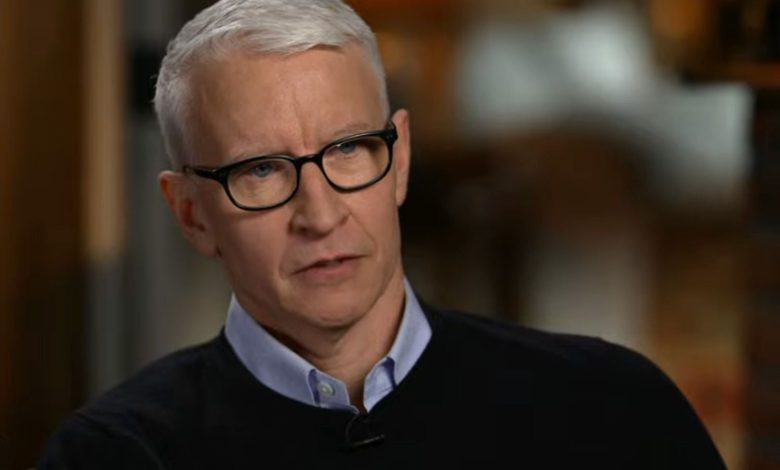
Table of Contents
- The End of an Era: Anderson Cooper Departs
- The Bari Weiss Factor: A Culture Clash at CBS
- The ‘Kill Switch’: Inside the CECOT Prison Segment Controversy
- The Paramount-Skydance Merger Fallout
- Newsroom Revolt: Sharyn Alfonsi and Scott Pelley at Risk
- Data Analysis: The Shift from Legacy to ‘New’ CBS
- The Future of Broadcast Journalism in 2026
- Cooper’s Legacy and Future at CNN
Anderson Cooper has officially announced his departure from 60 Minutes, ending a distinguished 20-year tenure as a correspondent for the most prestigious news magazine in American television history. The announcement on February 17, 2026, marks a seismic shift in the broadcast journalism landscape, coming just months after the chaotic takeover of CBS News by the newly merged Paramount-Skydance entity. While Cooper’s official statement cites a desire to focus on his young family and his primary role at CNN, insiders and industry analysts view the exit as the most significant casualty yet of the internal turmoil following the appointment of Bari Weiss as editor-in-chief.
The departure of a figure as central as Anderson Cooper signals more than just a personnel change; it represents a fundamental fracturing of the traditional broadcast news model. Under the leadership of David Ellison and the editorial direction of Weiss, CBS News is undergoing a radical transformation—pivoting from its legacy roots toward a "personality-driven" digital strategy that has alienated veteran staff and sparked accusations of corporate censorship. This report provides an in-depth analysis of the events leading to Cooper's exit, the specific controversies rocking the 60 Minutes newsroom, and the broader implications for the future of journalism.
The End of an Era: Anderson Cooper Departs
Since the 2006-2007 season, Anderson Cooper has occupied a unique space in American media, straddling the high-velocity world of 24-hour cable news at CNN and the deliberate, investigative storytelling of CBS’s 60 Minutes. His dual role was a rarity in an industry often defined by exclusive contracts, allowing him to bring his on-the-ground reporting from war zones and natural disasters to the Sunday night broadcast.
In his statement, Cooper emphasized the personal toll of maintaining two demanding careers while raising children. "For nearly twenty years, I've been able to balance my jobs at CNN and CBS, but I have little kids now and I want to spend as much time with them as possible," Cooper said. However, the timing of the announcement—coinciding with a reported 15% workforce reduction at CBS News and a newsroom in open revolt—suggests that the decision was accelerated by the changing culture at the network.
Sources close to the production indicate that Cooper, while not publicly criticizing the new leadership, had grown increasingly uncomfortable with the editorial friction introduced by Bari Weiss. The "church and state" separation between corporate ownership and editorial decision-making, a hallmark of CBS News since the days of Walter Cronkite, has been called into question under the new Paramount-Skydance regime.
The Bari Weiss Factor: A Culture Clash at CBS
The catalyst for the current upheaval dates back to October 2025, when Paramount-Skydance completed its acquisition of Weiss's digital media startup, The Free Press, for a reported $150 million. As part of the deal, Weiss was installed as the editor-in-chief of CBS News, a move that stunned the establishment press. Weiss, known for her "heterodox" views and critiques of "woke" culture, promised to shake up a network she described as stagnant and out of touch with "half the country."
Her tenure began with a contentious town hall meeting where she reportedly asked the assembled staff of 60 Minutes, "Why does the country think you're biased?" The question was met with stunned silence from a team that prides itself on nonpartisan investigative rigor. Weiss’s strategy involves shifting resources away from what she terms "commodity news" toward high-engagement, opinion-blended journalism that mirrors the success of the podcast ecosystem.
This strategic pivot has created deep fissures within the organization. While Weiss argues that legacy media must adapt to survive in an era dominated by algorithmic feeds and independent creators, veteran journalists view her approach as an erosion of objective standards. The friction is not merely theoretical; it has manifested in direct editorial interference that many insiders claim drove Cooper to the exit.
The ‘Kill Switch’: Inside the CECOT Prison Segment Controversy
The tension at 60 Minutes reached a boiling point in late 2025 over a segment reported by correspondent Sharyn Alfonsi. The investigation focused on the CECOT "mega-prison" in El Salvador, specifically highlighting the plight of Venezuelan migrants detained without due process. The story had been fully vetted by CBS legal and standards departments and was scheduled for broadcast.
However, just days before it was set to air, Weiss ordered the segment to be pulled. The justification provided was that the report lacked sufficient response from the Trump administration, which had declined repeated requests for comment. Weiss argued that airing the piece without the administration's perspective would appear biased. Alfonsi and her producers vehemently disagreed, arguing that allowing a government entity to kill a story simply by refusing to comment hands politicians a "kill switch" for unfavorable coverage.
This incident, now referred to internally as the "CECOT Censorship," crystallized the fears of the legacy staff. It raised fundamental questions about editorial independence in the face of political pressure—a theme that resonates with broader legal battles, such as the Supreme Court’s review of surveillance and privacy rights in 2026, where the press plays a crucial oversight role. For Cooper, whose career has been built on holding power accountable regardless of political affiliation, this shift in editorial philosophy likely made his departure inevitable.
The Paramount-Skydance Merger Fallout
The editorial chaos is unfolding against a backdrop of severe financial restructuring. The merger between Paramount Global and Skydance Media, orchestrated by David Ellison, was sold to investors as a necessary consolidation to compete with tech giants. However, the reality has been a brutal series of cost-cutting measures. We have analyzed the corporate maneuvers in our detailed report on the Paramount-Skydance hostile bid dynamics, which forecasted exactly this type of post-merger austerity.
In February 2026, CBS News initiated a layoff round affecting approximately 15% of its workforce. These cuts have decimated the production ranks of the CBS Evening News and are now encroaching on the historically protected budget of 60 Minutes. The acquisition of Weiss’s The Free Press for $150 million, while simultaneously firing veteran producers, has created a morale crisis. Staffers perceive the new ownership as prioritizing "star power" and ideological alignment over institutional knowledge and reporting infrastructure.
Newsroom Revolt: Sharyn Alfonsi and Scott Pelley at Risk
Anderson Cooper is the first marquee name to leave, but reports suggest he may not be the last. Correspondents Sharyn Alfonsi and Scott Pelley are rumored to be in precarious positions. Alfonsi’s leaked memo criticizing Weiss’s decision on the El Salvador story was viewed by management as an act of insubordination. Meanwhile, Pelley, the former anchor of the CBS Evening News and a stalwart of the network’s traditional values, has reportedly clashed with Weiss over the "streaming-first" direction.
The potential exit of Alfonsi and Pelley would effectively dismantle the core team of 60 Minutes, leaving the program unrecognizable. The "Game of Thrones" atmosphere described by insiders paints a picture of a newsroom where loyalty to the new regime is valued over journalistic track records.
Data Analysis: The Shift from Legacy to ‘New’ CBS
To understand the magnitude of the changes prompting Cooper’s departure, we have compiled a comparative analysis of the network’s strategic direction before and after the Paramount-Skydance merger.
| Metric | Legacy Era (Pre-2025) | The Weiss-Ellison Era (2026+) |
|---|---|---|
| Editorial Philosophy | Objectivity, "Voice of God" narration, institutional authority. | "Heterodox" perspectives, personality-driven, opinion-blended. |
| Content Strategy | Investigative long-form, linear broadcast focus. | Digital-first, viral clips, podcast integration, "streaming mentality." |
| Political Stance | Centrist establishment, often criticized by the right. | Anti-"woke" pivot, actively courting conservative audiences. |
| Talent Management | Long-tenured correspondents (Cooper, Pelley, Whitaker). | Recruiting independent creators (podcasters, Substack writers). |
| Handling Controversy | Internal debate, fierce defense of stories (e.g., Tobacco industry). | Pre-emptive spiking of stories to avoid political fallout (CECOT). |
The Future of Broadcast Journalism in 2026
The restructuring at CBS News is symptomatic of a broader existential crisis in journalism. As we noted in our analysis of the changing digital landscape in the 2026 Facebook AI report, traditional distribution models are collapsing. The "appointment viewing" model that sustained 60 Minutes for decades is eroding in favor of algorithmic discovery. Weiss’s supporters argue that her "shock therapy" is the only way to save the network from irrelevance. By integrating the nimble, provocative style of The Free Press, they hope to engage a younger demographic that views traditional news as homogenized.
However, the risk is the alienation of the core audience that trusts the 60 Minutes stopwatch. The program has long been the gold standard for American journalism. If it transforms into a platform for partisan grievance or "hot takes," its unique value proposition—deep, fact-based reporting—may disappear. The industry is watching closely to see if other networks follow suit, essentially merging news divisions with entertainment and opinion verticals.
Cooper’s Legacy and Future at CNN
Anderson Cooper leaves behind a library of work at 60 Minutes that stands the test of time. From his harrowing coverage of the earthquake in Haiti to his deep dives into wildlife conservation in Africa, Cooper brought a humanity to the screen that balanced the show’s harder edges. His interviews were masterclasses in empathy and precision. For more context on the political eras Cooper covered, readers can refer to the comprehensive review of the Biden presidency, a period that featured heavily in his recent reporting.
Looking ahead, Cooper will consolidate his efforts at CNN, which itself is navigating a complex media environment. With his departure from CBS, he is no longer split between two masters, potentially allowing him to take on a larger role in defining CNN’s future strategy. Meanwhile, CBS News faces an uncertain future. The loss of Anderson Cooper is a warning flare—a sign that the delicate balance between profit, politics, and the public interest is tilting dangerously. For further reading on the intersection of media and corporate power, visit Variety for ongoing coverage of the industry’s financial shifts.
As the dust settles on this announcement, the question remains: Can 60 Minutes survive without the journalists who made it a legend, or will it become just another casualty of the 2026 media wars?