Miami Dolphins 2026 Roster Purge: Veterans Eye Chargers Move
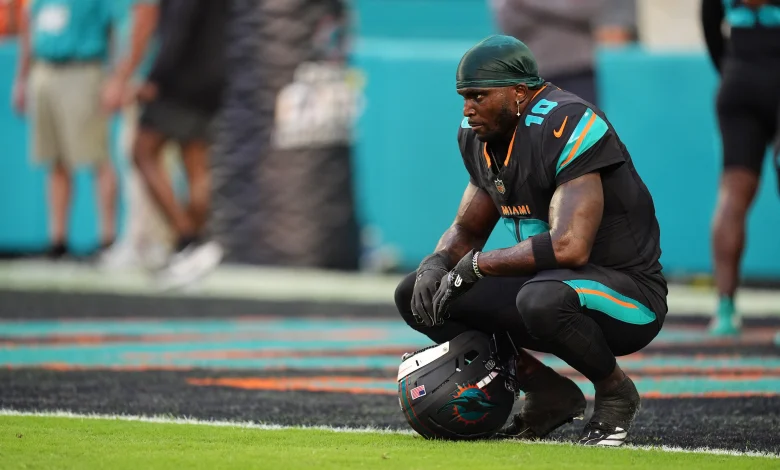
Table of Contents
- The Great Miami Fire Sale: Cap Casualties and Dead Money
- Tyreek Hill’s Release and the Mike McDaniel Connection
- James Daniels: A Low-Risk Interior Upgrade for Los Angeles?
- Bradley Chubb: Bolstering the Chargers’ Pass Rush Rotation
- Chargers’ Financial Advantage: $83 Million in Cap Space
- The Harbaugh-McDaniel Brain Trust: Schematic Fits
- Rebuilding the Wall: Offensive Line Priorities
- Weaponizing the Offense for Justin Herbert
- Data Analysis: Dolphins Cuts vs. Chargers Cap Space
- League-Wide Implications: AFC Power Balance Shift
- Conclusion
Miami Dolphins are currently navigating one of the most tumultuous offseasons in franchise history as the 2026 league year approaches. Following a disappointing 2025 campaign that saw the team miss the playoffs and part ways with head coach Mike McDaniel, the organization has initiated a massive roster purge to correct a salary cap situation that had spiraled out of control. With new General Manager Jon-Eric Sullivan at the helm and Jeff Hafley taking over as head coach, the franchise has made the difficult decision to release several cornerstones of their previous regime, including star wide receiver Tyreek Hill, edge rusher Bradley Chubb, and veteran guard James Daniels. These moves, while necessary to clear over $17 million in cap overages, have created a unique market opportunity for the Los Angeles Chargers, who are flush with cash and currently employ the very man who utilized these players best: offensive coordinator Mike McDaniel.
The Great Miami Fire Sale: Cap Casualties and Dead Money
The sheer scale of the financial reset in South Florida is staggering. Reports confirm that the Dolphins are absorbing nearly $120 million in dead salary cap money for the 2026 season—a figure that effectively signals a “gap year” for the franchise. The release of Tyreek Hill alone accounts for $28.2 million in dead money, while saving the team roughly $22.8 million in immediate space. Hill, who turns 32 in March, is recovering from a torn ACL and dislocated knee suffered in Week 4 of the 2025 season against the New York Jets, making his high cap number untenable for a rebuilding squad.
Similarly, the release of Bradley Chubb clears $7.3 million but leaves a $24 million crater in dead cap. Chubb’s tenure in Miami was marred by injuries, including a torn ACL that wiped out his 2024 season, though he did rebound with 8.5 sacks in 2025. The most financially complex exit, however, might be that of guard James Daniels. Signed to a three-year, $24 million deal in 2025, Daniels played only three snaps before a pectoral injury ended his season. His release triggers a $4.8 million dead cap hit, further compounding Miami’s fiscal paralysis. For a deeper look at the AFC East’s changing landscape, including the fallout from other coaching changes, readers can explore our analysis on Sean McDermott’s firing and the tactical shifts in Buffalo.
Tyreek Hill’s Release and the Mike McDaniel Connection
The narrative linking Tyreek Hill to the Los Angeles Chargers is more than just speculative dot-connecting; it is rooted in one of the most significant coaching hires of the 2026 cycle. After being dismissed by Miami, Mike McDaniel was quickly snatched up by Jim Harbaugh to serve as the Chargers’ offensive coordinator. This union pairs Harbaugh’s physical, ground-and-pound philosophy with McDaniel’s intricate, speed-based passing schemes. Hill, despite his injury and age, remains the ideal “Z” receiver for a McDaniel offense, capable of stretching defenses horizontally and vertically.
While Hill’s health is a legitimate concern, the Chargers are in a position to take a calculated risk. Justin Herbert has lacked a true field-stretcher since the departure of Keenan Allen and Mike Williams in previous years. Even at 85% capacity, Hill’s gravity forces safeties deep, opening up the intermediate zones for the run game—a staple of Harbaugh’s “Schembechler-esque” vision. The Chargers could offer Hill a heavily incentivized, short-term deal that mitigates risk while offering him a chance to rehab his value in a familiar system.
James Daniels: A Low-Risk Interior Upgrade for Los Angeles?
The interior offensive line has been a persistent Achilles’ heel for the Chargers, a weakness that was ruthlessly exploited in their previous playoff exits. With Zion Johnson pending free agency and the center position requiring an upgrade, James Daniels represents a logical, cost-effective target. Daniels is a scheme-versatile lineman who excels in the zone-blocking concepts that McDaniel prefers. His 2025 season was a wash due to the pectoral injury, but prior to that, he was a reliable starter for the Pittsburgh Steelers and Chicago Bears.
For Los Angeles, signing Daniels would allow them to allocate their premium draft capital—specifically the No. 22 overall pick—elsewhere, perhaps on a younger receiver or defensive tackle. Daniels could slide into the right guard spot, providing a veteran presence next to returning tackles Rashawn Slater and Joe Alt. If the Chargers can secure him on a “prove-it” deal similar to what Miami attempted, it could be one of the steals of free agency.
Bradley Chubb: Bolstering the Chargers’ Pass Rush Rotation
Defensively, the Chargers are facing the potential loss of Khalil Mack and Odafe Oweh to free agency. While Tuli Tuipulotu has developed into a star, the modern NFL requires a stable of pass rushers. Bradley Chubb, despite his injury history, offers high-end production when healthy. His connection to the Dolphins’ purge makes him an interesting candidate for a reunion with defensive coordinator Jesse Minter, whose schemes share some DNA with the systems Chubb has played in previously.
Chubb would not need to be the primary alpha in Los Angeles, a role that taxed his body in Miami. Instead, he could operate as a situational pass rusher, keeping his snap counts manageable while maximizing his efficiency. With the Chargers eyeing a Super Bowl run at SoFi Stadium in February 2027, adding a veteran with Chubb’s pedigree aligns with an “all-in” strategy.
Chargers’ Financial Advantage: $83 Million in Cap Space
The dichotomy between Miami’s poverty and Los Angeles’ wealth is the defining story of the 2026 offseason. The Chargers enter the new league year with approximately $83 million in salary cap space, the third-highest total in the NFL. This war chest allows General Manager Joe Hortiz to be aggressive in a way that his counterparts in Miami cannot. While the Dolphins are paying players to *not* play for them, the Chargers can front-load contracts, absorb veteran salaries, and structure deals to maximize the competitive window of Justin Herbert’s prime.
This financial flexibility is crucial given the escalating costs of top-tier talent. For instance, the market for interior offensive linemen has exploded, with top guards now commanding over $20 million annually. By targeting “distressed assets” like the cut Dolphins veterans, the Chargers can acquire starting-caliber talent at a discount, preserving cap space for their own extensions (such as Rashawn Slater) or big-ticket external free agents like Ravens center Tyler Linderbaum. For a broader look at financial trends in sports, see our report on the economics of the 2026 sports calendar.
The Harbaugh-McDaniel Brain Trust: Schematic Fits
The hiring of Mike McDaniel as offensive coordinator signaled a fascinating evolution in Jim Harbaugh’s team-building philosophy. Known for his “bully ball” approach, Harbaugh recognized that to maximize Justin Herbert, the offense needed more complexity and speed. McDaniel’s system relies heavily on pre-snap motion, wide zone runs, and play-action shots—elements that require specific personnel traits: speed at receiver and agility on the offensive line.
This schematic shift makes the former Dolphins players even more valuable to Los Angeles than to other potential suitors. Tyreek Hill doesn’t need to learn a new route tree; he invented the current iteration of it under McDaniel. James Daniels doesn’t need to learn the blocking steps; he was signed by Miami specifically to execute them. This continuity reduces the friction of integration, allowing the Chargers to hit the ground running in training camp.
Rebuilding the Wall: Offensive Line Priorities
Protecting Justin Herbert remains the franchise’s paramount directive. The return of Joe Alt and Rashawn Slater from injuries provides elite bookends, but the interior remains soft. The potential acquisition of James Daniels addresses one guard spot, but the center position is the linchpin. Rumors heavily link the Chargers to Tyler Linderbaum, but should they miss out, a pivot to other veterans is necessary. The goal is to build a wall that allows McDaniel’s long-developing route concepts to flourish. Without a stout interior, the timing-based passing game collapses, as seen in Miami’s struggles late in 2025.
Weaponizing the Offense for Justin Herbert
Beyond the line, the Chargers must upgrade their weaponry. The 2025 season exposed a lack of explosive playmaking. While rookie Ladd McConkey showed promise, he is best suited for the slot. A healthy Tyreek Hill changes the geometry of the field. Even if Hill has lost a step, his reputation demands safety help, which isolates other receivers and lightens the box for the run game. This symbiotic relationship between the run and pass is the holy grail of the Harbaugh-McDaniel partnership.
Data Analysis: Dolphins Cuts vs. Chargers Cap Space
The following table illustrates the financial dynamics at play, contrasting the dead money Miami is eating with the potential market value these players might command from a team like the Chargers.
| Player | 2026 Age | Miami Dead Cap Hit | Miami Cap Savings | Est. Market Value (1-Yr Deal) | Chargers Fit Grade |
|---|---|---|---|---|---|
| Tyreek Hill (WR) | 32 | $28.2 Million | $22.8 Million | $12M – $15M (Incentive heavy) | A+ (Scheme fit) |
| Bradley Chubb (EDGE) | 30 | $23.9 Million | $7.3 Million | $8M – $10M | B (Health dependent) |
| James Daniels (G) | 28 | $4.8 Million | $2.4 Million (Post-June 1) | $4M – $6M | A (Need + Value) |
| Tua Tagovailoa (QB) | 28 | $99M (if cut pre-June 1) | -$43M (Negative Savings) | N/A (Trade likely) | F (Chargers set at QB) |
League-Wide Implications: AFC Power Balance Shift
Miami’s retreat from contention opens the door for a reshuffling of the AFC hierarchy. With the Bills also undergoing a transition post-McDermott, the AFC East is vulnerable, potentially allowing the New York Jets or New England Patriots to rise. Conversely, the Chargers’ aggressive posturing signals their intent to challenge the Kansas City Chiefs’ hegemony in the West. By absorbing the talent Miami is shedding, Los Angeles is effectively transferring the Dolphins’