Annular Solar Eclipse: Ring of Fire 2024-2025 & 2026 Path
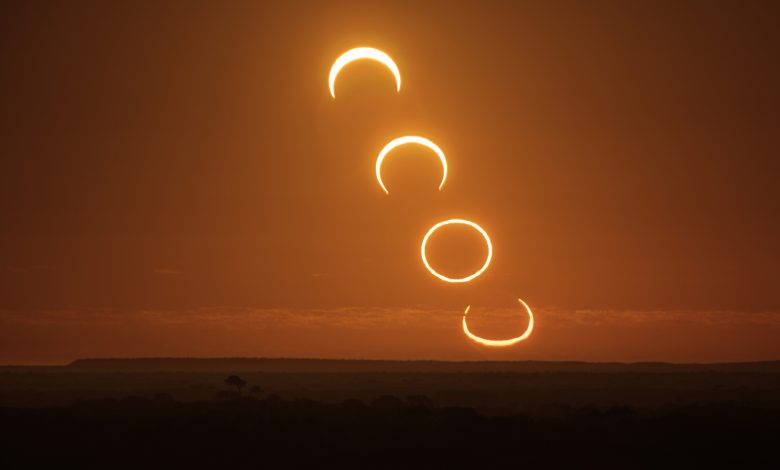
Table of Contents
- The Significance of the Annular Solar Eclipse
- Tracing the Ring of Fire: The 2024-2025 Cycle
- Today’s Event: Path of Annularity over Antarctica
- Celestial Alignment and the Antumbra Shadow
- Solar Cycle 25 and Atmospheric Effects
- Essential Viewing Safety: ISO 12312-2 Certified Gear
- Weather Forecasting and Visibility Trends
- Future Eclipse Chronology: Beyond 2026
Annular Solar Eclipse events represent some of the most visually arresting phenomena in astronomy, captivating observers with the iconic "Ring of Fire" effect. As we navigate the celestial calendar from the transformative eclipses of 2024 through the quiet gap of 2025 and into today’s spectacular event on February 17, 2026, the alignment of the Earth, Moon, and Sun continues to offer profound scientific insights. This comprehensive analysis explores the trajectory of the Annular Solar Eclipse phenomenon during the 2024-2025 period and its culmination in the present Antarctic spectacle.
The Significance of the Annular Solar Eclipse
An Annular Solar Eclipse occurs when the Moon passes directly between the Earth and the Sun but does not completely cover the solar disk. Unlike a total solar eclipse, where the Moon’s apparent diameter is large enough to block the Sun entirely, an annular eclipse happens when the Moon is near its apogee, or the point farthest from Earth in its elliptical orbit. This distance causes the lunar disk to appear slightly smaller than the Sun, leaving a brilliant ring of sunlight—the annulus—visible around the silhouette of the Moon. This "Ring of Fire" is distinct from the corona seen during totality and presents unique challenges and opportunities for astronomers.
The mechanics of this celestial alignment rely heavily on the precise distances involved. The Moon’s shadow consists of the umbra (total shadow) and the penumbra (partial shadow). During an Annular Solar Eclipse, the tip of the umbra falls short of reaching the Earth’s surface. Instead, a negative shadow called the antumbra forms. Observers situated within the path of the antumbra witness the ring effect, while those in the penumbra see a partial solar eclipse.
Tracing the Ring of Fire: The 2024-2025 Cycle
To understand today’s event, we must look back at the Annular Solar Eclipse activity of the 2024-2025 cycle. The period began with a major event on October 2, 2024. This eclipse swept across the Pacific Ocean and southern South America, offering observers in Chile and Argentina a dramatic view of the Ring of Fire. The 2024 event was pivotal because it occurred during the ascending phase of Solar Cycle 25, providing researchers with data on how the ionosphere reacts to sudden drops in solar irradiance.
Interestingly, the year 2025 served as a "gap year" for annular events. While 2025 featured partial solar eclipses—specifically on March 29 and September 21—there was no full Annular Solar Eclipse during that calendar year. This pause is a natural consequence of the Saros cycle and orbital nodes. The absence of a Ring of Fire in 2025 heightened anticipation for the 2026 return, making today’s event in Antarctica even more significant for the scientific community. For those tracking the broader sequence, understanding these gaps is crucial for predicting future observational opportunities.
| Date | Eclipse Type | Primary Visibility (Annularity/Totality) | Max Duration |
|---|---|---|---|
| October 2, 2024 | Annular | Southern South America (Chile, Argentina) | 7 min 25 sec |
| March 29, 2025 | Partial | Europe, North Asia, North/West Africa | N/A (Partial) |
| September 21, 2025 | Partial | South Pacific, New Zealand, Antarctica | N/A (Partial) |
| February 17, 2026 | Annular | Antarctica (Today’s Event) | 2 min 20 sec |
| August 12, 2026 | Total | Arctic, Greenland, Iceland, Spain | 2 min 18 sec |
Today’s Event: Path of Annularity over Antarctica
The Annular Solar Eclipse occurring today, February 17, 2026, traces a remote and challenging path of annularity. Unlike the 2024 event which crossed populated regions of South America, today’s antumbra shadow falls primarily over the pristine and icy landscapes of Antarctica. The path begins in the southern Indian Ocean, sweeps across the Antarctic continent, and concludes near the Ross Sea.
For the few expeditions and research stations situated within this path, the maximum coverage will last approximately 2 minutes and 20 seconds. During this brief window, the "Ring of Fire" will hover above the frozen horizon. While direct observation is limited to scientists and extreme tourists, the partial solar eclipse phases are visible from southern tips of Africa and South America. This event is particularly valuable for atmospheric scientists studying the effects of solar obstruction in polar regions, where the magnetic field lines are vertical and the ionosphere is highly reactive.
Those braving the extreme cold to witness this must be well-prepared. Comprehensive guides on winter storm preparedness science are essential for anyone operating in these high-latitude environments, ensuring that the pursuit of astronomical wonder does not compromise survival safety.
Celestial Alignment and the Antumbra Shadow
The geometry of an Annular Solar Eclipse is a testament to the precision of celestial mechanics. The alignment, known as syzygy, requires the Sun, Moon, and Earth to be in a near-perfect straight line. However, the nuance lies in the Moon’s orbit. Today, the Moon is near apogee, making it appear approximately 6% smaller than the Sun. This size discrepancy prevents the formation of a total eclipse’s darkness.
As the Moon’s silhouette glides across the Sun, observers equipped with high-powered telescopes may witness Baily’s beads—points of sunlight shining through the rugged lunar valleys along the limb of the Moon. These beads appear just before and after the annular phase. In an annular eclipse, they can sometimes form a broken ring if the lunar limb is particularly uneven. The study of these light anomalies helps refine our understanding of the lunar topography.
Advanced optical equipment is necessary to capture these details. Trends in optics and lens technology suggest that modern telephoto lenses and solar telescopes are becoming more accessible, allowing even amateur astronomers to document the intricate dance of the antumbra shadow with professional fidelity.
Solar Cycle 25 and Atmospheric Effects
The current Annular Solar Eclipse takes place against the backdrop of Solar Cycle 25, which has been notably active. The solar maximum, expected to peak around this period, means the Sun is riddled with sunspots and active regions. When the Moon obscures the central disk, it acts as a natural coronagraph, allowing scientists to observe the outer solar atmosphere more clearly, although the glare of the annulus usually outshines the corona.
Recent data indicates that Solar Cycle 25 has produced historic flares, including the massive X8.1 flare from sunspot AR4366. Observing an eclipse during such a volatile period offers a rare chance to see how the sudden drop in UV radiation affects the Earth’s upper atmosphere. The cooling effect of the eclipse shadow can generate atmospheric gravity waves, ripples in the air that travel thousands of kilometers. Understanding these waves is crucial for improving global communication systems that rely on ionospheric stability.
Essential Viewing Safety: ISO 12312-2 Certified Gear
Observing an Annular Solar Eclipse requires strict adherence to safety protocols. Unlike a total eclipse, there is never a safe time to look directly at the Sun during an annular event with the naked eye. The ring of sunlight remaining is intense enough to cause permanent retinal damage, known as solar retinopathy.
Viewers must use solar eclipse glasses that meet the ISO 12312-2 international safety standard. These filters block 99.999% of visible light and all harmful UV and IR radiation. It is critical to inspect these glasses for scratches or pinholes before use. For those using cameras, binoculars, or telescopes, a dedicated solar filter must be attached to the front of the objective lens. Never wear eclipse glasses while looking through an unfiltered optical instrument, as the magnified sunlight will burn through the glasses and damage the eye instantly.
For general updates and safety reminders, consulting a reliable blog or astronomical society page is recommended to stay informed about the latest safety standards and gear recalls.
Weather Forecasting and Visibility Trends
The visibility of any Annular Solar Eclipse is entirely dependent on local weather conditions. For today’s Antarctic eclipse, the challenge is compounded by the harsh polar climate. Cloud cover statistics for February in Antarctica are variable, often dominated by coastal storms. However, the cold, dry air of the interior plateau can offer crystal-clear skies for viewing.
Advancements in weather forecasting technology in 2026 have significantly improved our ability to predict eclipse visibility. AI-driven models now analyze satellite data to provide micro-climate predictions, helping expedition leaders position themselves in gaps between cloud banks. This technological leap ensures that the logistical effort of reaching the path of annularity is less likely to be thwarted by last-minute weather changes.
Future Eclipse Chronology: Beyond 2026
As the Annular Solar Eclipse of February 17, 2026, concludes, astronomers are already looking ahead. The 2024-2025-2026 sequence is just one chapter in the ongoing saros cycles. The next major event this year will be the Total Solar Eclipse on August 12, 2026, visible from the Arctic, Greenland, Iceland, and Spain. This will be the first total eclipse visible from the European mainland in decades.
Following that, the next annular eclipse will occur on February 6, 2027, passing over Chile, Argentina, and the Atlantic Ocean. This continues the trend of South American visibility established in 2024. For eclipse chasers, the journey never truly ends; each alignment offers a new perspective on our place in the cosmos. Whether viewing from the frozen wastes of Antarctica or the high deserts of Chile, the "Ring of Fire" remains a powerful reminder of the clockwork precision of our solar system.
For detailed maps and precise timing of future eclipses, reputable sources like NASA’s Eclipse Website provide invaluable data for planning upcoming expeditions.