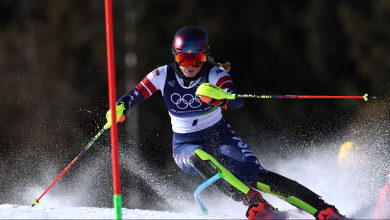
Winter Olympics Day 10: Historic US Women’s Dominance in Monobob and Hockey
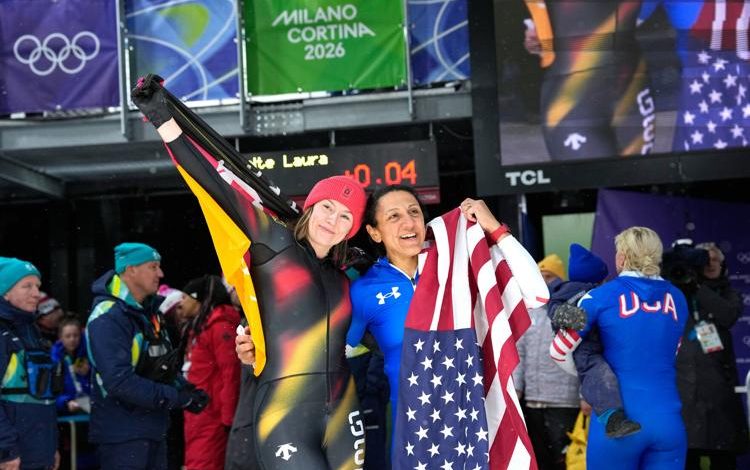
Table of Contents
- Historic Monobob Debut: Humphries and Meyers Taylor Shine
- Mastering the Dragon: Yanqing Sliding Centre Analysis
- USA vs Canada: The Hockey Rivalry Reignited
- Ice Dance: Papadakis and Cizeron’s Record-Breaking Gold
- Freestyle Skiing: Xu Mengtao’s Emotional Victory
- Strategic Implications of Day 10 Results
- From Beijing to Milano Cortina 2026
Winter Olympics Day 10 of the Beijing 2022 Games stands as a monumental chapter in the history of winter sports, particularly for the United States women’s team. As the world turned its eyes to the Yanqing Sliding Centre and the Wukesong Sports Centre, history was not just made; it was rewritten. This day, February 14, 2022, delivered the debut of women’s monobob as an Olympic discipline, solidifying the legacy of veteran sliders while setting the stage for one of the fiercest rivalries in team sports. In this comprehensive retrospective, we dissect the technical mastery, athletic brilliance, and strategic nuances that defined this pivotal day.
Historic Monobob Debut: Humphries and Meyers Taylor Shine
The introduction of the Women’s Monobob at the Beijing 2022 Winter Olympics marked a significant shift in the sliding sports landscape. Unlike the two-woman or four-man events where teamwork and synchronization are paramount, monobob places the entire burden of performance on a single athlete. The driver must push, pilot, and brake, requiring a unique blend of explosive power and cognitive precision. On Winter Olympics Day 10, Kaillie Humphries of Team USA demonstrated why she is considered one of the greatest bobsledders of all time.
Kaillie Humphries gold medal performance was a masterclass in driving consistency. Over four heats, she maintained a commanding lead, navigating the complex curves of the "Snow Dragon" track with surgical precision. Finishing with a total time of 4:19.27, Humphries secured not only the first-ever Olympic gold in monobob but also her third Olympic title overall. Her victory was particularly poignant given her transition from representing Canada to the United States, a journey fraught with legal and emotional challenges.
Following closely behind was her teammate, Elana Meyers Taylor, who claimed the silver medal. Meyers Taylor, who had arrived in Beijing in isolation due to COVID-19 protocols, showcased immense mental fortitude. Her silver medal cemented her status as the most decorated Black athlete in Winter Olympic history. The 1-2 finish for Team USA underscored the country’s depth in the sport and the effectiveness of their development programs. The strategic cognitive science of connections between driver and sled was evident in how both women adapted to the standardized equipment provided for the event.
Mastering the Dragon: Yanqing Sliding Centre Analysis
The venue for this historic monobob event, the Yanqing Sliding Centre, presented a formidable challenge. Known as the "Snow Dragon," the track features a 360-degree loop and unparalleled vertical drops. On Winter Olympics Day 10, the ice conditions were fast and unforgiving, testing the reflexes of every competitor. The Olympic bobsled standings were heavily influenced by how drivers managed the notorious Curve 13, a section that claimed several crashes during training runs.
For the monobob event, all athletes used identical sleds, removing technological disparity and placing a premium on driving skill. This standardization meant that the results were a pure reflection of athletic ability and track analysis. Humphries’ ability to find the optimal line through the labyrinthine lower section of the track proved to be the decisive factor. Her exit velocities out of the Kremlin corner consistently outpaced her rivals, allowing her to build an insurmountable lead.
USA vs Canada: The Hockey Rivalry Reignited
While the sliders dominated the mountains, the Wukesong Sports Centre hosted critical semifinals in women’s ice hockey. The USA vs Canada women’s hockey rivalry is arguably the most intense in winter sports, and Day 10 set the stage for their inevitable gold medal clash. Team USA faced Finland in the semifinals, delivering a disciplined 4-1 victory. Despite a sluggish start, the Americans, led by Hilary Knight and Kendall Coyne Schofield, overwhelmed the Finnish defense with superior speed and puck possession.
Simultaneously, Canada dismantled Switzerland with a 10-3 victory, showcasing an offensive juggernaut that seemed unstoppable. The contrast in styles was evident: Canada’s relentless scoring power versus the United States’ methodical, possession-based game. These results on Winter Olympics Day 10 guaranteed that the two North American giants would meet in the final, a scenario that sports fans and broadcasters had anticipated since the opening faceoff. For viewers watching via modern streaming platforms, the evolution of coverage has been immense; seeing how services handle such high-demand events is reminiscent of the analysis found in our FuboTV stock and streaming guide.
Team USA Women’s Hockey Schedule and Path
The victory over Finland was a crucial morale booster for Team USA. The schedule had been grueling, but the semifinal win allowed them to refocus on the gold medal objective. The tactical adjustments made during the Finland game—specifically the improved power-play execution—were vital preparations for the speed of the Canadian team.
| Event | Gold / Winner | Silver / Runner-Up | Bronze / Third | Key Note |
|---|---|---|---|---|
| Women’s Monobob | Kaillie Humphries (USA) | Elana Meyers Taylor (USA) | Christine de Bruin (CAN) | Inaugural Olympic Champion |
| Ice Dance | Papadakis / Cizeron (FRA) | Sinitsina / Katsalapov (ROC) | Hubbell / Donohue (USA) | World Record Score |
| Women’s Hockey (SF) | USA (4) | Finland (1) | – | USA Advances to Final |
| Women’s Hockey (SF) | Canada (10) | Switzerland (3) | – | Canada Advances to Final |
| Women’s Aerials | Xu Mengtao (CHN) | Hanna Huskova (BLR) | Megan Nick (USA) | Host Nation Gold |
Ice Dance: Papadakis and Cizeron’s Record-Breaking Gold
Beyond the sliding track and hockey rink, Winter Olympics Day 10 witnessed artistry on ice at the Capital Indoor Stadium. French ice dancers Gabriella Papadakis and Guillaume Cizeron finally claimed the elusive Olympic gold that had slipped through their fingers in PyeongChang 2018. Their performance to Gabriel Fauré’s "Élégie" was nothing short of perfection, earning a world-record total score of 226.98.
Team USA also found success in this discipline, with Madison Hubbell and Zachary Donohue securing the bronze medal. The competition highlighted the technical evolution of ice dance, where the margins between podium finishes are determined by fractions of a point in grade of execution (GOE). The emotional release from the French duo upon seeing their scores remains one of the defining images of the Beijing Games.
Freestyle Skiing: Xu Mengtao’s Emotional Victory
For the host nation, Winter Olympics Day 10 was defined by Xu Mengtao’s triumph in women’s aerials. After years of near-misses and injuries, Xu landed a brilliant back-lay-full-full to claim gold at the Genting Snow Park. Her victory was a significant moment for Chinese winter sports, validating the country’s massive investment in snow disciplines. American Megan Nick surprised the field to take bronze, executing a high-difficulty jump that edged out more experienced competitors. This event underscored the global expansion of freestyle skiing, a trend we continue to monitor as we look toward future games.
Strategic Implications of Day 10 Results
The outcomes of Winter Olympics Day 10 had profound implications for the medal table and national funding strategies. For the United States, the dominance in monobob validated the push for gender equity in bobsledding disciplines. The event was added to the Olympic program specifically to provide more opportunities for female sliders, and Team USA’s capitalization on this opportunity was a testament to their robust recruitment from track and field backgrounds.
Furthermore, the intensity of the competition mirrors the fiercest rivalries in professional sports. Much like the Mavericks vs Bucks rivalry renewed in the NBA, the USA-Canada hockey dynamic drives innovation and performance. Both teams push each other to higher levels of speed and physicality, raising the standard for women’s hockey globally.
From Beijing to Milano Cortina 2026
As we reflect on the achievements of February 14, 2022, it is impossible not to look forward to the next evolution of these sports. The Winter Olympics Day 10 results from Beijing set a baseline for performance that athletes are currently striving to surpass in preparation for the 2026 Games. The monobob field has deepened, with European nations investing heavily to catch up to the North American standard established by Humphries and Meyers Taylor.
The venues in Milano Cortina will offer different challenges compared to the artificial perfection of Beijing’s Yanqing track. Traditional European tracks often feature more organic profiles, which may favor drivers with different skill sets. For a comprehensive look at what to expect in the upcoming games, refer to our Ultimate Guide to Milano Cortina 2026.
In conclusion, Winter Olympics Day 10 of Beijing 2022 was a watershed moment. It was a day where the solitary bravery of monobob drivers and the collective grit of hockey teams took center stage. The historic US women’s dominance in monobob, led by Kaillie Humphries, will be remembered as the gold standard for the discipline’s Olympic inauguration. As the torch passes toward future competitions, the legacy of this day remains a powerful testament to the resilience and excellence of female athletes on the world’s biggest stage.