Netflix Reality Check: America’s Next Top Model Docuseries Secrets
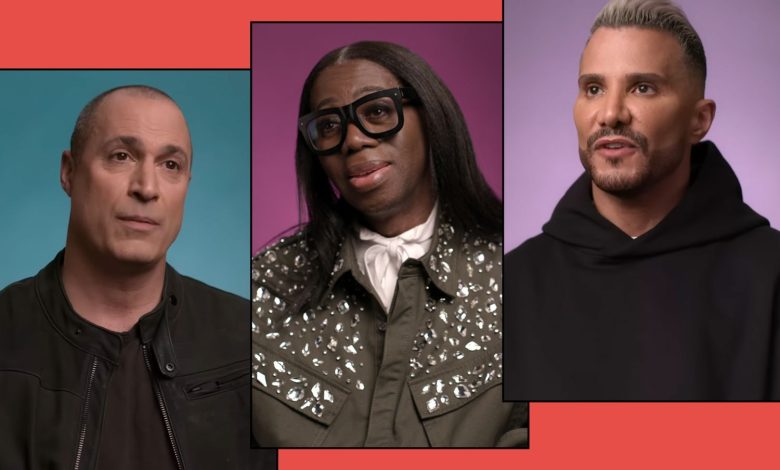
Table of Contents
- The Reckoning Has Arrived
- The “Monster” Confession: Tyra and Mok Speak
- Shandi Sullivan’s Milan Incident: A Darker Truth
- Psychological Warfare: The Makeover Room
- Financial Disparity: The Reality Gap
- The Tiffany Richardson Explosion Revisited
- The Counter-Movement: Lisa D’Amato’s Stand
- The Future of Reality TV Transparency
Netflix Reality Check has officially dropped, and the landscape of reality television history may never be the same. Released today, February 16, 2026, the three-part docuseries titled Reality Check: Inside America’s Next Top Model tears down the glossy façade of the early 2000s’ most influential fashion competition. For over two decades, America’s Next Top Model (ANTM) stood as a titan of pop culture, a show that promised to turn small-town girls into high-fashion superstars. However, as the new Netflix investigation reveals, the cost of that potential stardom was often the contestants’ mental health, physical safety, and dignity. Featuring unprecedented interviews with creator Tyra Banks, executive producer Ken Mok, and a legion of traumatized alumni, the series confirms what internet sleuths have suspected for years: the cruelty was the point.
The release comes at a time when the entertainment industry is undergoing a massive audit of its past practices. Much like the revelations surrounding other media empires, the ANTM exposé highlights a systemic failure to protect vulnerable talent. As audiences binge through the episodes, the conversation has shifted from nostalgic meme-sharing to horror at the production mechanics that allowed such exploitation to thrive.
The “Monster” Confession: Tyra and Mok Speak
For years, Tyra Banks has deflected criticism regarding her behavior on the show, often citing the harsh realities of the fashion industry as justification for her tough-love approach. In Netflix Reality Check, however, the tone shifts. Banks, sitting for a solo interview that frames much of the series, admits, “I knew I went too far.” It is a rare moment of concession from the supermodel mogul, though it is quickly followed by a pivot that many critics are already calling deflection. Banks argues that the audience “demanded” the drama, stating, “We kept pushing it, more and more and more, because you guys were demanding it.”
Perhaps the most damning soundbite comes not from Banks, but from executive producer Ken Mok. Often seen as the unseen hand guiding the narrative, Mok candidly admits to the camera, “There was a moment I realized, ‘Oh my God, I think we’ve built a monster.'” This acknowledgment of the show’s runaway toxicity serves as the thesis for the entire docuseries. The production team details how they treated the show as a “documentary” to justify non-intervention during crises, a defense that crumbles under the weight of the specific allegations leveled by former contestants.
Shandi Sullivan’s Milan Incident: A Darker Truth
One of the most harrowing segments of the series focuses on Cycle 2 contestant Shandi Sullivan. For over 20 years, Sullivan’s storyline was defined by a “cheating scandal” in Milan, where she was filmed being intimate with a male model while having a boyfriend back home. The narrative broadcast to millions was one of infidelity and poor judgment. The narrative presented in Netflix Reality Check is one of predation and negligence.
Sullivan reveals that on the night in question, she was blackout drunk—a state exacerbated by production providing the alcohol and hiring the male models to “drive” the contestants. “I was so blacked out I hardly remember the experience,” Sullivan states in a tearful interview. She argues that under such intoxication, she could not consent, yet the cameras continued to roll, and no producer stepped in to ensure her safety. The show then weaponized this footage for ratings, framing a potential assault as a salacious plot twist. This revelation recontextualizes one of the show’s most infamous moments, transforming it from a “reality TV gold” moment into a documentation of failure of duty of care.
Psychological Warfare: The Makeover Room
The “Makeover Episode” was arguably the most anticipated broadcast of every ANTM cycle. It was also, according to the docuseries, a site of calculated psychological warfare. Contestants describe the experience not as a professional update to their look, but as a systematic stripping of their identity. Jeana Turner, a Cycle 24 finalist who suffers from alopecia, details how she was pressured to remove her wig and expose her baldness, only to be allegedly called a “prostitute” by Banks in a moment not aired on TV.
Dani Evans, the winner of Cycle 6, revisits the infamous “gap tooth” controversy. The show originally depicted Evans as stubborn for refusing to close the gap in her front teeth, with Banks suggesting she would never work as a CoverGirl with it. In Netflix Reality Check, Evans breaks down, describing the immense pressure she was under to alter her body permanently for a television storyline. Banks addresses this specifically, claiming she was caught “between a rock and a hard place” with agencies, but for Evans, the trauma of that coercion remains fresh. This segment illustrates a broader theme of control, where contestants were allegedly confined to their rooms, deprived of contact with the outside world, and sometimes restricted from eating freely, all to induce the high-stress environment necessary for explosive television.
| Incident / Contestant | Original TV Narrative | Reality Check Docuseries Revelation |
|---|---|---|
| Shandi Sullivan (Cycle 2) | Betrayed her boyfriend by cheating with a male model in Milan due to poor impulse control. | Was blackout drunk on production-supplied alcohol; alleges inability to consent and lack of producer intervention. |
| Dani Evans (Cycle 6) | Refused dental surgery out of stubbornness; Tyra saved her career by insisting on closing the gap. | Felt coerced into permanent body modification; Tyra admits to pressuring her due to agency demands. |
| Tiffany Richardson (Cycle 4) | Ungrateful for the opportunity; Tyra’s explosion was “tough love” from a mother figure. | Tyra said “a lot more” that was edited out; legal teams were called to set the next day due to the severity of the verbal dressing-down. |
| Jeana Turner (Cycle 24) | Received a liberating makeover embracing her alopecia. | Describes strict confinement, food restriction, and derogatory comments from Banks about her past work. |
Financial Disparity: The Reality Gap
While America’s Next Top Model generated hundreds of millions of dollars in revenue through syndication, merchandise, and international franchises, the models themselves saw pennies. The docuseries exposes the stark financial inequality that plagued the production. Sarah Hartshorne and other contestants reveal they were paid a per diem of roughly $40 a day—and were often expected to pay for their own food out of that sum.
This economic exploitation is particularly jarring when contrasted with the massive payouts received by Banks and Mok. The show operated under the guise of an “opportunity,” using the promise of exposure to bypass standard union rates and working condition regulations. This business model is not unique to ANTM, but as discussed in analysis of media industry leadership crises, the disparity between executive compensation and talent treatment is becoming a central legal battleground in 2026. The docuseries suggests that many models left the show not with a career, but with debt and a reputation that the fashion industry actively shunned because of the “reality TV stigma.”
The Tiffany Richardson Explosion Revisited
No moment in ANTM history is more viral than Tyra Banks screaming, “Be quiet, Tiffany!” at Tiffany Richardson in Cycle 4. For years, this clip has been circulated as a meme of frustration and passion. Netflix Reality Check deconstructs this scene frame by frame. Jay Manuel, the show’s creative director, reveals in his interview that the aired footage was a sanitized version of a much longer, darker tirade.
Manuel implies that the things said in that room were so personal and vicious that they crossed the line into verbal abuse. “People have tried to make it something funny, but it really wasn’t,” he notes. The docuseries reveals that the production team was in crisis mode the following day, with lawyers arriving on set to manage the potential liability of Banks’ outburst. This reframing strips the “meme” of its humor, revealing a power dynamic where a billionaire host publicly humiliated an impoverished contestant for “good TV.” This kind of re-examination of viral moments aligns with how we now scrutinize drama in entertainment, questioning the human cost behind the scenes.
The Counter-Movement: Lisa D’Amato’s Stand
Not every former contestant is satisfied with the Netflix narrative. Lisa D’Amato, winner of the All-Stars cycle and a vocal critic of Banks, has publicly denounced Reality Check as a “money grab” for Banks and Mok. D’Amato argues that by participating in the documentary, Banks is once again controlling the narrative, offering a “soft” apology to avoid true accountability.
D’Amato is spearheading a competing investigation, ANTM: Dirty Rotten Scandals, set to air on E! in March. She claims her project will delve even deeper into the “psychological warfare” of the show without the sanitized lens of a Netflix production that features the perpetrators as executive producers or interview subjects. This split in the alumni community underscores the complexity of the show’s legacy—even in exposing the truth, there is a battle over who owns the story. The “unsealing” of these truths parallels other major cultural exposes, such as the unsealed court documents that have redefined public understanding of power and complicity in recent years.
The Future of Reality TV Transparency
The release of Netflix Reality Check marks a turning point. It is no longer possible to watch early 2000s reality television with innocent eyes. The docuseries forces a reckoning not just for Tyra Banks, but for the audience that consumed this content voraciously. As Ken Mok admitted, the viewers helped feed the “monster.”
For the fashion industry, the series serves as a critical indictment of the standards that ANTM claimed to challenge but ultimately reinforced. By exposing the manipulation, hunger deprivation, and psychological abuse disguised as “boot camp,” Netflix has effectively killed the potential for an ANTM reboot—at least, one that resembles the original format. The legacy of America’s Next Top Model is now a cautionary tale of what happens when human beings are treated as raw material for a content mill.