Wes Moore CBS News Town Hall: 2026 Highlights & 2028 Future
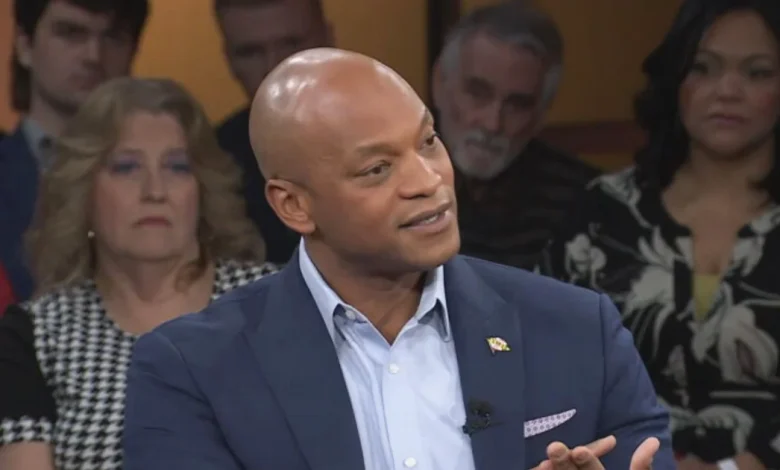
Table of Contents
- The CBS "Things That Matter" Town Hall Overview
- The "Worthiness" Feud: Moore vs. Trump
- 2028 Presidential Ambitions: A Definitive "No"?
- Epstein Documents & Calls for Justice
- Immigration & The "Party of Results" Pivot
- Data Analysis: Maryland Approval Ratings & Trends
- Economic Resilience Amidst Federal Cuts
- Public Safety Milestones & Baltimore’s Turnaround
- Conclusion: The Future of Democratic Leadership
Wes Moore, the Governor of Maryland and a central figure in the evolving landscape of the Democratic Party, took center stage this week in a high-stakes CBS News Town Hall that has reignited national conversation regarding his political trajectory. As the nation navigates the tumultuous political waters of early 2026, Moore’s appearance on the "Things That Matter" series with Norah O’Donnell served as both a state-level progress report and a national stress test for his brand of pragmatic progressivism. Facing direct questions about his feud with President Donald Trump, the release of unredacted Epstein documents, and the persistent rumors of a 2028 presidential run, Moore delivered a performance that was equal parts combative and contemplative.
The broadcast, aired on February 16, 2026, came at a critical juncture for Moore, who is balancing his reelection campaign for governor with his role as a leading voice against the current administration’s policies. From declaring he would "bow down to no one" to outlining a vision for a Democratic Party that sheds its reputation for being "slow," the Town Hall offered a comprehensive look at a leader attempting to bridge the divide between partisan warfare and effective governance. This article provides an extensive analysis of the event, dissecting the key moments, the data behind his administration’s performance, and the implications for the 2026 midterms and beyond.
The CBS "Things That Matter" Town Hall Overview
The "Things That Matter" series, filmed at The Packing House in Cambridge, Maryland, was designed to move beyond the soundbites of Washington and address the tangible concerns of voters. For Wes Moore, this setting provided a home-field advantage that he utilized to pivot between local achievements and national critiques. The atmosphere was charged, reflecting the polarized nature of 2026 politics, yet Moore maintained a disciplined focus on what he termed "consequences over chaos."
Throughout the hour-long special, Moore faced a barrage of inquiries that spanned the spectrum of modern American anxiety: the rising cost of living, the integrity of federal institutions, and the safety of communities. Unlike typical political interviews that often devolve into talking points, this Town Hall forced Moore to address uncomfortable realities, including a recent dip in his approval ratings and the friction between his state’s federal workforce and the Trump administration’s efficiency cuts. His ability to navigate these topics without alienating independent voters—a demographic critical to his 2026 reelection strategy—was a primary takeaway for political analysts watching the broadcast.
The "Worthiness" Feud: Moore vs. Trump
One of the most explosive segments of the evening revolved around the escalating personal and political conflict between Governor Moore and President Donald Trump. The tension reached a boiling point prior to the Town Hall when President Trump, in a post on his social media platform, explicitly stated that Moore was "not worthy" of an invitation to the National Governors Association (NGA) dinner at the White House. The insult, which broke decades of bipartisan tradition, was framed by the President as a response to Moore’s outspoken criticism of federal policies.
Moore did not mince words when O’Donnell pressed him on the snub. "I do want to be clear to the president, respectfully, you do not determine my worthiness," Moore declared, a line that immediately trended across social platforms. "God determines my worthiness. The people of Maryland determine my worthiness. They are who I answer to, not him." This moment encapsulated Moore’s strategy of moral opposition; rather than engaging in a mudslinging contest on the President’s terms, he elevated the dispute to a matter of democratic principle and personal faith.
The Governor went further, characterizing the President’s recent social media behavior as "unhinged" and "full of lies." This rhetorical clash highlights the deepening rift between state executives and the federal government in 2026. For further context on how digital platforms are shaping these high-level political feuds, readers can explore our analysis of Trump accounts and social media empires in 2026. Moore’s refusal to attend the meeting—stating, "If the point of the meeting is to turn it into name-calling… I will not go"—signals a new era of non-cooperation where Democratic governors are increasingly positioning themselves as the primary firewall against federal overreach.
2028 Presidential Ambitions: A Definitive "No"?
Perhaps the most persistent question shadowing Wes Moore’s governorship is his potential candidacy for the White House in 2028. With the Democratic Party searching for its next standard-bearer following the setbacks of 2024, Moore is frequently cited alongside other rising stars like Gavin Newsom and Josh Shapiro. However, during the CBS Town Hall, Moore attempted to shut down this speculation with categorical denials.
"I’m not running for president," Moore stated firmly when asked directly about his ambitions. He emphasized his commitment to his current job, citing the incomplete work of his first term and his focus on the 2026 reelection bid. "I love my job, and I love what I’m doing. I don’t see a reason to leave," he added. Despite these denials, political observers note that such statements are standard operating procedure for potential candidates two years out from a primary cycle. By focusing on Maryland, Moore avoids the "absentee governor" label that has plagued other hopefuls.
The strategy appears to be one of "wait and see." By solidifying his record in Maryland—specifically in areas of public safety and economic resilience—Moore is building a resume that could naturally translate to a national campaign, regardless of his current denials. His rhetoric during the Town Hall, which often touched on national themes of unity and service, sounded to many like the early stumping of a candidate testing the waters for a broader appeal.
Epstein Documents & Calls for Justice
In a surprising turn for a state-level Town Hall, the conversation shifted to the recent release of unredacted documents related to Jeffrey Epstein. The disclosure, mandated by a congressional law passed the previous year, has reopened old wounds and sparked new demands for accountability across the political spectrum. Moore was asked about his stance on the revelations and the broader issue of transparency for the powerful.
Moore adopted a hardline stance, asserting that "justice has to be served" regardless of political affiliation or social status. "I do not care your background nor political affiliation, justice has to be served," he told the audience, reflecting a growing public frustration with perceived two-tiered justice systems. He described the revelations in the Department of Justice files as "sickening" and aligned himself with the victims demanding full accountability.
This segment allowed Moore to project an image of ethical rigidity, distancing himself from the "elites" often associated with such scandals. It also provided him an opportunity to critique the "lack of transparency" that has characterized the handling of these files for decades. For those interested in the complexities of these disclosures and the misinformation often surrounding them, our report on Stephen Hawking and the Epstein list fact-checking offers crucial context on how these narratives evolve in the public domain.
Immigration & The "Party of Results" Pivot
Immigration remains a volatile wedge issue in 2026, and Moore utilized the Town Hall to offer a nuanced critique of both the Trump administration’s aggressive enforcement and his own party’s historical shortcomings. He blasted the current ICE crackdown, specifically citing reports of agents arresting young children, arguing that such tactics do not make the country safer but rather erode community trust.
However, Moore also delivered a stern message to Democrats. He argued that the party must shed its image as the "party of no and slow"—a critique that suggests Democrats are too often defined by what they oppose rather than what they deliver. "The job of the Democratic Party is not to just energize the base. It’s to enlargen it," Moore said. This pivot to a "results-oriented" messaging strategy is central to his political identity. He acknowledged that voters are frustrated with the chaos at the border and admitted that the Biden administration "needed to do more," a rare concession that likely appeals to moderate voters tired of partisan deflection.
Data Analysis: Maryland Approval Ratings & Trends
To understand the political capital Moore wields, one must look at the data. Despite a generally successful first term, recent polling indicates a tightening race and shifting public sentiment. The following table summarizes key metrics regarding Governor Moore’s standing in early 2026 compared to previous years.
| Metric | Sept 2024 | Jan 2026 (Current) | Trend Analysis |
|---|---|---|---|
| Overall Approval Rating | 64% | 51.7% | Decline (-12.3%) due to economic headwinds and polarization. |
| Disapproval Rating | 25% | 41% | Increase (+16%) reflecting partisan solidification. |
| Reelection Support | N/A | 50% vs 28% (R) | Maintains strong lead over generic Republican challengers. |
| Economic Sentiment | Neutral | 44% "Wrong Direction" | Voters concerned about inflation and federal cuts. |
| Public Safety Perception | Negative | Improving | Driven by 44% drop in homicides (2025). |
The data reveals a complex picture. While Moore’s personal approval has dipped from its honeymoon highs—a common trend for executives in their fourth year—he retains a commanding lead over potential Republican opponents. The "ambivalence" noted by pollsters suggests that while voters are anxious about the national economy, they do not blame Moore personally, viewing him as a buffer against broader instability.
Economic Resilience Amidst Federal Cuts
Maryland is uniquely exposed to changes in federal spending, with over 260,000 federal employees residing in the state. The Trump administration’s aggressive cost-cutting measures, spearheaded by the new Department of Government Efficiency (DOGE), have sent shockwaves through the local economy. Moore addressed this head-on, positioning his administration as the defender of the civil service.
He criticized the logic of slashing the federal workforce, arguing that it compromises national security and service delivery. "These are not just bureaucrats; these are our neighbors," he emphasized. To counter the potential economic fallout, Moore highlighted his state’s "Year of Service" program and efforts to transition displaced federal workers into private sector roles within Maryland’s growing biotech and cybersecurity industries. This defensive economic posturing is critical for his reelection. Readers interested in the specifics of these federal reforms can refer to our detailed breakdown of the Department of Government Efficiency (DOGE) initiative.
Public Safety Milestones & Baltimore’s Turnaround
One of the strongest arrows in Moore’s quiver is the dramatic turnaround in public safety, particularly in Baltimore. During the Town Hall, Moore touted a 44% reduction in homicides statewide, a statistic that challenges the Republican narrative that Democratic leadership leads to lawlessness. "The last time the homicide rate was this low in Baltimore City, I wasn’t born yet," Moore quipped, underscoring the historic nature of the decline.
He attributed this success to an "all of the above" strategy that combines rigorous law enforcement with community-based rehabilitation programs. By refusing to choose between "holding criminals accountable" and "rehabilitation," Moore argues he has found a third way that actually delivers results. This success story is vital for his national profile, as it provides a tangible counter-argument to the attacks often levied against Democratic governors regarding crime rates. However, he acknowledged that perception often lags behind reality, and his challenge remains convincing suburban voters that these gains are sustainable.
Conclusion: The Future of Democratic Leadership
The CBS Town Hall concluded with a broader discussion on the future of the Democratic Party. Moore’s call for a "party of results" suggests a shift away from pure ideological purity tests toward a more pragmatic, delivery-focused governance style. His willingness to criticize his own party’s past failures on immigration, while simultaneously fiercely defending democratic institutions against what he views as authoritarian encroachment, sketches a blueprint for the post-2024 Democratic coalition.
Whether or not Wes Moore runs for president in 2028, his influence on the political landscape of 2026 is undeniable. He represents a test case for whether a Democrat can maintain high approval ratings in a polarized era by focusing on "things that matter"—wages, safety, and service—while navigating the treacherous currents of a hostile federal administration. As the rhetoric heats up, specifically regarding political civility and governance, comparisons to other high-stakes political standoffs are inevitable. For a look at how such rhetoric is shaping legislative battles, see our report on Schumer’s rhetoric and shutdown standoffs. Ultimately, Wes Moore’s Town Hall was more than a TV appearance; it was a statement of intent from a leader who plans to be at the forefront of American politics for years to come.