Bad Bunny 2026: The Super Bowl, The Boycott, and The Definitive Global Impact Report
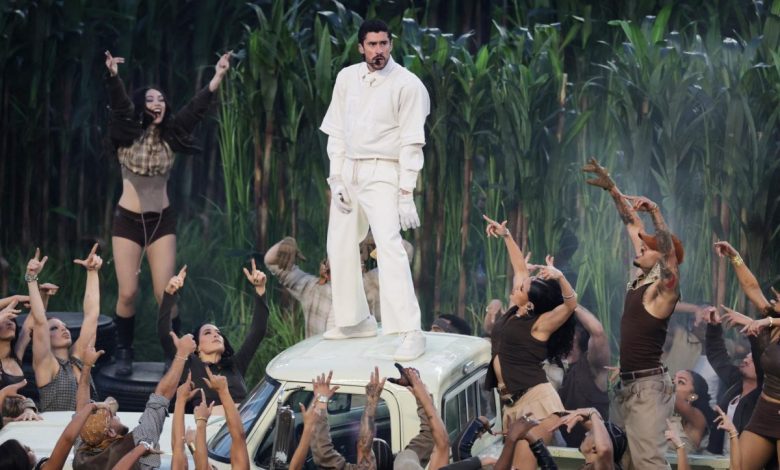
Bad Bunny has fundamentally altered the trajectory of pop culture in the first quarter of 2026, cementing his status not just as a musical artist, but as a geopolitical force. Following a historic Super Bowl LX halftime show and a precedent-shattering Grammy victory, Benito Antonio Martínez Ocasio stands at the apex of the global entertainment industry. However, his influence this year is defined as much by where he refused to appear as where he did. This report provides a definitive analysis of Bad Bunny’s 2026 strategic maneuvers, his confrontation with U.S. immigration policy, and the economic engines driving his billion-dollar brand.
The 2026 Cultural Hegemony
Bad Bunny entered 2026 with a calculated strategy that diverged sharply from the traditional Western pop star playbook. While peers scrambled for North American arena slots, Benito turned his gaze inward to Puerto Rico and outward to the global stage, pointedly bypassing a traditional U.S. tour run. This decision, rooted in political activism and solidarity with the Latino diaspora, has paradoxically increased his demand in the continental United States. His ability to command the global narrative while abstaining from the world’s largest music market is a testament to the “Bad Bunny Effect”—a phenomenon where scarcity and authenticity drive value higher than saturation ever could.
The cultural hegemony of Bad Bunny in 2026 is built on three pillars: uncompromised linguistic identity (performing exclusively in Spanish at the Super Bowl), direct political engagement (the anti-ICE stance), and cross-sector dominance (music, wrestling, fashion, and cinema). As we analyze the specifics of his year so far, it becomes clear that we are witnessing the maturation of the first truly sovereign global pop star of the streaming era.
Super Bowl LX: A Political & Musical Statement
Bad Bunny headline the Super Bowl LX Halftime Show on February 8, 2026, marking a watershed moment for the NFL and Latin music. Taking the stage at the nexus of American sports culture—where the New England Patriots faced off against the Seattle Seahawks—Benito delivered a performance that was defiant, exuberant, and entirely in Spanish. Unlike previous crossover attempts that relied on English-language cameos, this show was an unapologetic showcase of Urbano history.
Critics and fans alike noted the absence of “translation” in the performance. From the opening chords of tracks from his 2025 blockbuster album Debí Tirar Más Fotos (DTMF) to the closing reggaeton anthems, the setlist was a direct communication with his core audience. The performance reportedly garnered over 120 million viewers worldwide, but it was the political undercurrents that dominated the news cycle. In a climate of heightened tension regarding immigration enforcement, Bad Bunny’s visual choices—subtle nods to Puerto Rican resistance and the diaspora—sparked intense debate across major networks.
For a deeper dive into the sporting context of the night, analysts have looked at how the New England Patriots’ 2026 resurgence under the Mike Vrabel era culminated in this very game, providing a high-stakes backdrop for Benito’s cultural assertion. The juxtaposition of the Patriots’ disciplined, traditional brand of football against Bad Bunny’s fluid, avant-garde performance art highlighted the shifting demographics and cultural fault lines of modern America.
Debí Tirar Más Fotos: Making Grammy History
Bad Bunny achieved what many industry insiders deemed impossible just a week before the Super Bowl. At the 2026 Grammy Awards, Debí Tirar Más Fotos took home the award for Album of the Year, becoming the first-ever Spanish-language album to win the ceremony’s top honor. This victory was not merely symbolic; it was a statistical inevitability acknowledged by the Recording Academy. The album had spent 22 weeks atop the charts in Spain and dominated global streaming platforms since its release in early 2025.
The album itself represents a sonic evolution, blending his signature Latin Trap roots with experimental synth-pop and Jersey club influences. Tracks like “Alambre Púa” and “NUEVAYoL” have become anthems for a generation grappling with displacement and identity. The critical acclaim for DTMF suggests that the “Anglo-centric” bias of global music awards has finally been broken, paving the way for non-English artists to compete on equal footing.
The Great U.S. Tour Boycott & ICE Controversy
Bad Bunny shocked the touring industry in late 2025 by announcing that his “Debí Tirar Más Fotos World Tour” would exclude the United States. In a candid interview with i-D Magazine, he cited fears of Immigration and Customs Enforcement (ICE) raids targeting his undocumented fans at U.S. venues. This decision, termed the “Great Boycott” by music journalists, has had massive ramifications for the live music ecosystem.
By removing the U.S. leg, Bad Bunny effectively forfeited an estimated $200 million in gross revenue. However, this move solidified his loyalty to his fanbase. Instead of playing arenas in New York or Los Angeles, he directed fans to international dates in Mexico City, Santo Domingo, and Medellín. This caused a surge in travel tourism, with American fans flying abroad to catch the show—a reverse migration that highlights his economic pull.
While other artists like Don Toliver are capitalizing on the 2026 U.S. touring market with massive arena runs, Bad Bunny’s absence has left a vacuum. Promoters are scrambling to fill the dates that would typically be reserved for the Puerto Rican superstar, reshaping the calendar for the fiscal year. The boycott has also reignited political discourse regarding the safety of public gatherings for immigrant communities under the current administration.
Financial Dominance: Streaming & Revenue Metrics
Bad Bunny remains the undisputed king of streaming. For the fourth time, he was named Spotify’s Most Streamed Artist of the Year, accumulating over 19.8 billion streams in the last cycle alone. The economics of his empire are staggering, shifting from pure touring revenue to a diversified portfolio of royalties, merchandise, and brand equity.
The “Bad Bunny Effect” on streaming platforms is documented in the comprehensive 2026 YouTube algorithm report, which notes that his video releases consistently break the “velocity” records—the speed at which a video reaches 10 million views. His visualizer for the DTMF album tracks generated more ad revenue in Q1 2026 than entire catalog releases from major legacy acts.
The Puerto Rico Residency: Economic Impact
Bad Bunny executed the “No Me Quiero Ir de Aquí” residency in San Juan during the summer of 2025, a 31-date engagement at the Coliseo de Puerto Rico. This was more than a concert series; it was a macroeconomic stimulus package for the island. The residency generated an estimated $400 million in local economic activity, from hospitality to transport.
Crucially, he reserved the first nine shows exclusively for Puerto Rican residents, requiring local ID for purchase. This “locals-first” policy endeared him further to his countrymen, countering the narrative of the detached global celebrity. The residency also served as a platform for his political activism, with nightly interludes addressing the island’s power grid failures and colonial status. The event was livestreamed globally, utilizing infrastructure similar to the massive broadcasts seen in major entertainment franchises like Squid Game, proving that a localized event could command a worldwide digital audience.
Hollywood Expansion: From Bullet Train to Happy Gilmore 2
Bad Bunny has successfully transitioned from musician to multi-hyphenate actor. Following his breakout role in Bullet Train, 2025 and 2026 have seen him take on more substantial parts. His role in Adam Sandler’s Happy Gilmore 2 (2025) as a charismatic caddie showcased his comedic timing and ability to hold the screen with industry veterans. Critics praised his naturalism, noting that he brings the same authenticity to acting as he does to his verses.
Beyond comedy, he has signed on for Darren Aronofsky’s upcoming thriller Caught Stealing, signaling a pivot to serious drama. This trajectory mirrors the strategic diversification seen in media conglomerates like Disney, where talent management involves cross-pollinating assets across film, music, and merchandise. Bad Bunny is not just “acting”; he is building a filmography that enhances his brand’s longevity beyond the physical toll of touring.
Comparative Market Analysis
Bad Bunny’s 2026 performance metrics stand in stark contrast to his peers. The following table illustrates his dominance despite his selective touring strategy.
| Metric | Bad Bunny (2026) | Major Competitor A (Global Pop) | Major Competitor B (Rap/Trap) |
|---|---|---|---|
| Album of the Year (Grammy) | Winner (DTMF) | Nominated | Not Nominated |
| Touring Strategy | Intl. Only (US Boycott) | Global Stadium Run | US Arena Run |
| Super Bowl Headline | Yes (Solo, Spanish) | No | No |
| Streaming (Annual) | ~20 Billion | ~15 Billion | ~8 Billion |
| Avg. Ticket Price (Resale) | $650+ (Intl.) | $450 | $250 |
| Acting Roles (2025/26) | 2 Major Films | 1 Cameo | None |
This data highlights a critical insight: Bad Bunny achieves higher valuation per unit of output. His scarcity in the U.S. market has driven international ticket prices up, while his streaming numbers remain unaffected by the lack of domestic promotion. This efficiency is reminiscent of viral phenomena discussed in the context of global music hits like Tabola Bale, where organic demand outstrips manufactured supply.
Future Outlook: The Post-2026 Trajectory
Bad Bunny faces a pivotal juncture as we move deeper into 2026. The sustainability of his U.S. boycott remains to be seen; while financially viable in the short term, the long-term separation from his largest market could eventually open doors for competitors. However, his pivot to Hollywood and his entrenched status as a political icon suggest he is playing a longer game.
We expect Bad Bunny to launch a new fashion label venture in late 2026, leveraging his status as a style icon to rival major luxury houses. Furthermore, his wrestling career with WWE remains a potent wildcard, offering him sporadic, high-visibility moments that keep him in the Anglo-centric conversation without requiring a full concert tour. Ultimately, Benito Antonio Martínez Ocasio has proven that in 2026, the most powerful move a superstar can make is to say “no”—and have the world beg for “yes.”
For more on the intersection of celebrity influence and global markets, readers should monitor the Billboard Year-End charts to see if anyone can challenge his reign.